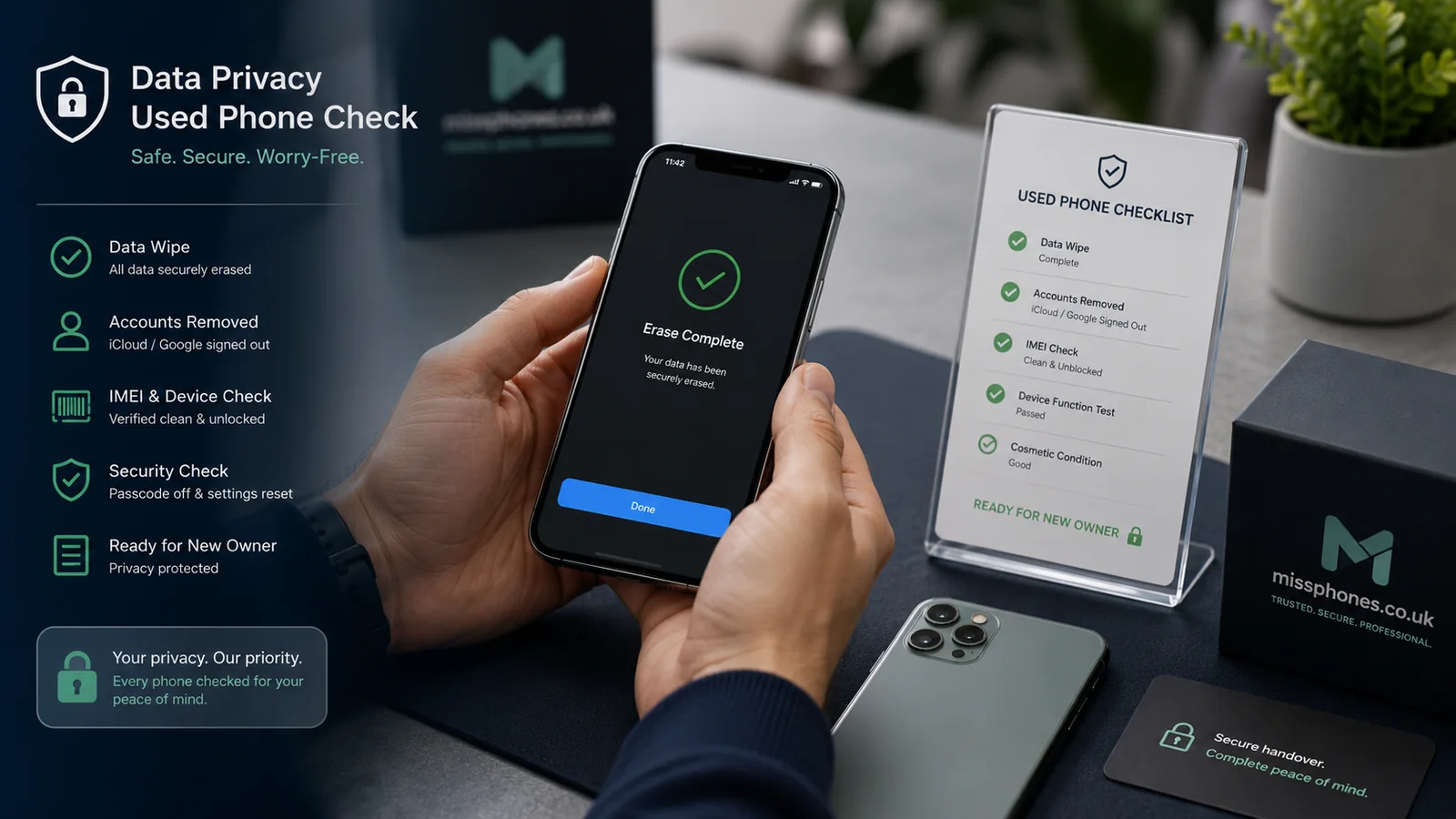
A used-phone purchase is safe only when identity, account status, condition, function and seller evidence are checked separately. A clean-looking handset or a reassuring IMEI result cannot replace the other checks.
Choose the level of protection

| Route | Typical protection | Buyer’s main task |
|---|---|---|
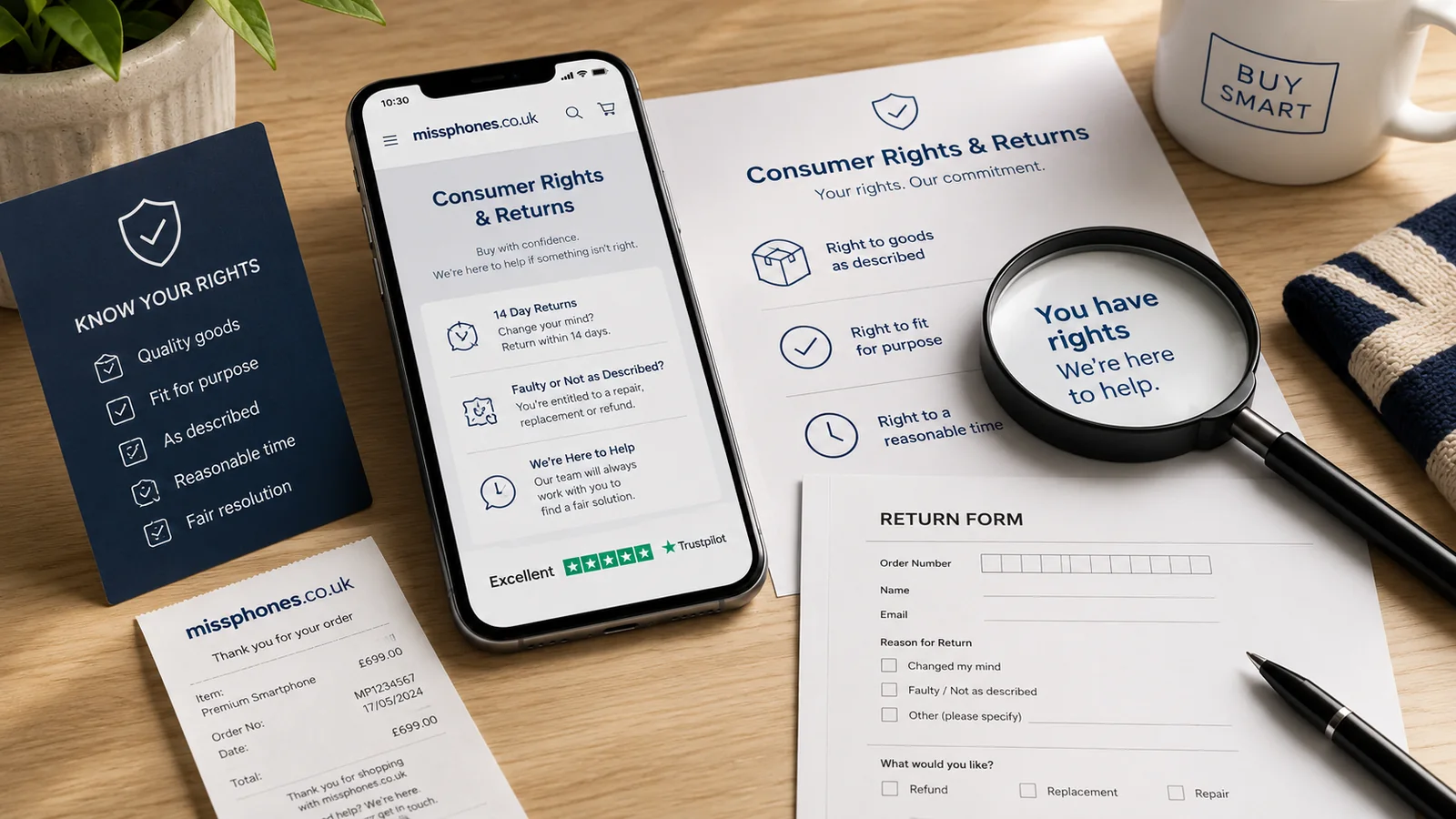
| Refurbisher or retailer | Business returns, warranty and written grading | Check the seller’s actual battery, parts and condition policy |
| Marketplace trader | Business rights may apply, plus platform process | Confirm trader identity and keep the transaction on-platform |
| Private seller | Fewer consumer remedies | Complete ownership and technical checks before payment |
Five separate checks
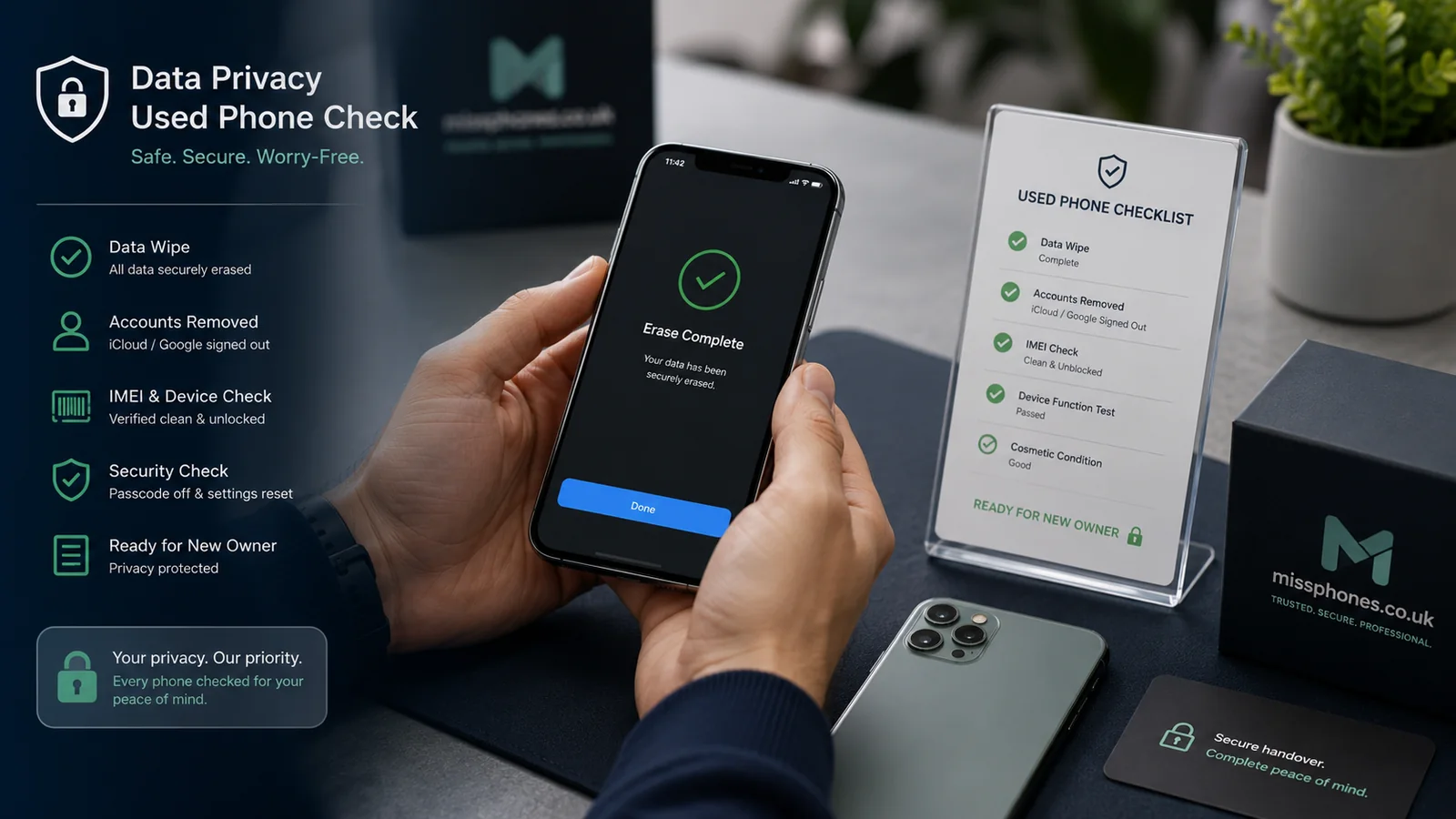
- Identity: exact model, storage, region, colour, serial and IMEI.
- Accounts: Apple Activation Lock, Google Factory Reset Protection and any manufacturer or organisation management.
- Condition: frame, display, cameras, ports, buttons, liquid signs and repair history.
- Function: calls, charging, Wi-Fi, Bluetooth, sound, microphones, cameras, biometrics and sensors.
- Evidence: seller identity, listing, proof of purchase where available, payment and written condition.
Use the right checklist
- Used iPhone Buying Checklist
- Used Android Phone Buying Checklist
- How to Check a Phone’s IMEI Number
- How to Spot a Fake Phone
Price the risk
Compare the used price with a refurbished equivalent that has returns and warranty. Add any immediate battery, screen, charger or accessory cost. A private sale saving of £40 may not compensate for an uncertain battery and no practical return route.
When to walk away
- The seller will not remove account locks or allow a reset check.
- Identifiers do not match and the discrepancy is not explained.
- The phone is managed by an organisation.
- The seller insists on irreversible payment before inspection.
- The price is far below comparable completed sales without a documented reason.
A practical cost comparison
Illustrative example: a private used phone costs £260, while a refurbished equivalent is £310 with returns and a 12-month seller warranty. If the private phone is likely to need an £80 battery replacement, its effective cost is already £340 before valuing the weaker return route. The lower asking price is not always the lower-risk purchase.
Inspection sequence for an in-person purchase
- Confirm the seller and listing before meeting.
- Inspect the frame, screen, cameras and ports while the phone is off.
- Power it on and compare the exact model and identifiers.
- Test normal functions with your own compatible SIM where appropriate.
- Have the seller remove accounts and complete the reset/setup check.
- Create a written bill of sale and verify payment independently.
Do not let the seller erase the phone before you have checked the current battery, parts history and functions, but do not pay until the post-reset account-lock check is complete.