Three to five years is a useful planning range for many buyers, but it is not a guarantee and should not be treated as a replacement deadline. A phone's useful life ends when it can no longer be kept secure, dependable and economical for the work you need it to do. Some phones remain practical beyond five years; others become poor value much sooner.
Use four tests: security support, battery condition, repair economics and day-to-day suitability.
1. Is the phone still receiving security updates?

Security support is more important than whether the phone receives every new feature. Unsupported software can leave known weaknesses unpatched, which matters particularly when the device is used for banking, shopping, email and work accounts.
For relevant consumer connectable products placed on the UK market, manufacturers must publish a defined support period for security updates. Check that information for the exact model rather than relying on a brand-wide promise or an old review. A manufacturer's newest flagship policy may not apply to an older or cheaper phone.
Also distinguish between:
- Operating-system upgrades, which can add features and change the interface.
- Security updates, which address vulnerabilities and may continue on a different schedule.
- Application support, which is controlled by individual app developers and can end separately.
If the published minimum support period ends before your planned replacement date, treat the phone as a shorter-life purchase even if the hardware is powerful.
2. Can the battery be restored economically?
Rechargeable batteries lose capacity through use and age. There is no universal “80% after 500 cycles” rule for every smartphone. Apple, for example, states different design targets for different iPhone generations: iPhone 14 models and earlier are designed to retain 80% of original capacity at 500 complete charge cycles under ideal conditions, while iPhone 15 models and later are designed around 1,000 cycles. Other manufacturers use their own specifications and may report battery health differently.
A lower battery-health figure does not automatically mean the phone is unsafe or unusable. It means the available runtime has fallen. Judge the real effect:
- Does the phone still last through your normal day?
- Does it shut down unexpectedly?
- Is the battery swollen, unusually hot or physically damaged?
- Is a reputable replacement available at a sensible cost?
- Will opening the phone affect its water-resistance protection?
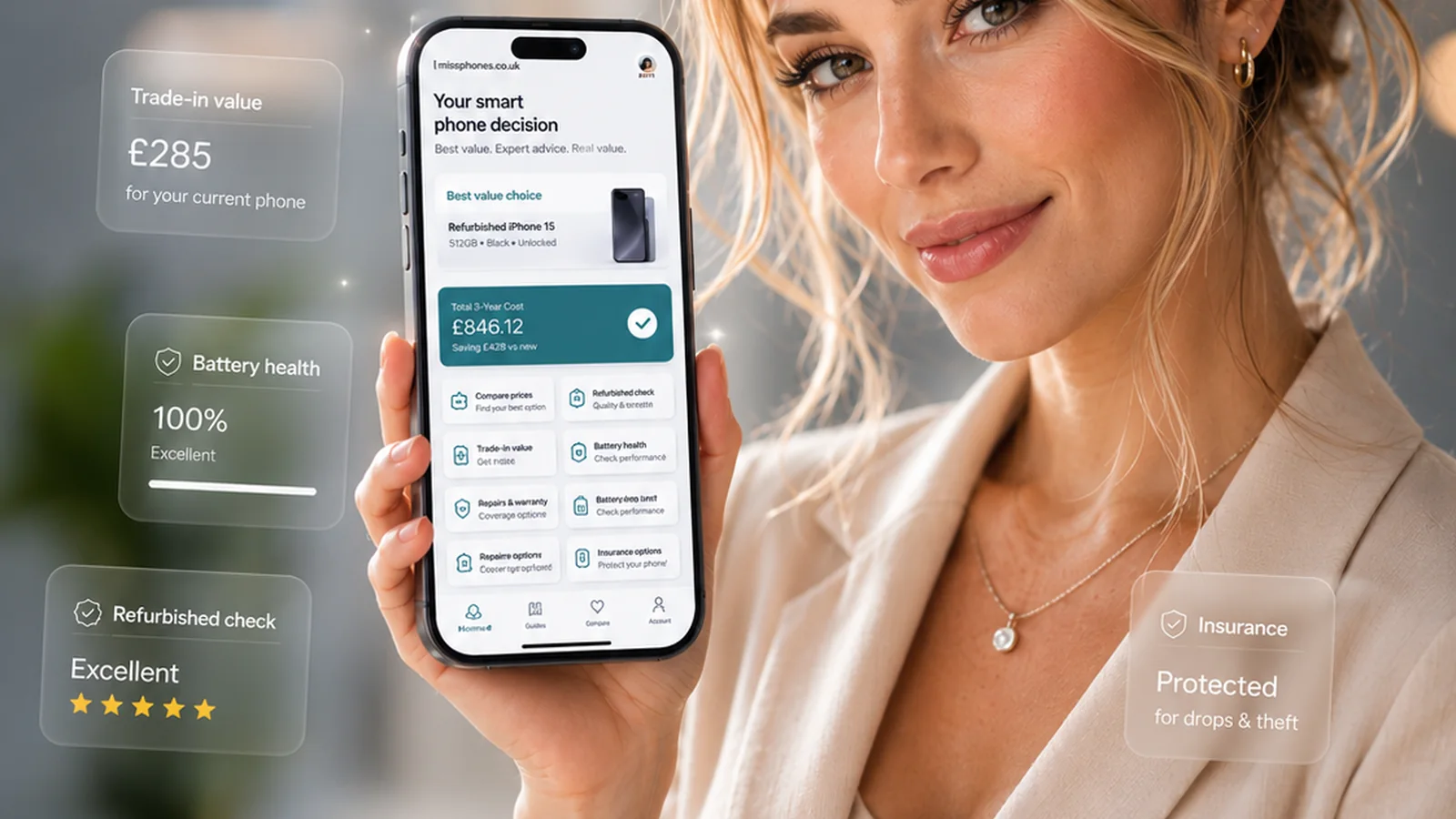
Battery health is easy to view on supported iPhones. On Android phones, the available information varies by manufacturer and software version; some devices provide a health estimate, while others show only usage and diagnostic information. Do not install an unknown “battery health” app and assume its estimate is authoritative.
If a replacement battery restores dependable use and the phone remains supported, repair is often more economical than replacing the entire device.
3. Are parts and competent repairs still available?
Useful life depends on the cost and quality of common repairs. Before buying a phone for long-term ownership, check the current prices for a battery, screen and charging-port repair. Ask whether the quote includes labour, tax, diagnostics, a repair warranty and any work needed to restore seals.
Manufacturer-authorised and independent repairs have different advantages. Authorised service may provide specified parts and processes for that brand; a reputable independent shop may be cheaper or more convenient. Neither label alone guarantees the best outcome. Compare the written quote, parts description, data-handling process and warranty on the work.
A repair can stop making economic sense when its total cost approaches the price of a suitable replacement, when several faults are appearing together or when software support is close to ending. The current resale value of the damaged phone also belongs in the calculation.
4. Does the phone still suit your actual use?
Storage is often the first practical limit. Updates, apps, photographs, video and cached media accumulate. A phone that is nearly full can become difficult to update and frustrating to manage. Before replacing it, check what is using the space, remove unwanted downloads and confirm that backed-up files are genuinely recoverable.
Performance should be judged by the tasks you do, not by comparison with a new model. A four-year-old phone that opens your everyday apps promptly, runs current software and remains reliable is still doing its job. A newer phone may be unsuitable if it lacks storage, has poor battery life or cannot run a specialist application you need.
Slowness can also come from a failing battery, almost-full storage, a damaged component or a problematic app. Diagnose the cause before assuming the processor has reached the end of its life.
Repair, keep or replace?
| Situation | Most sensible next step |
|---|---|
| Supported, reliable, enough storage and acceptable battery life | Keep using it |
| Supported and otherwise sound, but battery life has become poor | Get a written battery-replacement quote |
| One repair is needed and costs much less than a suitable replacement | Repair, provided the work has a clear warranty |
| Security support is ending soon and a major repair is needed | Compare repair cost with replacement cost very carefully |
| Battery swelling, overheating or physical damage | Stop charging or using it where necessary and seek qualified advice promptly |
| Several faults, limited support and low resale value | Replacement is more likely to be rational |
Plan the next phone more accurately
Record why the current phone is being replaced. If storage was the limit, use your actual storage usage to choose the next capacity. If support ended too soon, verify the next model's published support period before buying. If a repair was uneconomical, compare common repair prices during the next purchase rather than after something breaks.
The calendar alone does not decide when a smartphone should be replaced. A supported, repairable and dependable phone has not become obsolete simply because a newer model exists.
After How Long Should a Smartphone Last?, the closest next step is Buying a Phone, then Complete Phone Buying Guide.
Useful official references: How Long Should a Smartphone Last?
Information checked on 25 July 2026. Model-specific support periods and battery specifications can change or differ by region.