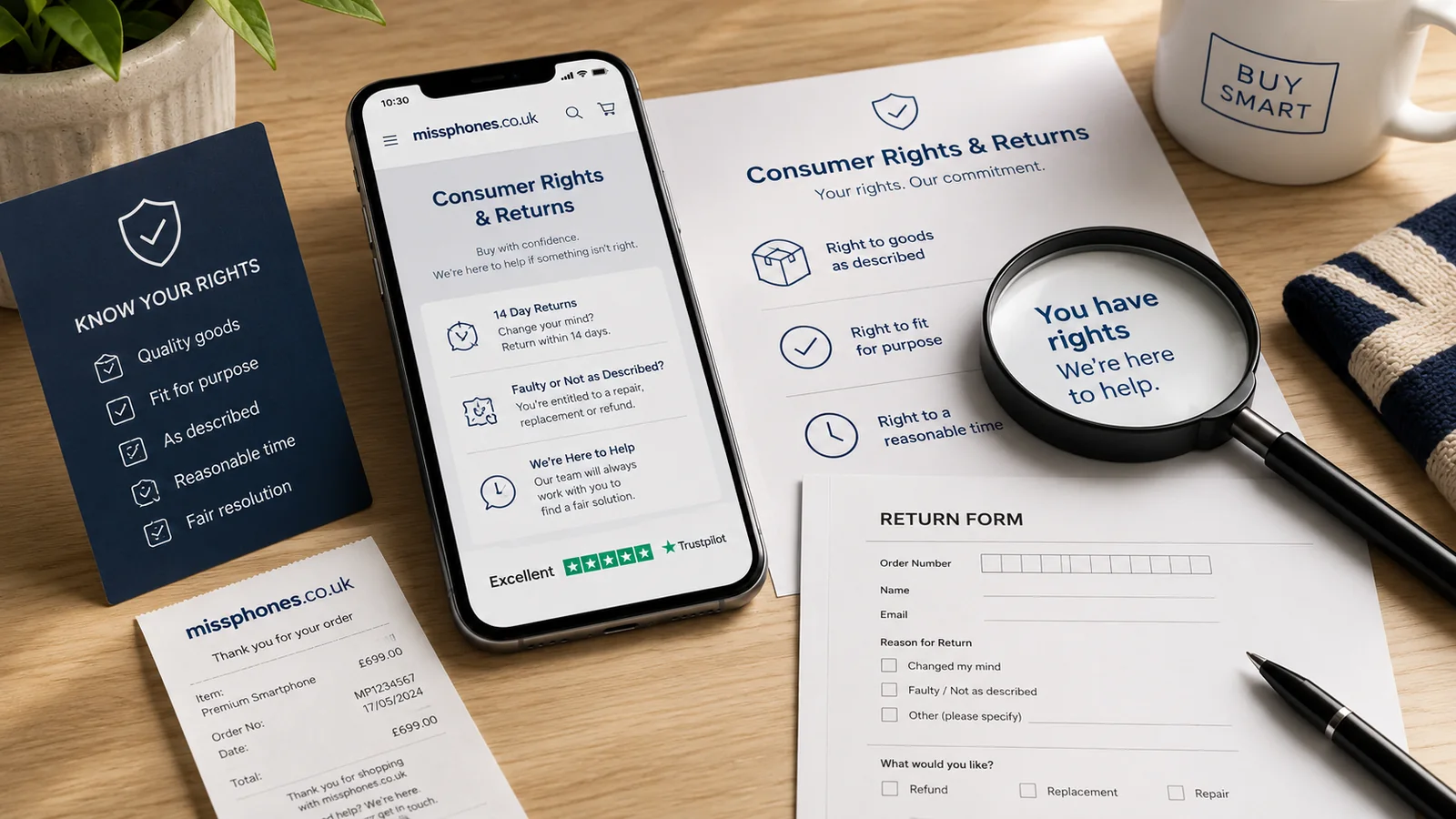
A strong complaint identifies the correct organisation, the relevant agreement, the evidence and the outcome requested. It does not need legal-sounding language. A short, accurate chronology is usually more effective than a long message that mixes the handset, airtime, finance, insurance and delivery dispute together.
Step 1: choose the correct recipient
| Problem | Complain first to |
|---|---|
| Faulty or misdescribed handset from a trader | The legal seller shown on the invoice |
| Airtime, billing, switching or network-contract issue | The communications provider |
| Device-finance or credit issue | The lender or regulated finance business named in the agreement |
| Insurance claim or policy issue | The insurer or complaint handler named in the policy |
| Poor paid repair | The repair business that supplied the service |
Step 2: build a one-page evidence pack
- Order number, date and exact phone.
- Invoice, payment evidence and relevant agreement.
- Saved advert or product description.
- A concise timeline of delivery, fault and contacts.
- Photos, video, diagnostic report or repair quote where useful.
- The remedy you are asking for and why.
Avoid sending irreplaceable originals. Redact account passwords, full payment-card numbers and unrelated personal information.
Step 3: make the requested remedy explicit
Examples include:
- accepting a qualifying rejection and refunding the price;
- repairing or replacing a non-conforming phone;
- correcting a bill or contract record;
- providing a deadlock letter;
- reviewing an insurance or finance decision under the formal complaints process.
Step 4: escalate through the correct route
For a phone or broadband provider, first use customer service and then make a formal complaint. Ofcom's current guidance says eligible residential, small-business and not-for-profit customers can take an unresolved complaint to an approved ADR scheme after at least six weeks, or earlier with a deadlock letter. Ofcom approves CISAS and Communications Ombudsman; check which scheme the provider belongs to.
For most complaints to a financial business, including many finance and insurance disputes, the business normally has up to eight weeks to issue its final response before the Financial Ombudsman Service can consider the matter. Some payment-service complaints have shorter time limits.
What Ofcom, the ombudsman and Trading Standards do
Ofcom generally regulates the sector rather than deciding an individual's compensation claim. ADR schemes assess eligible telecom disputes. The Financial Ombudsman handles eligible complaints about regulated financial firms. Trading Standards receives intelligence about unlawful trading practices, commonly through the Citizens Advice consumer service or the relevant national route.
A practical complaint format
- What I bought: exact product, date and seller.
- What went wrong: observable facts and dates.
- Evidence: list the attached documents.
- Requested resolution: one clear outcome.
- Response deadline: a reasonable date, without inventing a legal deadline.
Related guidance: This check sits within Buying a Phone. The Complete Phone Buying Guide covers the broader decision from start to finish.
Sources checked
Information checked on 26 July 2026. This is general UK guidance, not legal, tax or security advice. Terms, complaint routes and platform features can change, so confirm the current wording before acting.