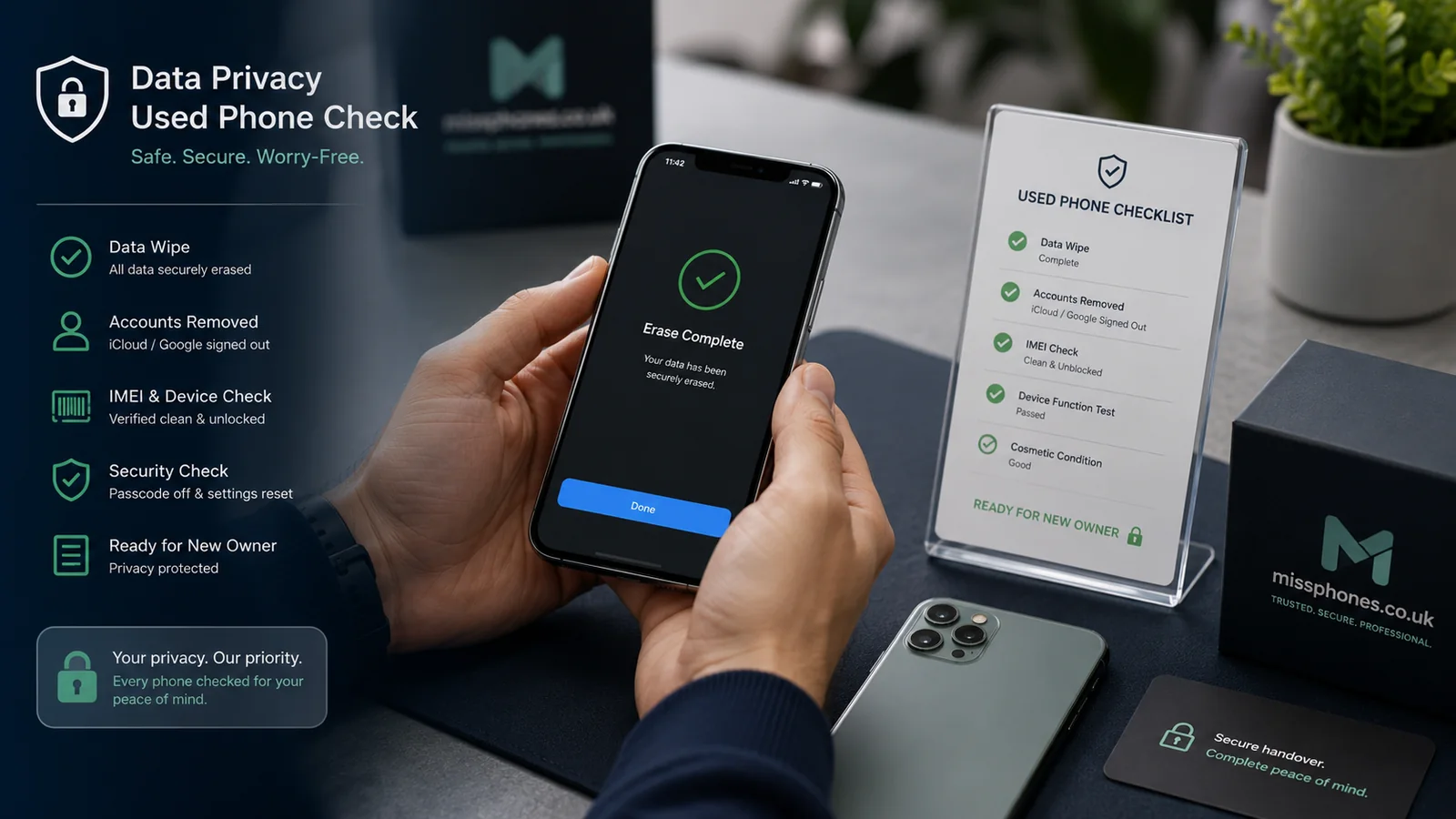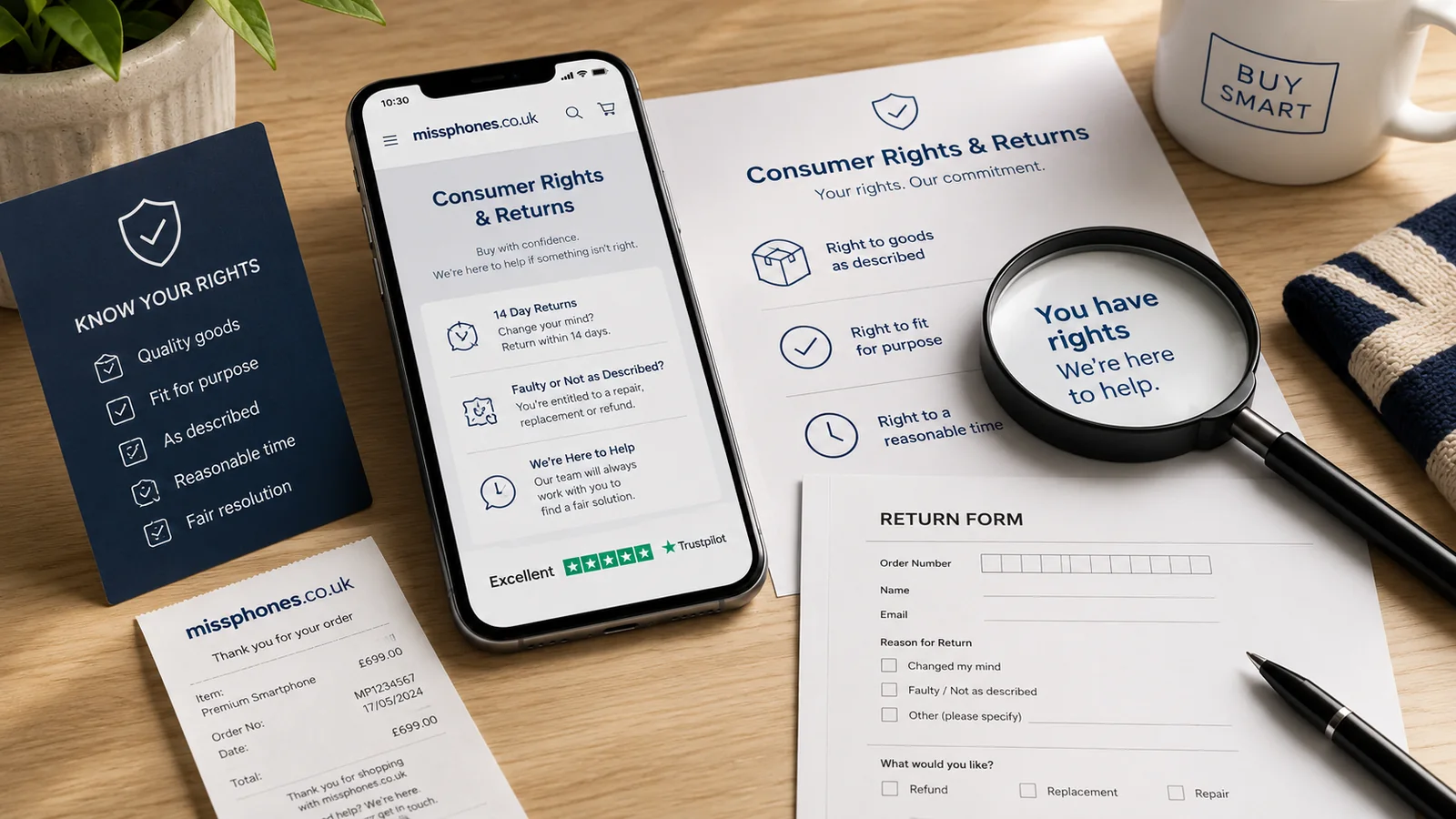
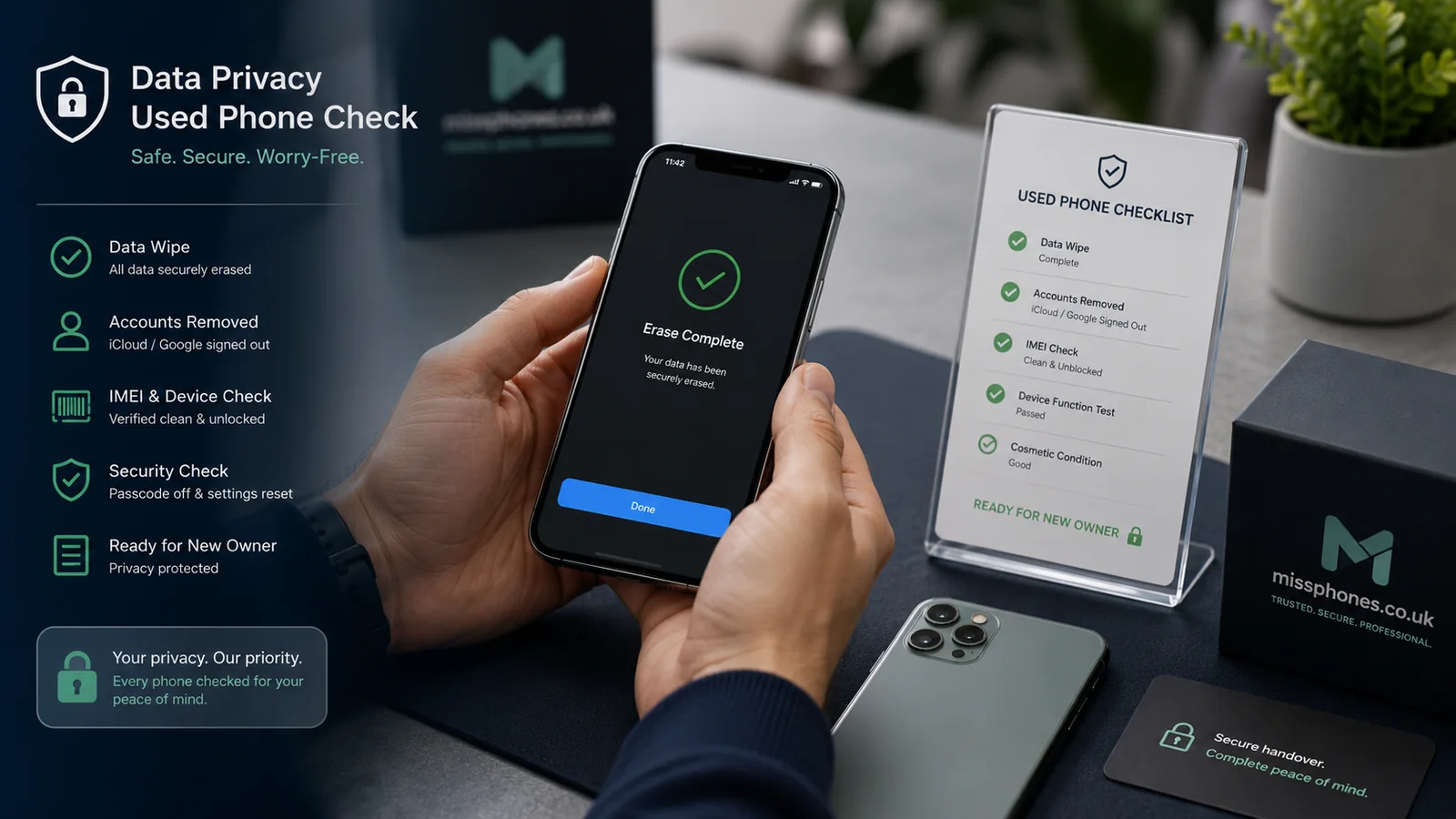
The word “second-hand” does not remove consumer rights when the seller is a trader. It does change what a reasonable person may expect from the phone's age, price, description and disclosed wear. A private sale has a narrower legal position, so identifying the seller is the first important check.
Trader or private seller?
| Seller | What to expect |
|---|---|
| Retailer, refurbisher or marketplace trader | Consumer Rights Act requirements normally apply to the goods, judged in the context of a used sale. |
| Genuine private seller | Do not assume the same satisfactory-quality and distance-cancellation remedies. Preserve the written description and seller identity. |
| Trader presenting as private | Platform labels are not conclusive. Look at sales volume, repeated stock, business language and payment identity. |
What satisfactory quality means for a used phone
A used phone may have disclosed scratches or reduced battery capacity without being legally faulty. However, it should match the description and meet a reasonable standard for its age, price and stated condition. Undisclosed account locks, a non-working camera, incorrect storage, serious screen defects or an inaccurately described battery can materially change the position.
Condition grades such as “Excellent”, “Good” or “Grade A” are not universal technical standards. Save the seller's own definition and compare the delivered phone with that wording.
Private sales: evidence matters more
Before paying a private seller, keep:
- the advert and all messages;
- the seller's real name and contact details;
- a signed receipt describing the exact device and known faults;
- the IMEI or serial recorded privately;
- proof of payment;
- photos or video of the inspection.
A clean IMEI check is useful but does not prove ownership or guarantee that a block will not appear later. Complete the second-hand phone test and account-lock checks before payment.
Marketplace protection is an additional layer
A platform's buyer-protection policy is not the same as statutory rights. Check whether payment must remain on-platform, which evidence is required and how quickly a dispute must be opened. Do not leave the protected payment route because the seller offers a small discount.
If a problem appears
- Stop making changes that could obscure the fault.
- Compare the phone with the saved description.
- Notify the seller promptly and in writing.
- Use the platform dispute route where applicable.
- For a trader sale, state the statutory issue and remedy requested.
- For a private dispute, obtain consumer or legal advice before threatening court action.
Related guidance: For the wider buying decision, use Buying a Phone. The Complete Phone Buying Guide brings the main costs, checks and trade-offs together.
Sources checked
Information checked on 26 July 2026. This is general UK guidance, not legal, tax or security advice. Terms, complaint routes and platform features can change, so confirm the current wording before acting.