A good phone purchase is not the newest handset or the lowest monthly payment. It is the option that covers your real needs for the time you intend to keep it, at a total cost you understand before you pay. That means looking beyond the specification sheet and comparing the phone, airtime, accessories, likely repairs and eventual resale value as one decision.
In brief: start with your daily use, set a total ownership budget, check the exact model's security-support period, compare buying routes on like-for-like terms, and read the returns, warranty and finance conditions before committing.
Start with what you do, not with a model name

Write down the tasks you use every week. Messaging, web browsing, navigation, banking, video calls and ordinary photography do not usually require flagship hardware. Demanding games, long periods of video recording, specialist work apps and regular low-light or zoom photography can justify spending more, but only where the improvement is relevant to you.
| What matters to you | What to check | What not to assume |
|---|---|---|
| Reading, maps and video | Screen size, brightness, weight and battery life in independent tests | A larger screen is automatically more convenient |
| Photos | Real sample images in the conditions you use most | More megapixels guarantee better results |
| Games or intensive apps | Sustained performance, heat, storage and battery drain | The fastest benchmark result will matter in ordinary use |
| Keeping the phone for years | Security-support period, repair options and replacement-battery cost | A high purchase price guarantees a long useful life |
| One-handed use | Width, weight and where the controls sit | A compact screen always means a compact phone |
Use your current phone as evidence. Check which apps you actually use, how much storage is occupied and what frustrates you. Replace a real shortcoming, not an imagined future need. Our guides to choosing storage and planning a phone's useful life cover those decisions in more detail.
Set a total budget, not just a handset budget
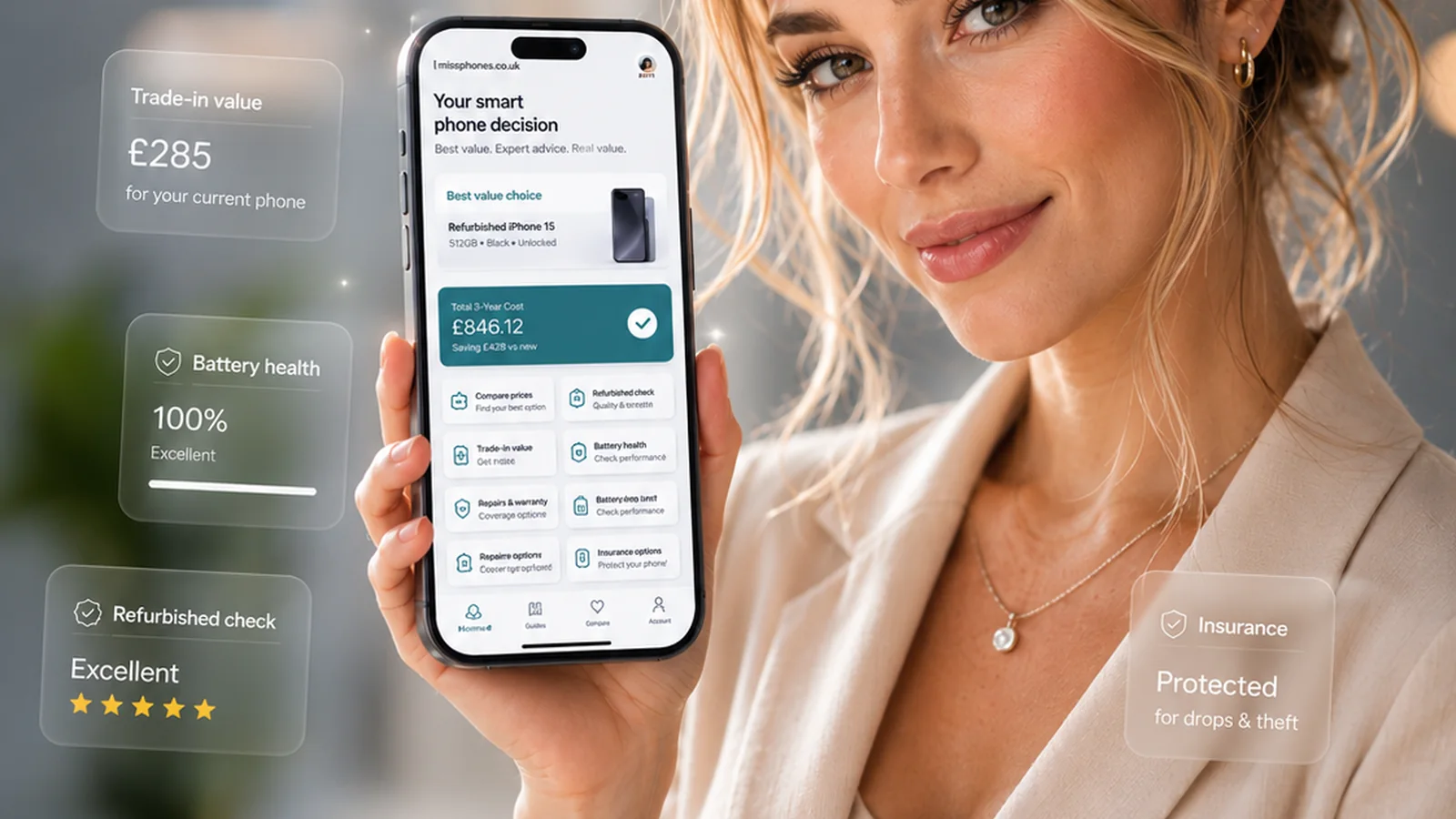
The purchase price is only one part of ownership. A useful comparison separates the following:
- One-off costs: handset, upfront contract payment, case, screen protection, charger or cable where needed.
- Ongoing costs: airtime, cloud storage, optional insurance and any scheduled contract price changes.
- Possible costs: battery replacement, screen repair, excess on an insurance claim and early-exit charges.
- Value recovered: expected resale or trade-in proceeds at the end of ownership.
Illustrative example: a £500 phone kept for four years, with £70 of accessories and one £90 battery replacement, has a hardware-and-maintenance cost of £660. If it is later sold for £140, the net ownership cost is £520, or £130 per year. Airtime should be added separately so that a handset purchase can be compared fairly with a phone contract.
For new UK phone and broadband contracts entered into from 17 January 2025, any in-contract price rise must be stated upfront in pounds and pence rather than being linked to inflation or expressed as a percentage. Older agreements can be different, so check the wording and calculate the complete term rather than multiplying the first monthly payment. This is general consumer guidance, not financial advice.
Use our smartphone budget guide to choose a realistic hardware range before comparing models.
Plan the useful life before you buy
A phone remains useful while it still receives appropriate security updates, holds enough charge for your routine, can be repaired at a sensible cost and has enough storage and performance for the work you give it. Age alone is a poor reason to replace it.
For consumer connectable products placed on the UK market, manufacturers must publish a defined support period for security updates under the UK's product-security regime. Treat that published minimum as a starting point, not a substitute for checking the exact model. Support commitments can differ between a manufacturer's flagship, mid-range and budget phones, and a policy announced for a new series may not apply retrospectively to an older model.
Battery ageing is normal, but there is no single cycle count that applies to every phone. Manufacturers use different designs and test conditions. Check the model's official battery information and the price of an authorised or reputable independent replacement. A replaceable battery can extend ownership far more cheaply than buying another phone.
Compare buying routes on the same basis
New phone bought outright
This usually provides the clearest ownership position and makes it easy to pair the phone with a SIM-only plan. Compare authorised retailers, the manufacturer's store and reputable high-street or online sellers. Check who is responsible for returns and warranty service rather than assuming the manufacturer will handle every problem.
Phone contract or separate device finance
Compare the total amount payable, contract length, ownership terms, credit check, scheduled price changes and early-exit position. A lower monthly figure can simply mean a longer commitment. UK mobile providers have been prohibited from selling locked handsets since 17 December 2021, but an unlocked phone does not remove your obligation to continue paying under a finance or airtime agreement.
Refurbished or used phone
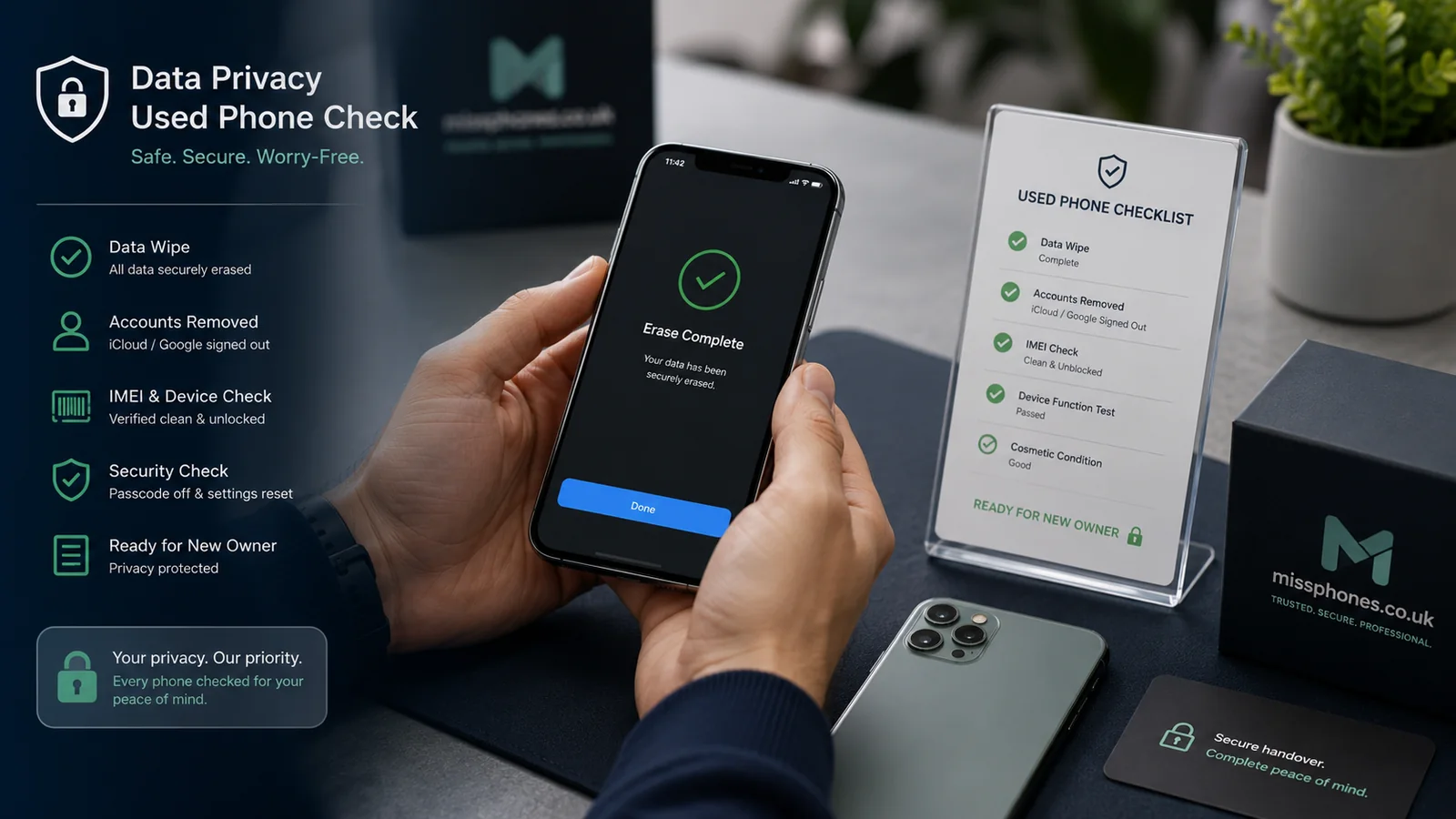
A refurbished phone can offer a strong balance of price and protection when the seller explains the condition, battery standard, parts policy, warranty and returns process. A private used purchase can be cheaper, but the buyer usually carries more of the checking risk. The words “excellent”, “good” and “grade A” are not universal technical standards.
Previous-generation phone
An older model is often the better purchase when it still has enough security support for your planned ownership period and the new model's changes do not solve a problem you have. Compare the same storage capacity and condition, then use our new versus previous-generation checklist.
Read the small print before paying
- Seller: identify the legal business or private individual you are buying from.
- Condition: confirm whether the phone is new, open-box, refurbished or used.
- Included items: check the manufacturer's original package rather than assuming a charger or earphones should be present.
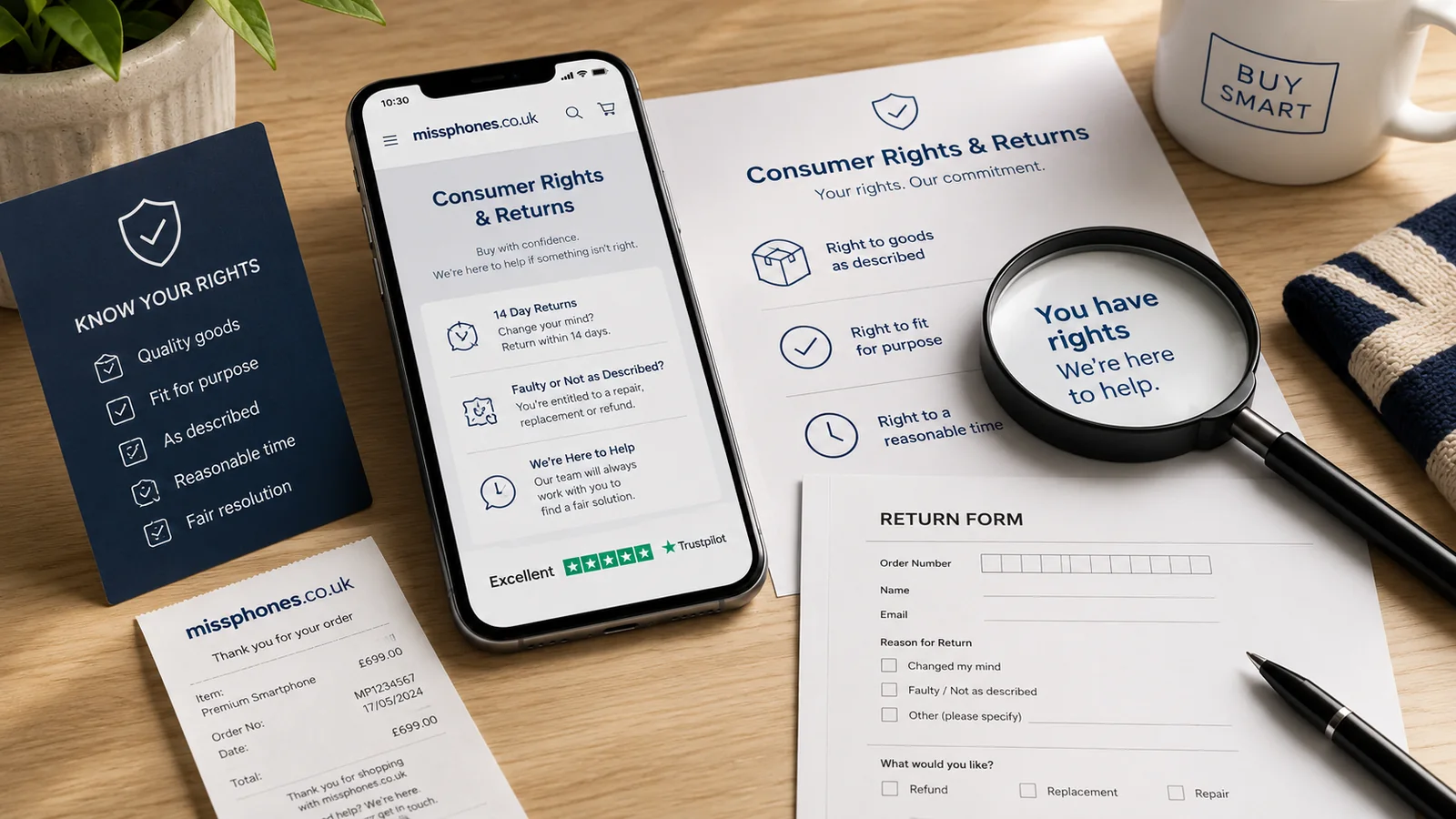
- Returns: distinguish a retailer's goodwill policy from statutory rights and from distance-selling cancellation rights.
- Warranty: check duration, exclusions, proof required, who handles the claim and whether the cover transfers to another owner.
- Finance: read the total amount payable, missed-payment consequences, ownership position and early settlement terms.
- Support: find the exact model's published security-update period.
- Evidence: keep the listing, order confirmation, invoice, serial number and written description of any damage or missing items.
A commercial warranty or guarantee does not replace your statutory rights against a business seller. The practical route depends on what went wrong, when it happened and how the phone was bought, so use current consumer guidance rather than relying on a general statement in a product listing.
Common mistakes that cost buyers money
- Choosing a phone from a headline discount before deciding what you need.
- Comparing monthly payments instead of the total contract cost.
- Buying more storage, camera hardware or processing power without a use for it.
- Ignoring the exact model's security-support period.
- Assuming a retailer, manufacturer warranty and statutory rights are the same thing.
- Accepting “new” or “refurbished” without checking condition and evidence.
- Forgetting accessories, insurance excess, repairs and resale value.
- Buying an incomplete package without pricing the missing items and documenting the condition. See our guide to damaged boxes and missing accessories.
A five-minute decision before you buy
- Write down the three tasks that matter most.
- Choose how many years you intend to keep the phone.
- Check your current storage use and battery frustrations.
- Set a total ownership budget, not only an upfront price.
- Compare two or three models on the requirements above.
- Verify the seller, support period, returns and warranty terms.
- Save the product page and contract summary before paying.
Official sources to verify current terms: Complete Phone Buying Guide
Information checked on 25 July 2026. Provider, retailer and manufacturer terms can change, so confirm them before acting.
- GOV.UK: consumer connectable product security regulations
- National Cyber Security Centre: keeping devices and software up to date
- Ofcom: upfront pounds-and-pence contract price rises
- Ofcom: ban on mobile providers selling locked handsets
- Citizens Advice: warranties and guarantees
- Citizens Advice: returning faulty goods