Spend enough to cover your real use and the period you intend to keep the phone, but do not pay for capability you are unlikely to use. For many UK buyers, the strongest value is in the broad middle of the market rather than at either extreme. The right figure is still personal: a £250 phone that remains secure and does everything you need can be a better purchase than a £1,000 flagship kept for the same length of time.
Editorial budget framework: the price bands below are decision aids, not market averages or promises of what a particular model will cost. Prices and promotions change, so compare current offers on the day you buy.
Choose the ownership period first

Start by deciding whether you expect to keep the phone for two, three, four or five years. Then check whether the exact model's published security-support period covers that plan. Under the UK's product-security rules, manufacturers of relevant consumer connectable products must publish a defined support period for security updates, but the minimum can vary between models.
Next, calculate the annual hardware cost:
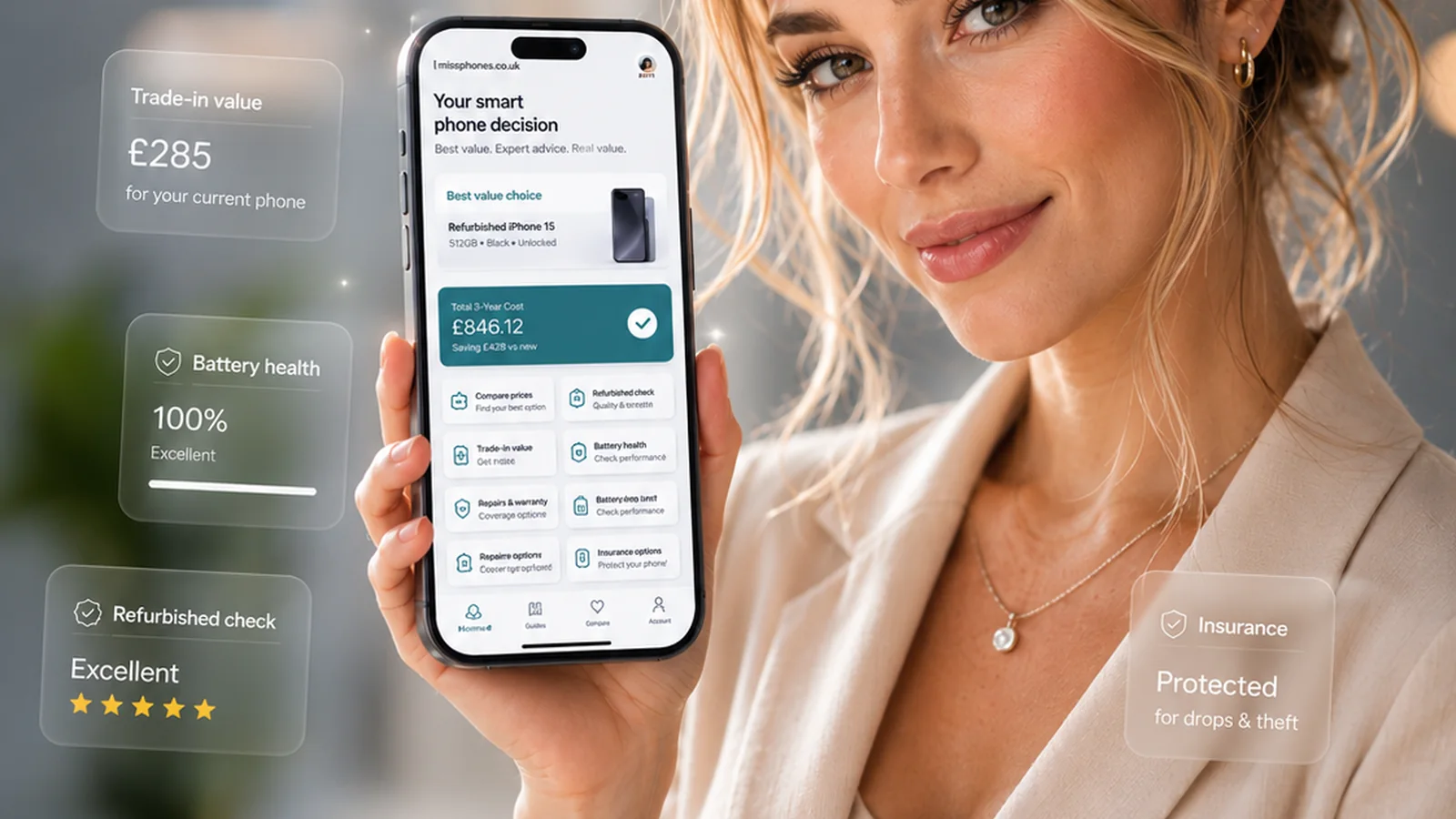
Illustrative example: a £360 phone kept for three years costs £120 per year before repairs and resale. A £650 phone kept for five years costs £130 per year. The second phone is not automatically better value: it only earns the higher spend if it genuinely remains useful for five years and offers benefits you need.
Add likely accessories and repairs, then subtract a cautious resale estimate. Keep airtime separate so that an outright purchase can be compared fairly with a phone contract.
What different budgets are likely to buy
| Working budget | Who it may suit | Checks that matter most |
|---|---|---|
| Under £200 | Light use, a temporary phone, a first phone or a strict budget | Security-support period, storage, screen quality, battery life and whether essential apps run well |
| £200–£400 | Messaging, browsing, navigation, streaming, ordinary photos and mainstream apps | Update commitment, camera consistency, storage and repair options |
| £400–£700 | Longer ownership, better cameras, stronger performance, brighter displays or more premium construction | Whether the extra features solve a real need and whether a previous-generation model offers better value |
| Over £700 | Specialist camera use, demanding games, premium foldables or buyers who value a particular high-end feature | Total depreciation, repair cost, insurance excess and whether the feature is worth the premium |
These bands overlap. A discounted previous-generation flagship can sit below a current mid-range phone, and a specialist rugged or foldable device can cost more without being faster in ordinary tasks. Judge the model, support period and seller rather than the category name.
Where spending more can be sensible
- Longer verified support: useful when you genuinely plan to keep the phone for the full period.
- A camera capability you regularly use: for example, reliable low-light performance, strong video stabilisation or meaningful optical zoom.
- High sustained performance: relevant to demanding games, video work or specialist applications, not routine messaging.
- More local storage: justified when your current usage, offline media or video recording would make a smaller capacity restrictive.
- Accessibility or durability: a brighter screen, better speakers, longer battery life or a design that is easier to handle can have more value than headline performance.
- Repair and parts availability: a phone that can be kept working at a sensible cost may justify a higher purchase price.
Where spending more is usually wasted
Do not pay a premium for a faster processor when your current problem is insufficient storage. Do not upgrade the camera because a review praises a feature you never use. Do not buy the highest storage tier solely because it may resell for more: the additional resale value rarely guarantees recovery of the full upgrade cost.
A contract can also make overspending feel painless. A difference of £10 per month is £240 over 24 months and £360 over 36 months before any scheduled price rise. For new contracts from 17 January 2025, providers must state any in-contract price rise upfront in pounds and pence, but you still need to add every payment and any upfront fee.
Buying the newest model at launch often means accepting the highest price and the steepest early depreciation. A previous-generation phone can be the better purchase when its remaining support period is long enough and the new features do not matter to you.
Use your current phone to set the budget
- Open the storage settings and note how much space you actually use.
- List the tasks that feel slow or unreliable.
- Check whether the problem is the battery, storage, damage or software rather than the whole phone.
- Decide how many years you want from the replacement.
- Set a maximum total ownership cost, including accessories and a repair allowance.
- Buy the least expensive model that meets those requirements with sensible headroom.
If your present phone still receives security updates and a battery or screen repair would solve the problem, replacing it may not be the cheapest option. Our guide to smartphone useful life helps make that decision.
A simple budget test
Before paying, finish this sentence: “I am spending an extra £___ because this phone gives me ___, which I will use ___.” If the benefit cannot be named clearly, the higher price is probably buying reassurance or status rather than practical value.
Official sources to verify current terms: How Much Should You Spend on a Smartphone?
Information checked on 25 July 2026. Prices are illustrative editorial bands and should not be treated as current market averages.