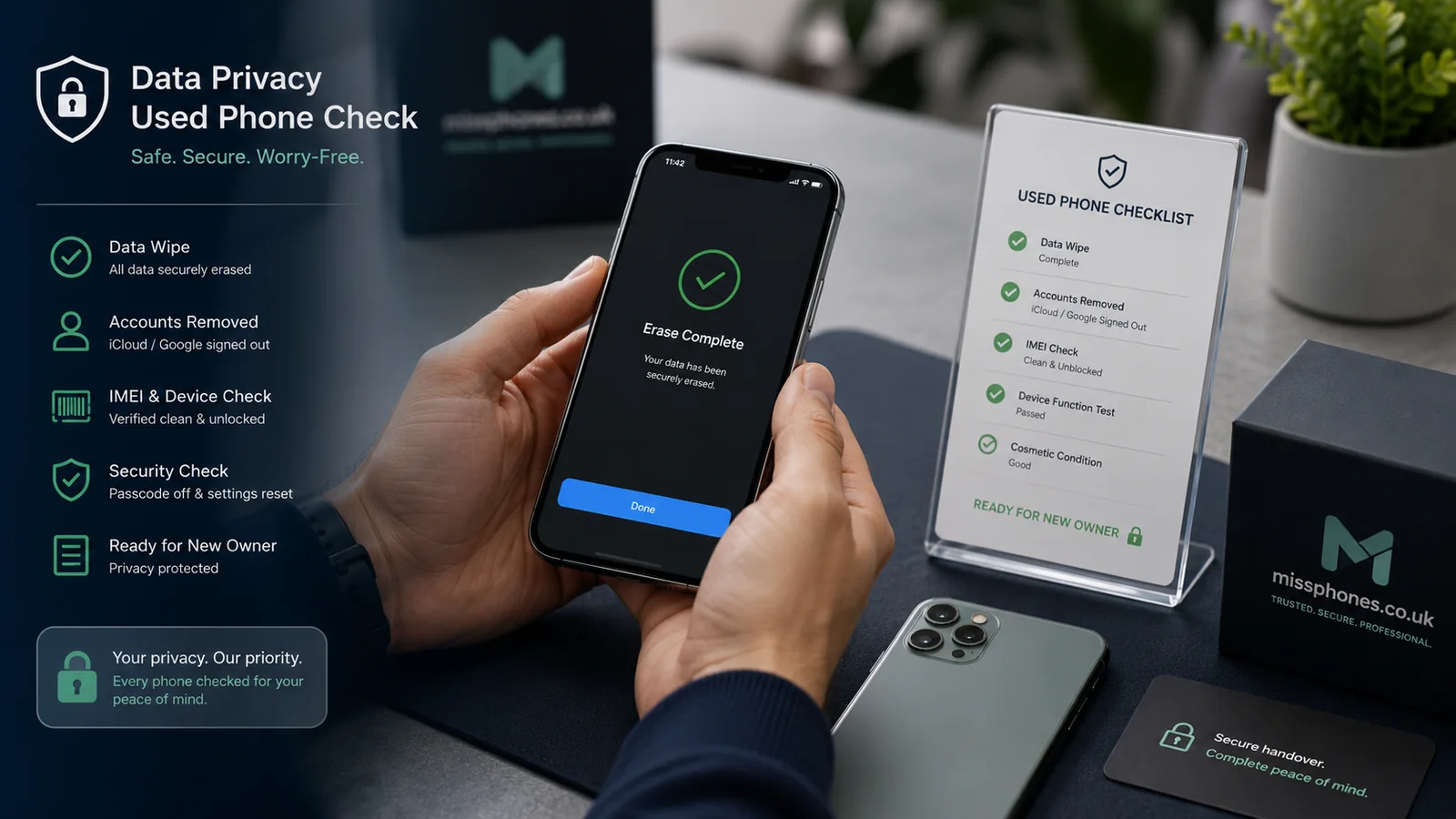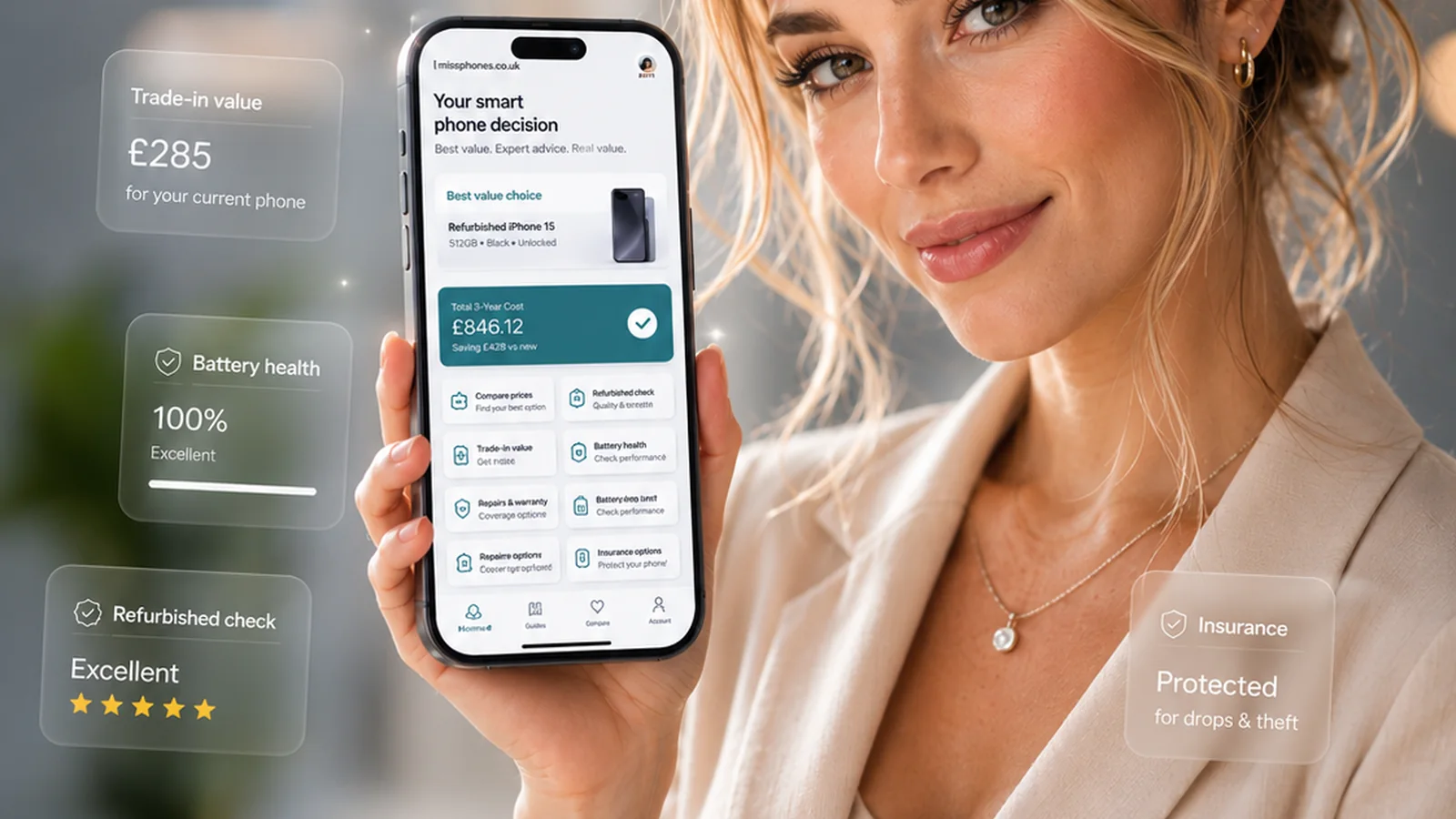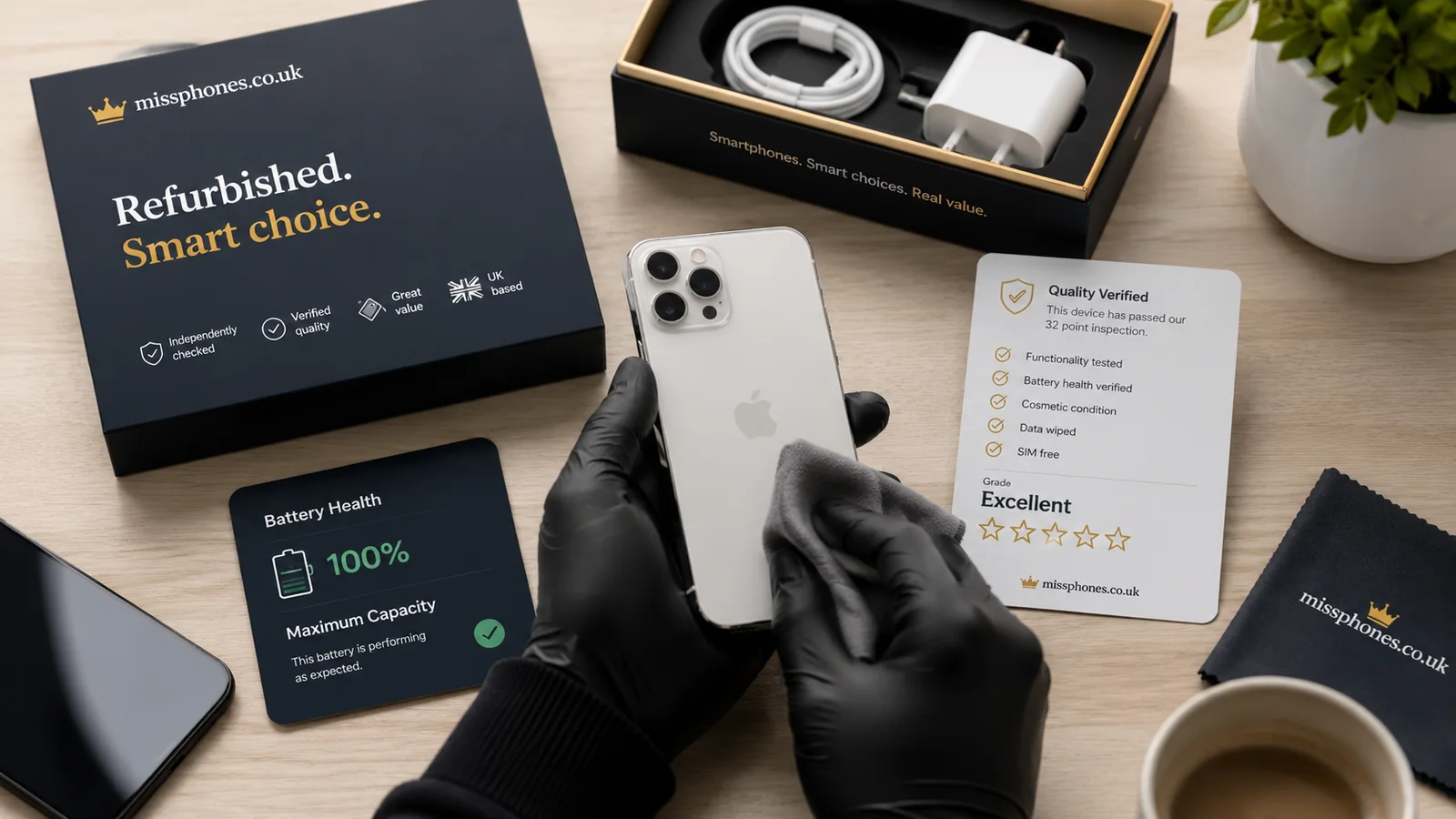
A refurbished phone can be a sensible way to buy a better device for less, but the word refurbished is not a quality guarantee. It tells you that the phone has had a previous life and has passed through a seller or refurbisher before being offered again. The value of the deal depends on what was checked, what was replaced, what evidence the seller provides and what protection you have if the phone is not as described.
In brief: choose the exact model first, then judge the seller, battery policy, repair history, condition description, returns and warranty. Treat the cosmetic grade as only one part of the decision.
What “refurbished” should mean in practice
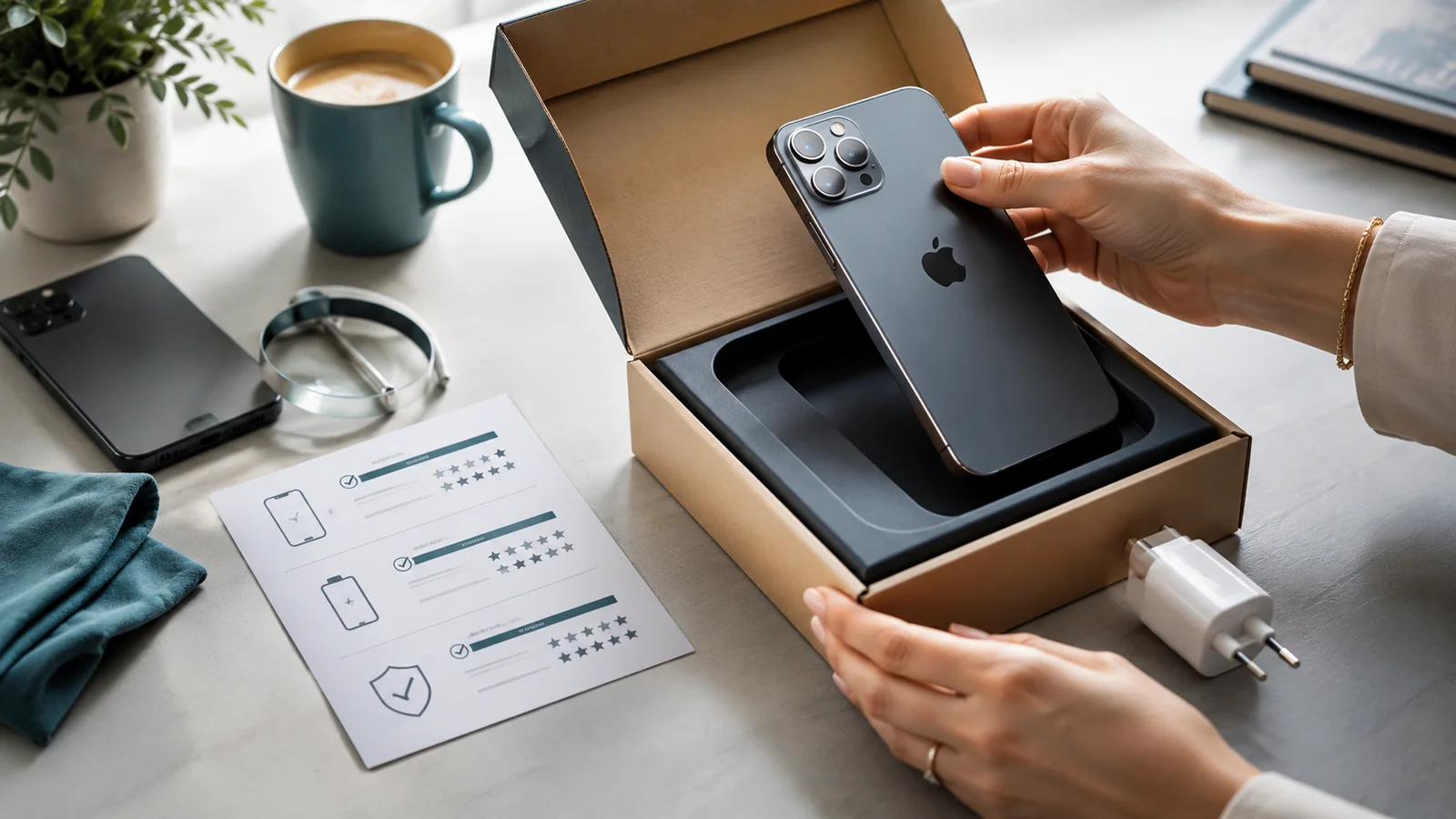
There is no single UK grading scale or universal refurbishment process for phones. One seller may perform a detailed functional test and replace failed parts; another may clean, reset and visually inspect the device. A phone returned shortly after purchase and a heavily used trade-in can therefore carry the same broad label.
Before comparing prices, find the seller's written answer to four questions. Our guide to where to buy refurbished phones in the UK explains how the main buying channels differ:
- Which functions are tested?
- When are batteries or other parts replaced?
- How is cosmetic condition graded?
- What happens if the phone arrives in a different condition?
If the listing does not explain the process, do not fill the gap with assumptions. A low price may still be worthwhile, but you should treat the phone as higher risk and price in a possible return or repair.
Refurbished, used and new: what you are paying for
| Buying route | What you normally receive | Main risk to check |
|---|---|---|
| New | An unused device sold through a retailer or manufacturer | Whether the model, support life and total cost justify the premium |
| Refurbished from a business | A previously owned or returned device sold after the seller's stated checks | The quality of those checks, the battery policy and the seller's after-sales support |
| Used from a business | A second-hand device that may have had limited preparation | What “used” includes and whether faults or wear are described clearly |
| Private sale | The phone in the condition agreed with the individual seller | Fewer consumer protections, account locks, undisclosed faults and weak evidence |
A refurbished phone from a trader is not automatically safer than every private sale, but a traceable business, written condition standard, practical returns route and meaningful warranty can reduce the risk.
Choose the model before choosing the condition grade
A pristine phone that is close to the end of its security-support period can be worse value than a visibly marked model with several years of support remaining. Check the exact model number and regional version, not just the product family.
For applicable consumer connectable products placed on the UK market, manufacturers must publish a minimum security-update period and an end date. Use that published period as a baseline, then check whether the particular model is still covered. Do not assume that every device from a brand receives the same support.
Also check:
- storage capacity and whether it can be expanded;
- network and SIM compatibility;
- availability and cost of battery and screen repairs;
- whether essential apps still support the operating system;
- the model's known limitations for cameras, charging or accessories.
Our guides to planning a phone's useful life and choosing storage cover these decisions in more detail.
Read the grade as a cosmetic description
Terms such as “Pristine”, “Excellent”, “Very Good” and “Grade A” are not interchangeable between sellers. Read the seller's own definition and save a copy of it with the listing. Check whether the grade covers only visible wear or also includes battery condition, screen defects and replaced parts.
A lower cosmetic grade can be excellent value where the marks are genuinely superficial. A deep screen scratch, bent frame, lifted display, cracked camera cover or damage around a port is different because it may affect function, sealing or future repairability.
Use our guide to refurbished phone grades and the comparison of cosmetic and functional damage before paying extra for a seller's highest label.
Set a battery rule before you shop
Battery condition should be disclosed separately from cosmetic grade. Ask whether the seller:
- provides a measured percentage, a diagnostic status or only a minimum promise;
- replaces batteries below a stated threshold;
- uses manufacturer, original-equipment or compatible replacement parts;
- covers the battery under the same warranty as the phone;
- will accept a return if real-world endurance is materially worse than described.
There is no universal “good” percentage for every phone. Apple publishes model-specific battery design references, while many Android phones do not expose a directly comparable percentage in normal settings. A practical test after delivery matters as much as the number. Our battery-health guide explains how to set a sensible threshold.
Check parts, locks and ownership barriers
A replaced part is not automatically bad. The important questions are what was replaced, whether the phone reports a warning, whether all features work and whether the seller explains the repair.
- On a supported iPhone, check Parts and Service History and ensure Activation Lock is removed.
- On Android, make sure the previous owner's Google account and any manufacturer account have been removed so that Factory Reset Protection does not block setup.
- Check the serial number and IMEI against the phone, invoice and listing where available.
- Ask about unexplained box or label mismatches rather than assuming they prove fraud.
- Test mobile service with your intended network where practical.
UK mobile providers have been prohibited from selling locked handsets since 17 December 2021, but older devices and phones sourced from other markets still deserve a compatibility check. An unlocked status also does not prove that the device is free from every ownership, finance or loss-related issue.
Judge the seller before the saving
Confirm the legal business name, contact details and return address. Check the Companies House register where the seller claims to be a UK company, but remember that registration only confirms public company information; it does not certify the quality of the phones.
Read the returns and warranty wording before purchase. Look for:
- who pays return postage;
- whether the seller requires prior authorisation;
- what the warranty excludes;
- whether battery degradation is treated separately;
- whether a repair, replacement or refund is offered;
- how long you have to report condition mismatch after delivery.
See how to check a refurbished seller for a full pre-purchase review.
Know the difference between changing your mind and reporting a fault
When you buy online from a UK trader, you normally have a statutory cancellation period for changing your mind. Faulty, misdescribed or unsatisfactory goods are handled under separate consumer-rights rules. A seller's commercial warranty sits alongside those statutory rights; it does not replace them.
Private sales are different. The description still matters, but you do not receive the same set of consumer remedies that applies when a trader sells to a consumer.
Read the refurbished-phone returns guide before buying, especially if the seller uses phrases such as “restocking fee”, “warranty only” or “no returns once activated”.
Inspect the phone while your options are clearest
Save the listing, grade definition, order confirmation and seller's battery promise. When the phone arrives:
- Photograph the parcel and device condition.
- Match the model, storage, serial number and IMEI.
- Check account and activation status.
- Test the display, touch, cameras, microphones, speakers, charging, buttons, biometrics and mobile connection.
- Install updates and observe battery drain, heat and stability during normal use.
- Report any mismatch promptly in writing.
The detailed arrival checklist helps you complete these tests without turning the phone into a fully personalised daily device before deciding whether to keep it.
A simple buying decision
| Buy | Pause and investigate | Walk away |
|---|---|---|
| Exact model and support period confirmed; seller is traceable; condition, battery and returns are clear | Vague repair history, unclear battery wording, unexplained identifier mismatch or a large saving with limited evidence | Account lock, pressure to pay outside the platform, no usable return route, undisclosed functional fault or seller identity that cannot be reconciled |
The best refurbished deal is not the phone with the highest cosmetic grade. It is the phone whose remaining useful life, condition and protections justify the price after you have allowed for likely battery or repair costs.