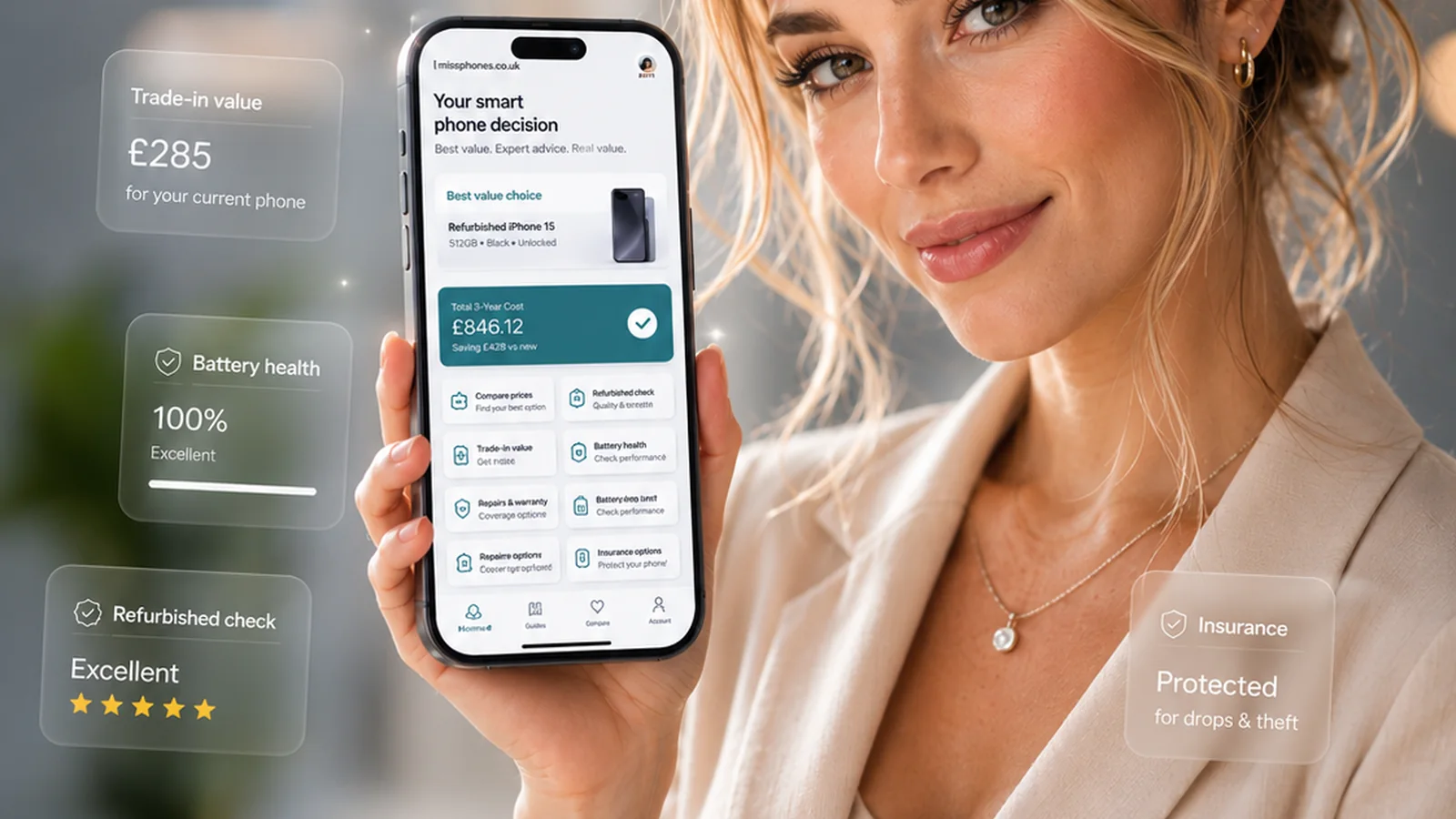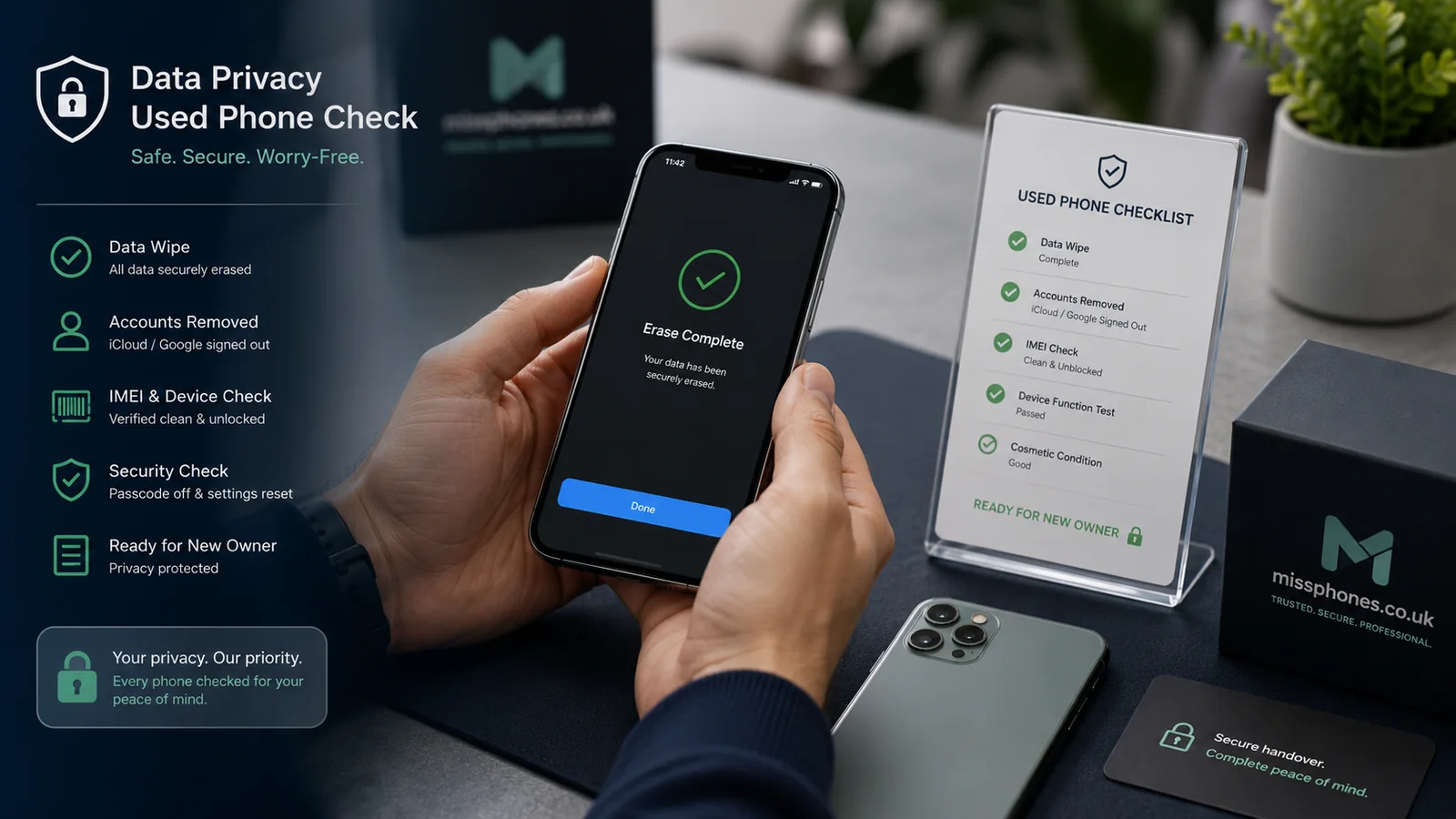
The seller matters at least as much as the phone. A refurbished handset can pass every initial test and still become a poor purchase if the business is difficult to identify, the battery promise is vague or the return process exists only in marketing copy.
In brief: verify who is selling the phone, read the exact condition and battery standards, inspect the return and warranty terms, and use a payment route that preserves useful evidence.
1. Identify the actual seller
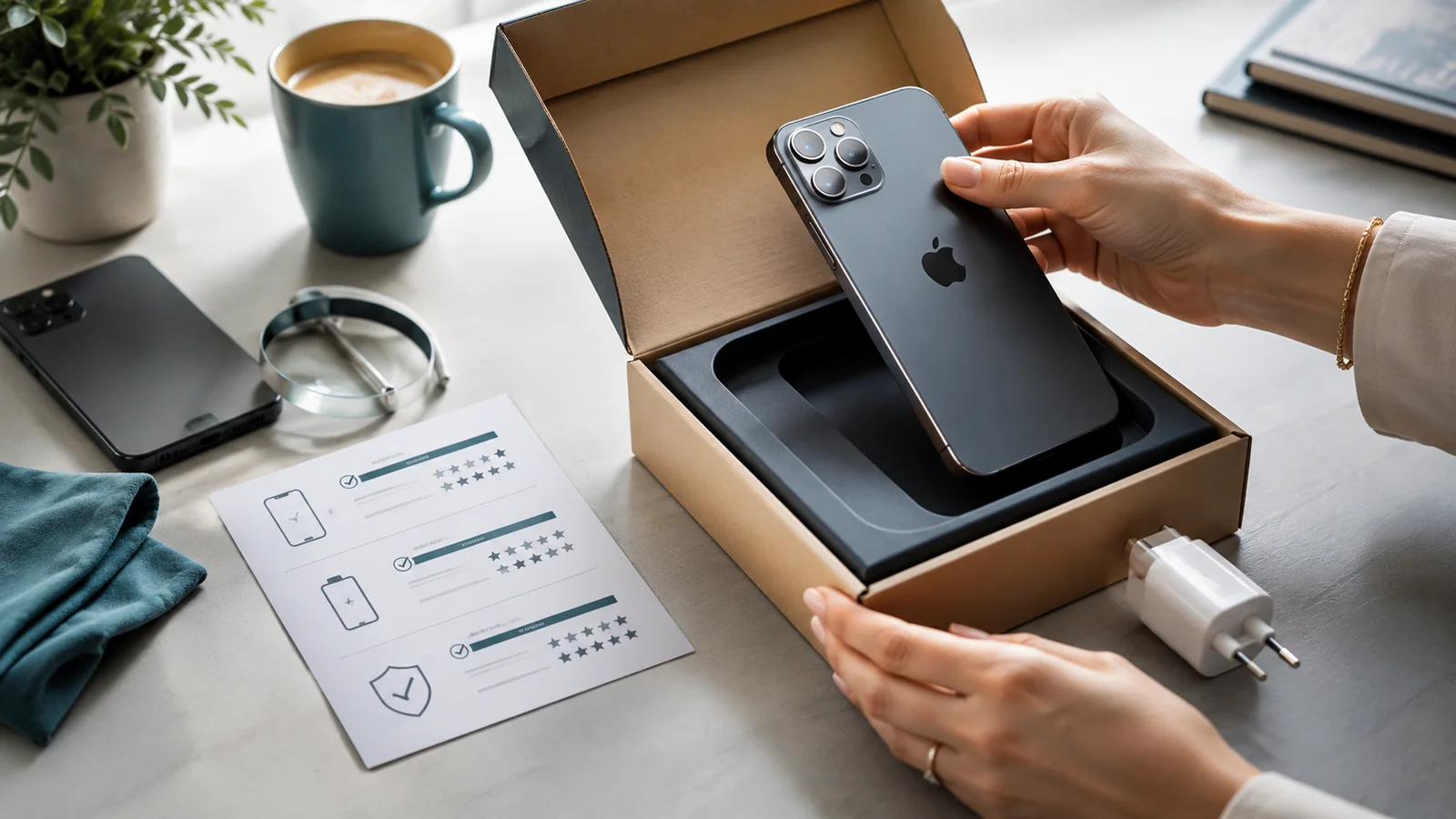
Do not stop at the website name or marketplace logo. Find:
- the legal business name;
- company number where the seller claims to be a UK company;
- geographic address;
- email and telephone contact;
- the name shown on the invoice and payment record;
- the return address and country.
On a marketplace, distinguish the platform from the third-party trader. Your order confirmation should make clear who has contracted to supply the phone.
Use the Companies House register to compare the company name, status, registered office and filing history. Registration is useful evidence of identity, but it is not a quality certificate and does not prove that the business trades from the registered office or provides good after-sales service.
2. Check whether the trading story is consistent
| Check | Reasonable sign | Warning sign |
|---|---|---|
| Names | Website, company, invoice and payment names are explained and consistent | Unrelated names with no explanation |
| Contact | Usable address, email and support route | Only a web form or social-media account |
| Returns | Clear address, steps, timescale and postage responsibility | Return details supplied only after payment or hidden behind approval |
| Stock | Exact models and grades with realistic availability | Large inventory at implausibly low prices and no individual detail |
| Claims | Specific test and battery standards | “Fully certified”, “as new” or “100-point checked” without explaining the test |
3. Read the refurbishment and grading standard
A competent seller should explain what it tests. Look for display, touch, cameras, microphones, speakers, charging, buttons, biometric security, wireless connections and mobile service. Ask whether the phone is tested after any repair, not only before it.
Read the seller's own grade definition. There is no universal meaning for “Excellent” or “Grade A”. Check whether the grade is cosmetic only and whether actual-device photographs are used.
Our guide to refurbished phone grades shows how to compare seller-defined labels.
4. Make the battery policy measurable
Weak wording includes “battery checked”, “good battery” and “holds charge”. Stronger wording explains:
- the minimum capacity or diagnostic status;
- when a battery is replaced;
- what kind of replacement may be used;
- whether the device can show a parts warning;
- how battery complaints are handled after delivery.
Do not expect every Android phone to show the same maximum-capacity percentage as an iPhone. The seller should describe a test appropriate to the model.
5. Read returns before warranty
Returns and warranty solve different problems. For an online purchase from a UK trader, statutory cancellation rights may allow you to change your mind within the relevant period. Separate rights apply where the phone is faulty, not of satisfactory quality or not as described.
A commercial warranty is an additional promise from the seller or another provider. Check:
- length and start date;
- covered parts;
- battery exclusions;
- accidental-damage and liquid exclusions;
- whether the seller chooses repair, replacement or refund;
- who pays postage;
- how many repair attempts may be made;
- whether opening the device elsewhere ends the cover.
Be cautious if a seller presents warranty wording as a replacement for statutory consumer rights. Read Can You Return a Refurbished Phone? before ordering.
6. Use reviews as evidence, not as a score
Look for patterns in recent, detailed reviews:
- condition not matching the advertised grade;
- battery below the stated minimum;
- account or activation locks;
- slow refunds;
- repeat repairs;
- difficulty obtaining a return label;
- seller responses that address the facts rather than blame the customer.
Also compare the risks in different refurbished buying channels and review the scams and deliberate warning signs that go beyond ordinary poor service.
A high average can hide a recurring after-sales problem. Equally, one angry review does not prove that every purchase is unsafe. Give more weight to repeated, specific complaints and how the business resolves them.
7. Check price and payment logic
Compare the exact model, storage, condition and warranty with several established sellers. A price below the market is not automatically fraudulent, but the saving should have an explanation such as lower cosmetic grade, shorter warranty, older stock or a limited battery promise.
Avoid pressure to pay by bank transfer, cryptocurrency, gift card or outside a marketplace's checkout. Preserve the listing, messages, invoice and payment record. Payment protections depend on the method and transaction structure, so do not rely on a logo alone.
8. Ask five questions before buying
- What exact tests were completed on this model?
- What battery result is guaranteed and how is it measured?
- Which parts may have been replaced?
- What happens if the grade or function does not match the listing?
- Where and how is the phone returned?
A seller that gives clear written answers is easier to assess than one that relies on badges and vague assurances.
Final decision
Use the full refurbished buying guide once the seller passes these checks. Walk away where identity, returns or phone condition cannot be reconciled before payment. The inconvenience of finding another seller is smaller than the risk of trying to enforce a vague promise after the phone fails.