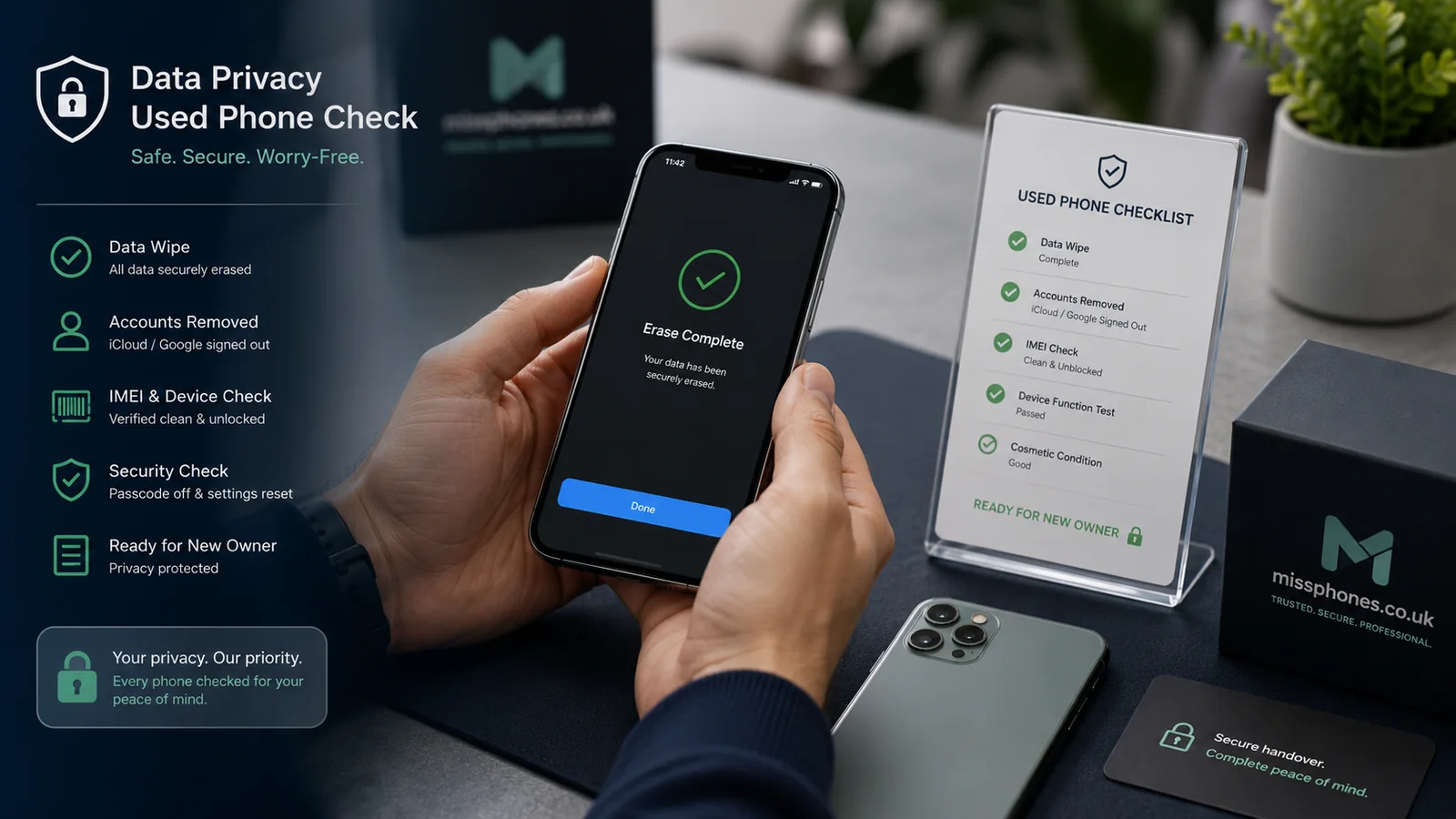
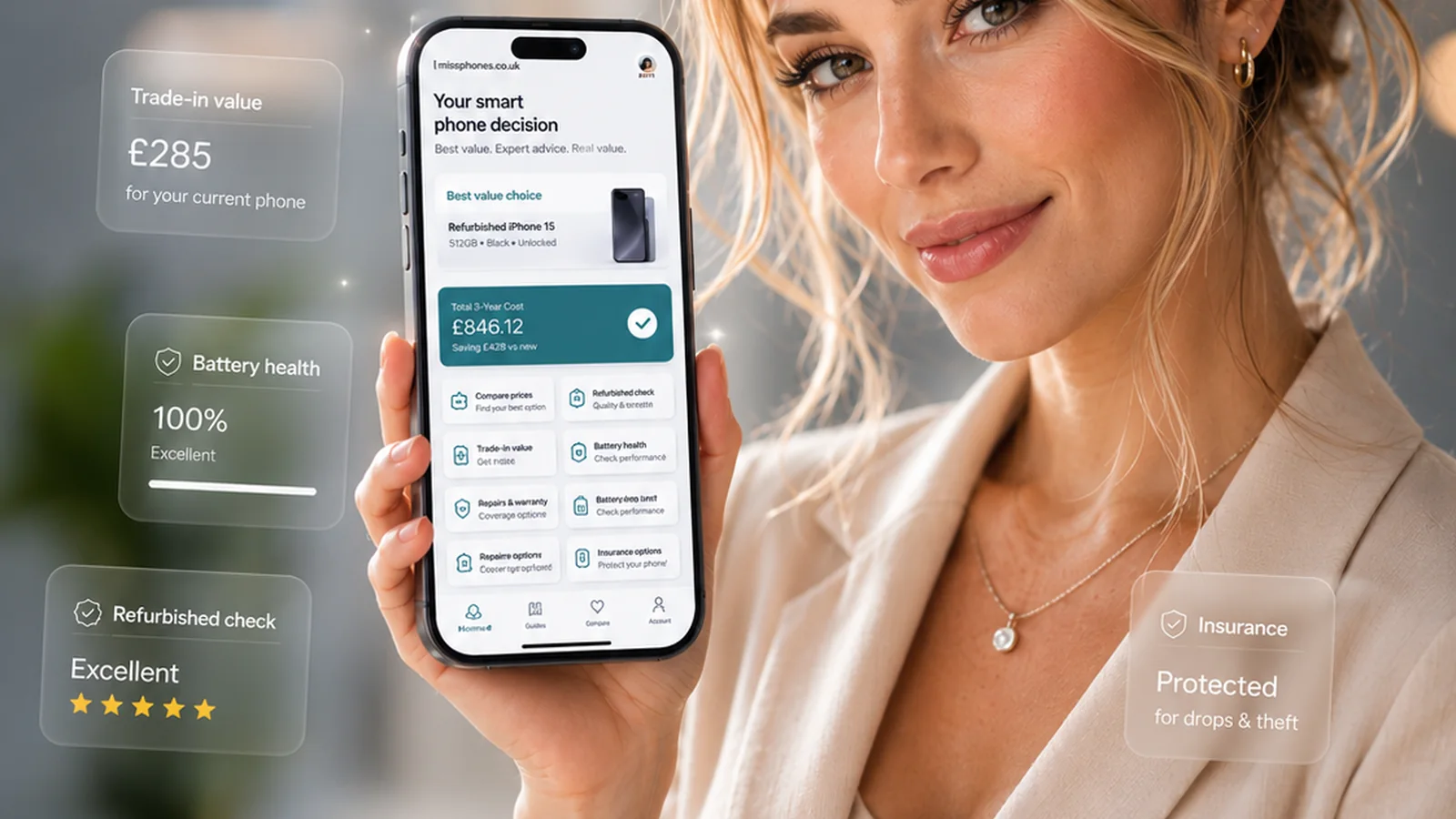
A refurbished-phone grade usually describes appearance, not the complete quality of the device. “Pristine”, “Excellent”, “Very Good”, “Good”, “Fair” and letter grades are seller-defined labels. They can help you compare two phones from the same seller, but they are unreliable for comparing different sellers unless you read each definition.
Practical rule: never pay for a grade name. Pay for the exact condition promised in writing, then check battery, parts, function, warranty and returns separately.
Why the same grade can mean different things
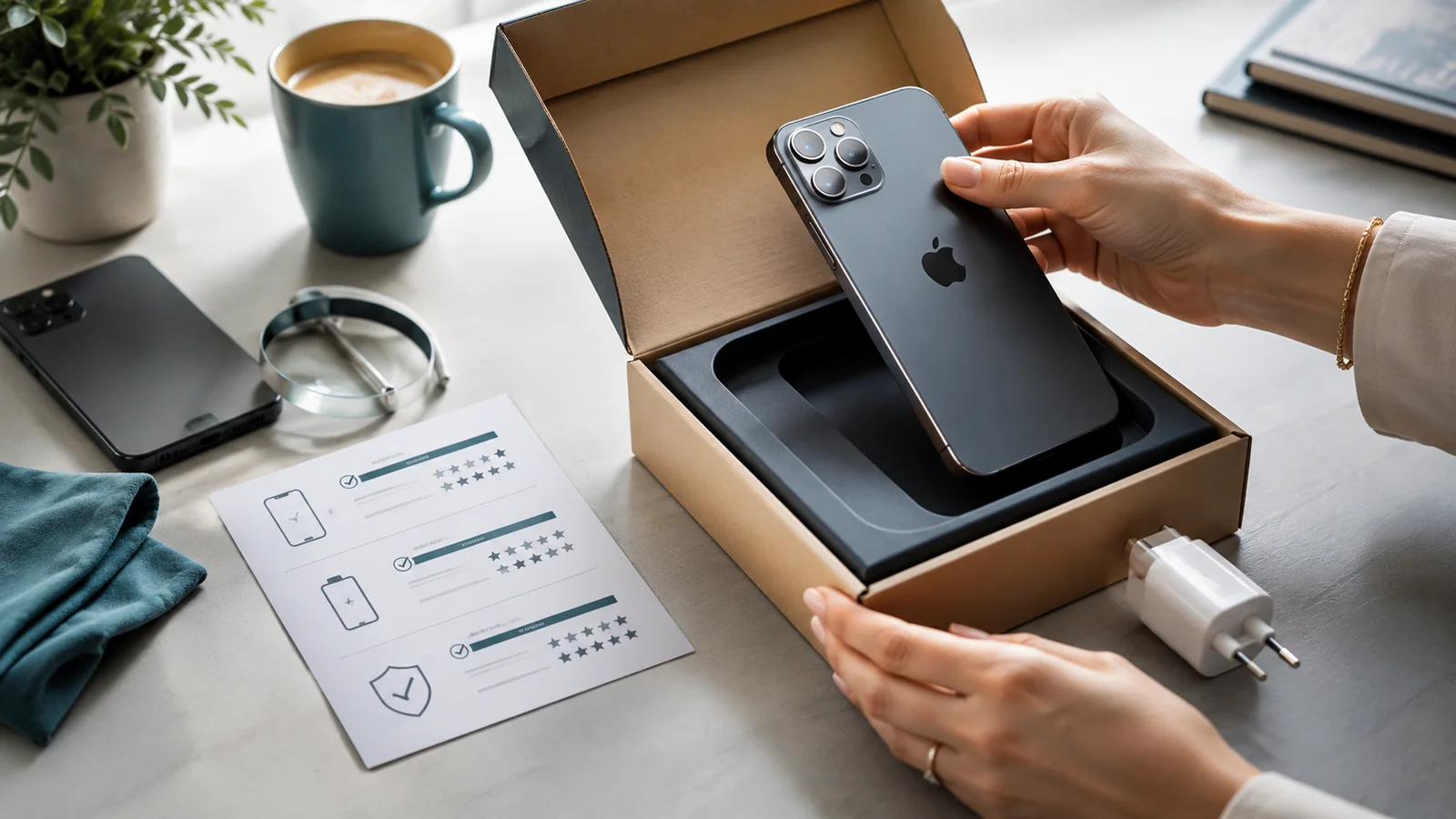
There is no universal UK grading scale for refurbished phones. Sellers choose their own labels, inspection rules and tolerance for wear. One seller's “Excellent” phone may allow visible frame marks; another may reserve that label for a nearly unmarked device. A letter grade can be equally ambiguous.
The useful information is not the label but the seller's condition definition. Save the listing and grade description at the time of purchase, because those words form the basis of what you reasonably expect to receive.
A safer way to read common grade labels
| Typical label | What it may indicate | What it does not prove |
|---|---|---|
| Pristine / Like New | Little or no visible wear under the seller's inspection standard | New battery, original parts, unused device or full manufacturer warranty |
| Excellent / Grade A | Light wear that should not dominate normal use | A universal scratch limit or better internal condition than a lower grade |
| Very Good / Grade B | Visible but moderate cosmetic wear | That the screen is free from all marks or the frame has never been repaired |
| Good / Fair / Grade C | More obvious scratches, scuffs or dents | That every mark is harmless or that functional defects are acceptable |
This table is an editorial interpretation, not an industry standard. The seller's current written definition takes priority.
Check what the grade actually covers
Look for clear answers to these questions:
- Is the screen graded separately from the frame and rear panel?
- Are scratches assessed with the screen on, off or both?
- Can the grade include dents, chips or cracks?
- Are camera lenses and charging ports included?
- Does the listing use stock photographs or images of the actual phone?
- Does the grade say anything about battery capacity or replaced parts?
If the seller uses stock photographs, the written grade definition matters even more. An image of a flawless sample does not necessarily describe the individual device you will receive.
Separate cosmetic wear from functional risk
Some wear is primarily visual: fine marks on a frame, light rear-panel scuffs or small finish chips away from openings. Other damage deserves investigation because it can indicate impact, pressure, poor repair or moisture exposure.
| Finding | Why it matters |
|---|---|
| Deep display scratch or chip | Can affect viewing, touch comfort, crack resistance and resale value |
| Bent frame or uneven gap | May indicate impact, internal stress or an incorrectly reseated display |
| Lifted screen or rear panel | Can indicate adhesive failure, previous repair or battery swelling |
| Cracked camera cover | Can affect image quality and allow contamination around the camera assembly |
| Damage around a charging port or buttons | May turn a cosmetic-looking mark into an intermittent functional fault |
Our guide to cosmetic and functional damage explains how to judge these signs.
Battery condition is not a cosmetic grade
A visually pristine phone can have a heavily aged battery, while a marked phone can have a recently replaced one. Check the seller's battery promise separately.
Ask whether the promise is:
- a minimum measured capacity;
- a diagnostic status such as “Normal” or “Good”;
- a real-world endurance test;
- replacement below a stated threshold;
- or simply a statement that the phone powers on.
There is no universal battery-health display across Android devices, and percentages from different systems are not necessarily directly comparable. See how much battery health is acceptable before deciding whether a higher cosmetic grade justifies a higher price.
Parts and refurbishment history need their own evidence
A grade normally does not tell you whether the display, battery, camera, housing or charging port has been replaced. A replacement part is not automatically poor quality, but the seller should not imply that an extensively repaired phone is untouched.
- Ask which parts, if any, were replaced.
- Check whether the phone reports a parts or calibration warning.
- Test features linked to the replaced component.
- Do not assume the original water-resistance rating remains intact after opening or impact.
- Check how a third-party repair affects the seller's warranty.
On supported iPhones, Parts and Service History can show information about replaced components. The wording and components shown depend on the model and software version.
Warranty and returns do not rise automatically with grade
A higher cosmetic grade does not necessarily provide a longer warranty, better battery cover or easier return. Read those terms independently.
When a UK trader sells a refurbished phone to a consumer, the phone must still meet the applicable requirements to be of satisfactory quality, fit for purpose and as described. What counts as satisfactory takes account of the description, price and other relevant circumstances; a lower grade does not excuse an undisclosed functional fault.
For an online purchase, the statutory cancellation rules for changing your mind are separate from remedies for faulty or misdescribed goods. Read the refurbished returns guide before assuming a seller's “no returns” line settles the matter.
Compare two offers properly
When two phones carry different grades, compare:
- exact model, storage and regional variant;
- seller-specific cosmetic definition;
- battery promise and replacement history;
- parts disclosure and test coverage;
- warranty exclusions;
- return route and postage;
- total price after accessories or a likely battery replacement.
A £30 saving on a lower grade can be sensible if the difference is a harmless frame mark. It is poor value if the lower price hides a weak battery, deep screen damage or an unclear return process.
Check the grade immediately after delivery
Photograph the phone under good light before fitting a case or screen protector. Compare each side with the listing and grade definition. Report discrepancies promptly and keep the packaging, order record and photographs.
Use the full refurbished-phone arrival checklist to test condition and function while your return options are clearest.