Yes, a refurbished phone can be returned in many circumstances, but the route depends on who sold it, how you bought it and why you want to send it back. Changing your mind is not the same as rejecting a phone that is faulty or not as described.
This is general UK consumer information, not legal advice. Keep the listing, order record and all messages because the exact facts and contract matter.
First identify the seller and reason
| Situation | Main issue to consider |
|---|---|
| Online purchase from a trader; you changed your mind | Distance-sale cancellation rules and the condition in which the phone is returned |
| Purchase from a trader; phone is faulty or misdescribed | Consumer Rights Act remedies |
| Purchase in a shop; you changed your mind | The retailer's voluntary returns policy, unless another right applies |
| Private purchase | The agreed description, misrepresentation and evidence; trader protections do not apply in the same way |
Changing your mind after an online purchase
For most goods bought at a distance from a trader, the consumer normally has 14 days after delivery to tell the trader that they are cancelling. After notifying the trader, there is normally a further 14 days to send the goods back.
The seller should provide information about the right to cancel, the return process and who pays the return cost. The rules contain exceptions, so use the seller's current instructions and the official guidance for your situation.
Opening the parcel and carrying out the kind of inspection reasonably needed to establish the phone's nature, characteristics and function does not automatically remove the right to cancel. However, the trader may be able to deduct for diminished value where handling goes beyond what would reasonably be allowed in a shop.
Restocking fees and deductions
An arbitrary cancellation or restocking fee should not be confused with a lawful deduction for diminished value. Under the distance-sale rules, the relevant question is whether your handling went beyond what was necessary to inspect the item and reduced its value.
To reduce disputes:
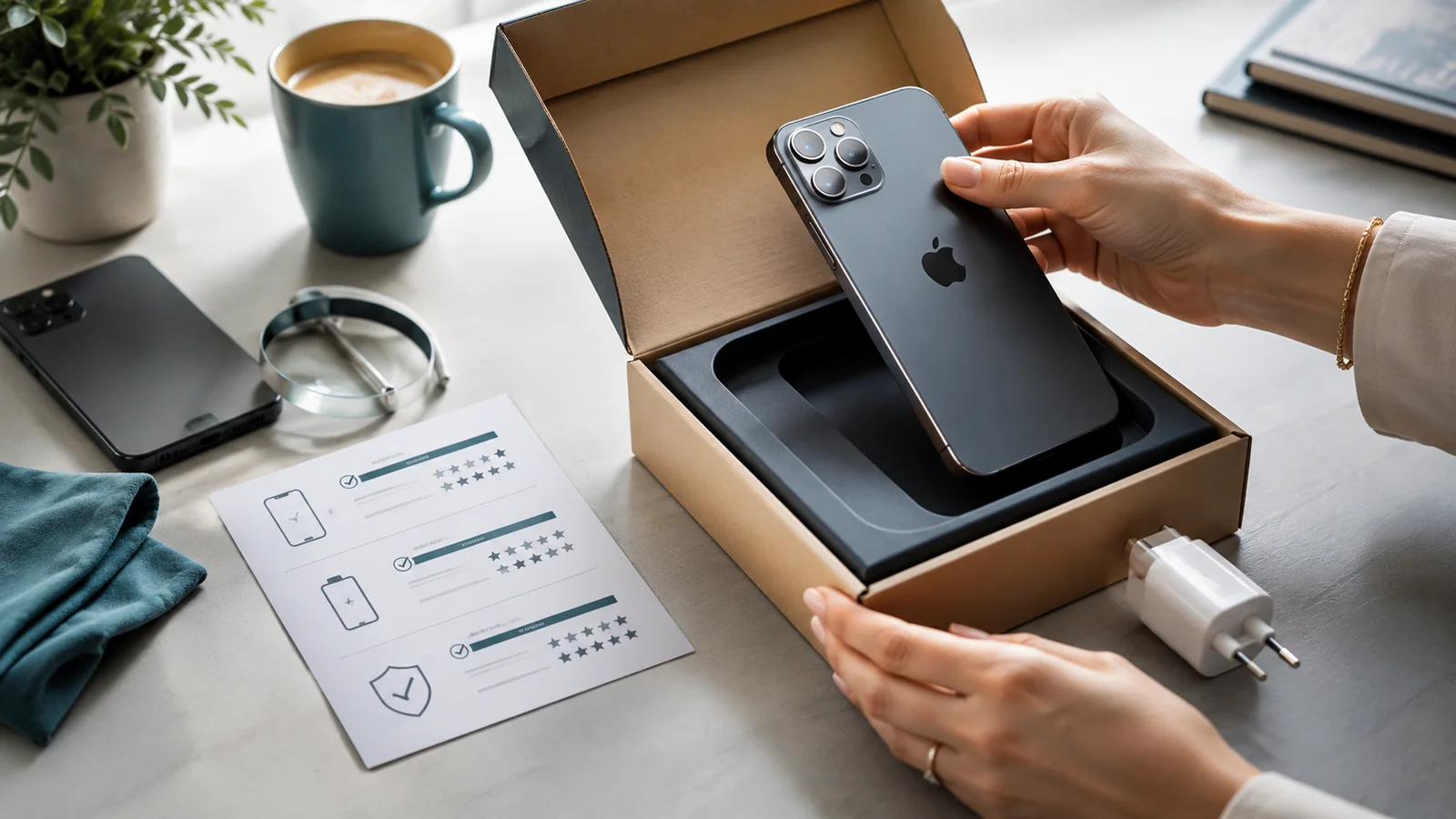
- keep the phone, packaging and accessories clean and complete;
- do not damage protective films unnecessarily;
- avoid long-term use while deciding;
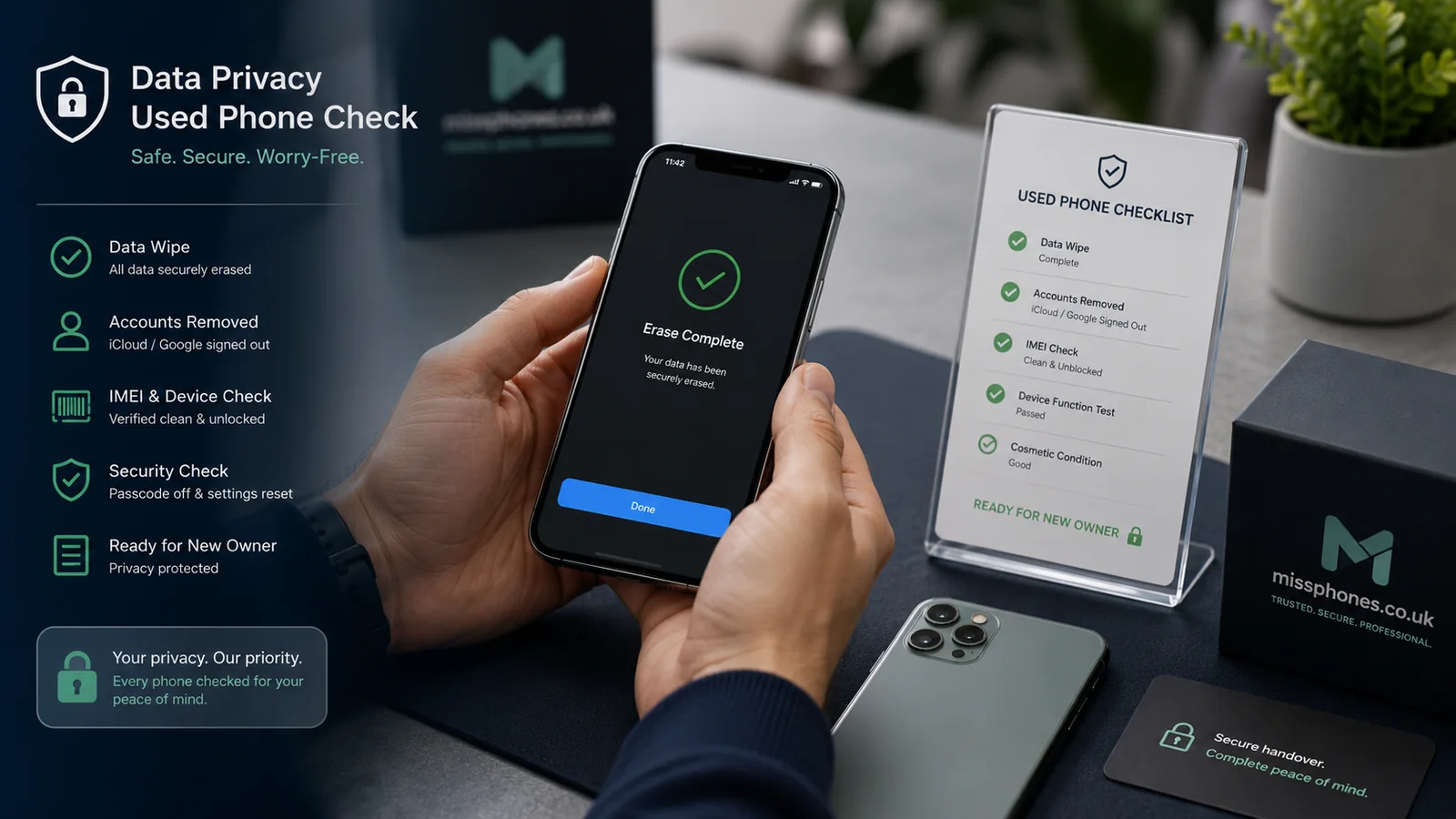
- remove your accounts and personal data correctly;
- photograph the condition before returning it;
- use the seller's documented return route.
When the phone is faulty or not as described
When a trader supplies a phone, the Consumer Rights Act 2015 requires applicable goods to be of satisfactory quality, fit for a particular purpose made known to the trader and as described. The assessment of satisfactory quality can take account of the phone's age, price, grade, description and other relevant circumstances.
A lower cosmetic grade does not excuse:
- an undisclosed functional fault;
- a materially weaker battery than the seller promised;
- the wrong model or storage capacity;
- an account lock that prevents normal use;
- damage outside the advertised grade;
- missing items expressly included in the sale.
The short-term right to reject
The Consumer Rights Act provides a short-term right to reject goods that do not conform to the contract. The normal time limit is 30 days, subject to the detailed rules and any period paused by an agreed repair or replacement.
After the short-term period, repair or replacement will often be the first statutory remedy before a price reduction or final rejection, depending on the circumstances. Do not let a commercial warranty obscure the statutory route: the warranty is additional and has its own terms.
What if the seller says the fault is normal wear?
Return to the saved description. A refurbished phone is judged in context, but the seller must describe material limitations clearly. A “Good” grade may reasonably include stated scratches. It does not automatically include random shutdowns, failed cameras, a non-working charging port or a battery below a written minimum.
Use photographs, video, diagnostic screens and a clear timeline. Avoid broad statements such as “the phone is terrible”; identify the exact promise and the exact mismatch.
Who pays return postage?
For a change-of-mind return, the consumer may need to pay return costs where the trader provided the required information. For faulty or misdescribed goods, the statutory position can be different and the trader may be responsible for reasonable return costs. Check the applicable rule and ask the seller for a prepaid, trackable method where appropriate.
How to make the return safely
- Contact the seller in writing and state whether you are cancelling or reporting non-conforming goods.
- Record the order number, serial number and IMEI.
- Photograph the phone and accessories.
- Back up your data and remove your accounts and activation locks.
- Factory-reset the phone only after preserving evidence of the fault where needed.
- Package it securely and follow battery-posting requirements from the chosen carrier.
- Use tracked delivery and retain proof, unless the seller arranges collection.
Private sellers are different
The same statutory cancellation and trader remedies do not automatically apply to a genuine private sale. The description and any representations remain important. If a private seller falsely describes the model, ownership status or condition, preserve the evidence and seek appropriate advice, but do not assume the trader-return process applies.
Before buying
Check the seller with our seller-review guide, save the exact grade definition, and use the arrival checklist as soon as the parcel arrives.
Official sources to verify current terms: Can You Return a Refurbished Phone?
- GOV.UK: online and distance selling
- Consumer Contracts Regulations 2013
- Consumer Contracts Regulations: reimbursement and diminished value
- Consumer Rights Act: satisfactory quality
- Consumer Rights Act: as described
- Consumer Rights Act: time limit for short-term rejection
- Consumer Rights Act: repair or replacement