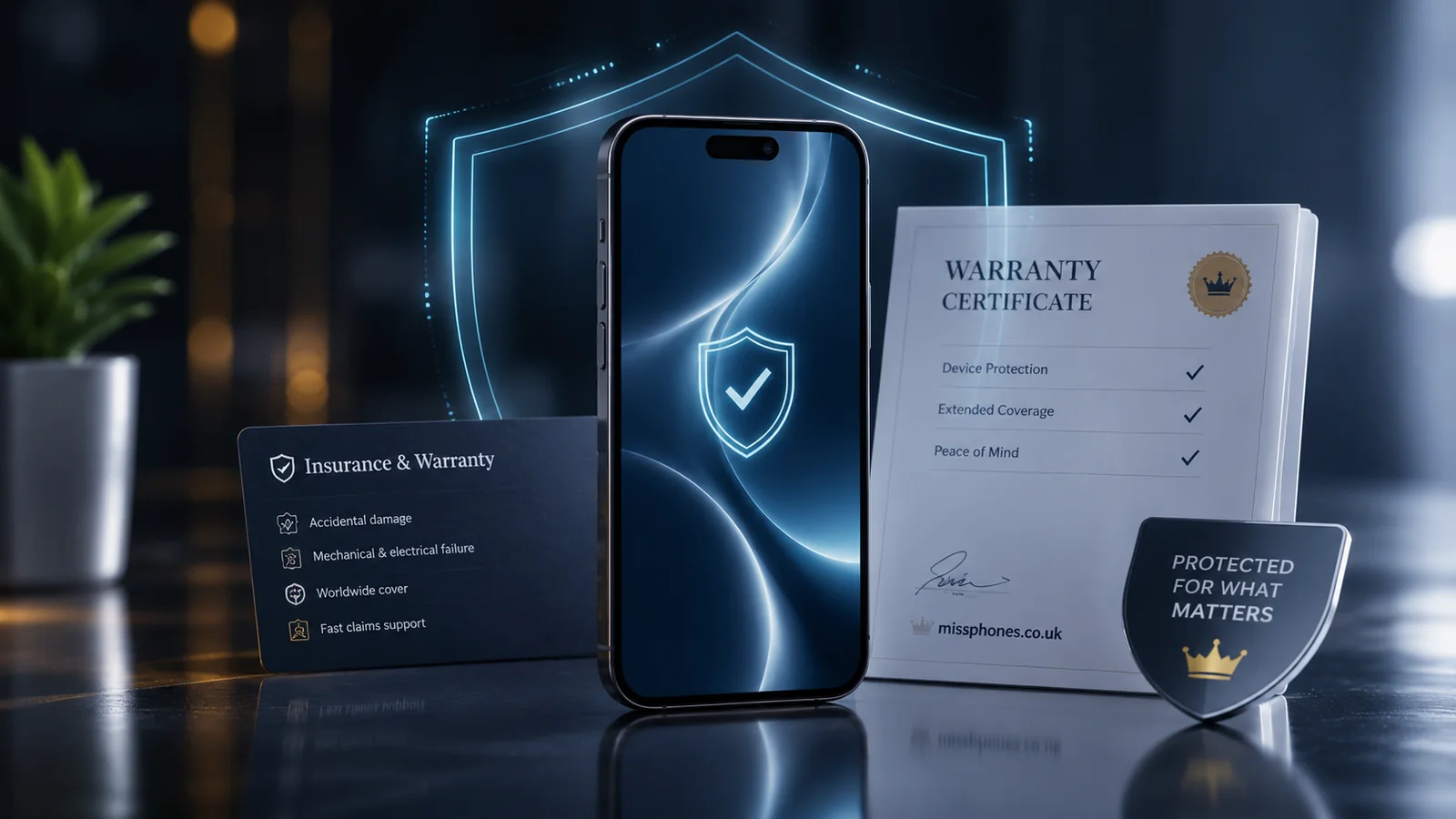
Phone insurance is useful only when the insured events, excess and remedy match the risk you actually need to transfer. A policy name or monthly price is not enough to judge value.
Choose by risk
- Accidental damage: drops, impact or other sudden incidents, subject to the policy definition.
- Liquid damage: may be included under accidental damage, separately listed or excluded.
- Theft: usually requires circumstances consistent with the policy and may require a police report.
- Loss: must be expressly covered; theft cover does not automatically include an unexplained disappearance.
- Breakdown: may begin only after a manufacturer warranty or may be excluded entirely.
Four common ways to obtain cover
| Route | Potential strength | Main check |
|---|---|---|
| Stand-alone policy | Designed specifically for gadgets | Insurer, administrator, excess and replacement wording |
| Packaged bank account | May cover several household benefits for one fee | Eligibility, registration, account fee and who is covered |
| Home contents policy | Can combine household risks | Personal possessions away from home, excess and claims impact |
| Retailer or network policy | Convenient at purchase | Cooling-off rights, total premium and remedy quality |
The policy documents that matter
Do not rely only on a sales page. Save the Insurance Product Information Document, full policy wording, schedule and confirmation of any registered device. Identify the insurer, not just the brand selling or administering the cover, and check the firm on the Financial Services Register.
Value is more than premium
Compare the full expected cost: premium over the ownership period, excess for the most likely claim, uncovered accessories, postage, replacement condition and the time you may be without the device. A low premium with a high excess and narrow remedy can be poor value.
Start with the event you need covered
Compare routes in Types of Phone Insurance, then test the policy against Phone Insurance Exclusions to Watch For.
Eligibility can remove cover before a claim begins
Policies may restrict the phone’s age, maximum value, purchase source or condition at the start of cover. Some require proof that the device was bought new or refurbished from a recognised business; others can cover a second-hand phone if ownership and condition are evidenced. Check whether cover begins immediately and whether an inspection, registration or waiting period applies.
Understand claim limits
A policy can limit the number of successful claims, the total value paid in a year or the maximum replacement value for one device. A family policy may share a limit across several phones. These limits matter more than a broad statement such as “unlimited cover”.
Check what happens after a total loss
If the insurer replaces the phone or pays cash, ask whether the damaged device becomes its property, whether premiums continue and whether the replacement is automatically covered. Confirm what happens to any finance agreement: an insurance settlement does not normally erase money still owed to a lender or network.
Cancellation and renewal
Record the cooling-off period, cancellation method, refund calculation and renewal arrangement. A monthly premium does not always mean a policy can be stopped without consequences at any moment, and annual cover paid monthly may still be an annual contract. Read the current terms rather than inferring the contract structure from the payment frequency.