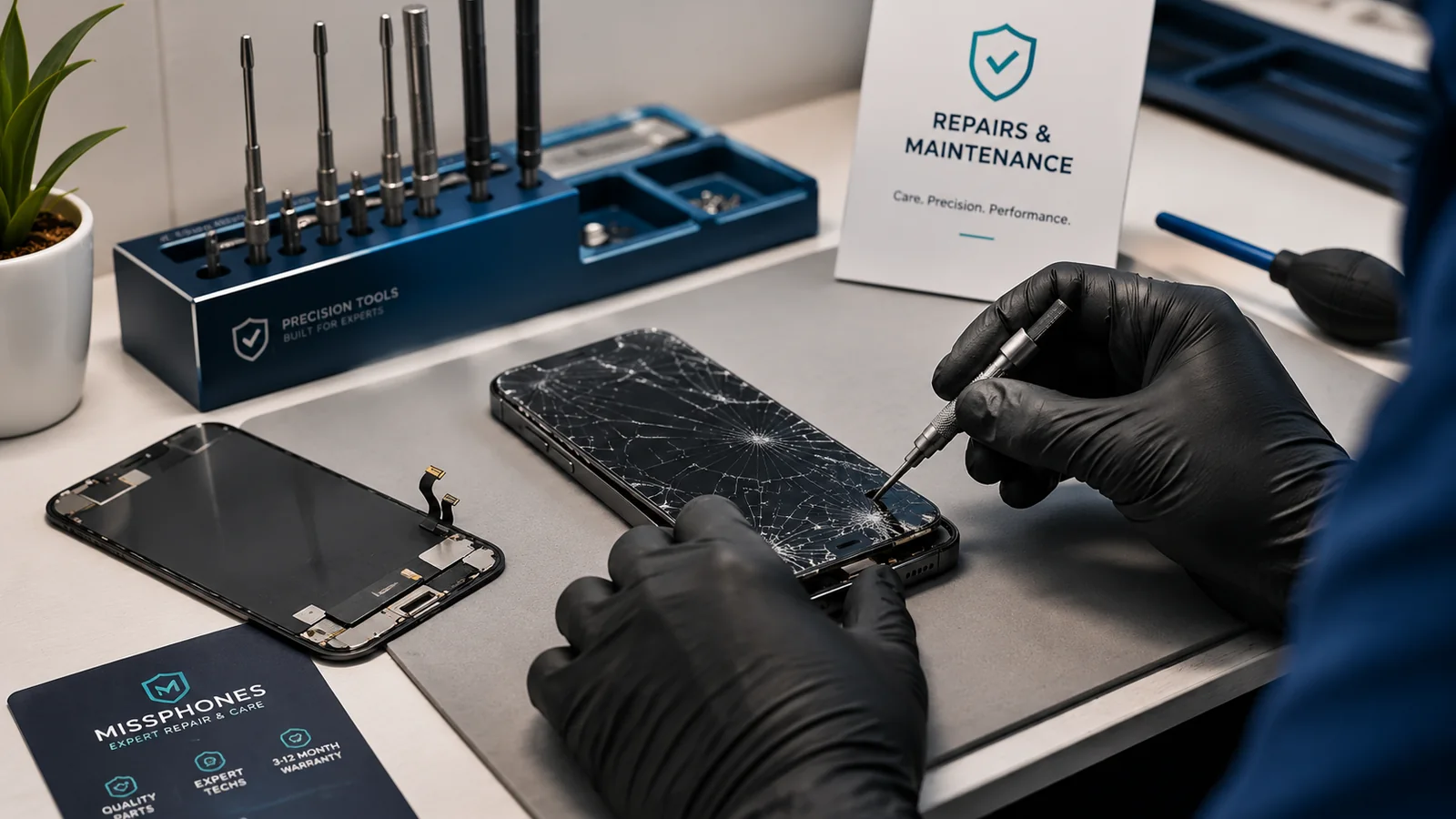
Opening a sealed phone can affect its resistance to water and dust. A competent repair may replace adhesive and test the device, but the original IP rating was established under controlled conditions and is not a permanent guarantee.
Water resistance is already variable
Manufacturers state that splash, water and dust resistance can decrease through normal wear. Drops, frame distortion, heat, previous opening and ageing seals can change the position before any battery replacement begins.
Ask what the repairer actually does
- Are the old seals and adhesive removed and replaced?
- Is the frame checked for distortion?
- Is any pressure or sealing test performed?
- Will the result be recorded?
- Does the repairer provide a written water-resistance warranty, or only say the phone is “resealed”?
“Resealed” does not automatically mean the original IP certification has been recreated.
Manufacturer and independent routes
An authorised route may follow the manufacturer's defined procedure and use recognised parts. An independent can also perform careful sealing work, but its process and warranty must be checked. Neither route should be described as making an ageing phone permanently waterproof.
How to behave after repair
Treat the phone as vulnerable to liquid unless the repair documentation gives a clear, credible commitment. Avoid deliberate immersion, do not charge while wet and maintain backups. If water resistance is essential for work or accessibility, discuss that requirement before authorising the repair.
Insurance and warranty
Check whether the repair affects manufacturer warranty, care plan or insurance terms. Liquid damage may remain excluded even after an authorised repair and even where the phone has an IP rating.
Pressure testing has limits
A repairer may use a pressure or seal test, but ask what it measures and whether the result is documented. Passing an in-shop test does not recreate every original laboratory condition or guarantee survival in salt water, steam, soap or repeated immersion.
Frame condition can prevent a reliable seal
Adhesive alone cannot compensate for a bent frame, cracked back or damaged screen edge. If the chassis is distorted, ask whether additional parts are required and whether the repairer will decline any water-resistance claim.
Check the wording on the invoice
Record whether it says “adhesive replaced”, “resealed”, “tested” or provides an actual warranty. These phrases are not interchangeable. A future buyer or insurer may ask what work was performed.
Choose based on exposure, not marketing
If the phone is regularly used outdoors, around water or for navigation in heavy rain, uncertain sealing has greater practical cost than for a device kept mostly indoors. Include that exposure in the repair-versus-replacement decision.
Related guidance: Use Cost of Ownership to choose the right route. The Smartphone Cost of Ownership Guide provides the full checklist for comparing the available options.
Sources and fact-checking
Facts checked: 25 July 2026. Repair prices, parts policies and warranty terms can change. Check the exact model and current written terms before acting.