Most bad refurbished-phone purchases do not begin with an obscure technical failure. They begin with a vague listing, an assumption about what “refurbished” means or a saving that distracts from battery, support life and returns.
1. Treating “refurbished” as a standard
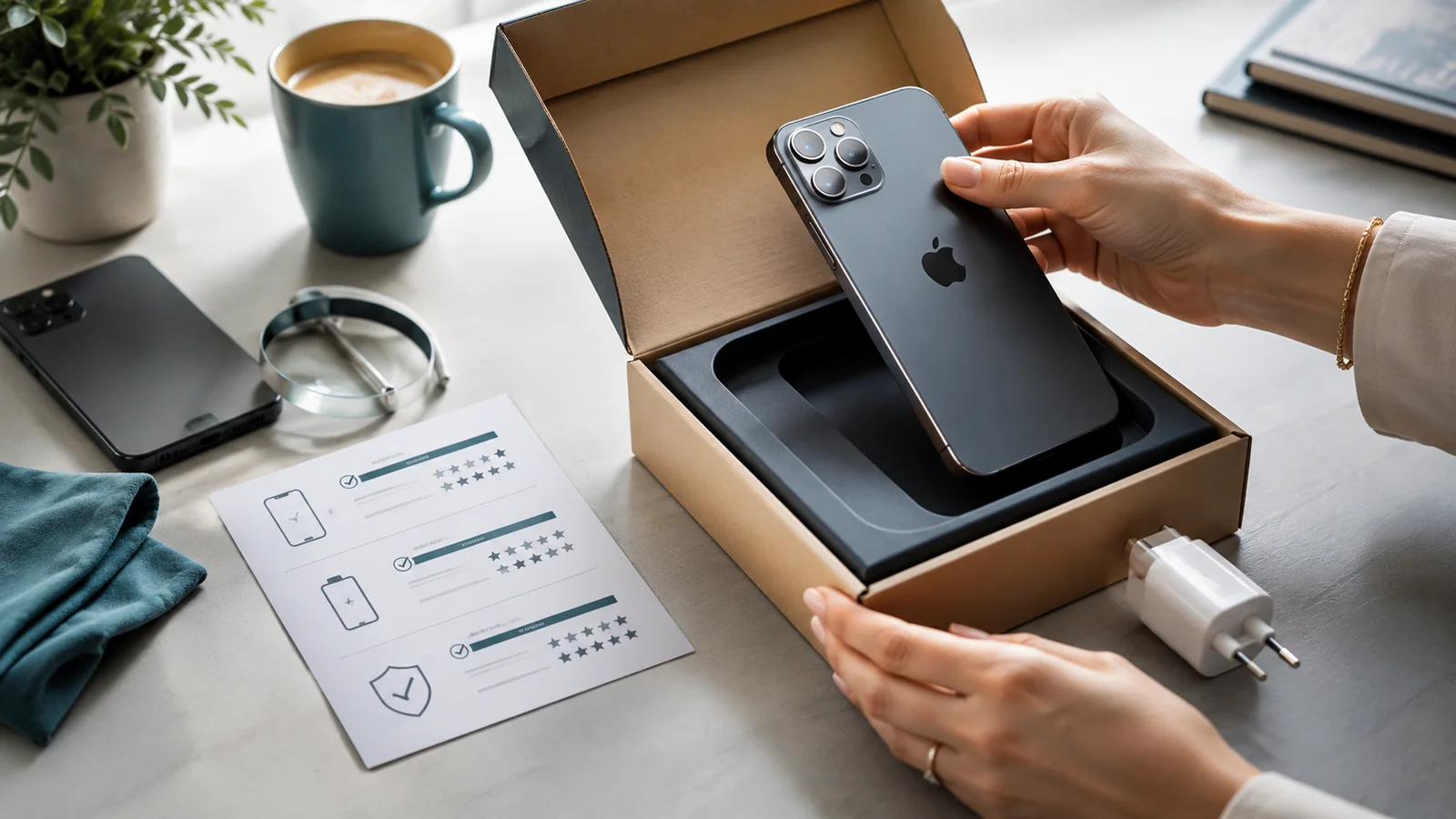
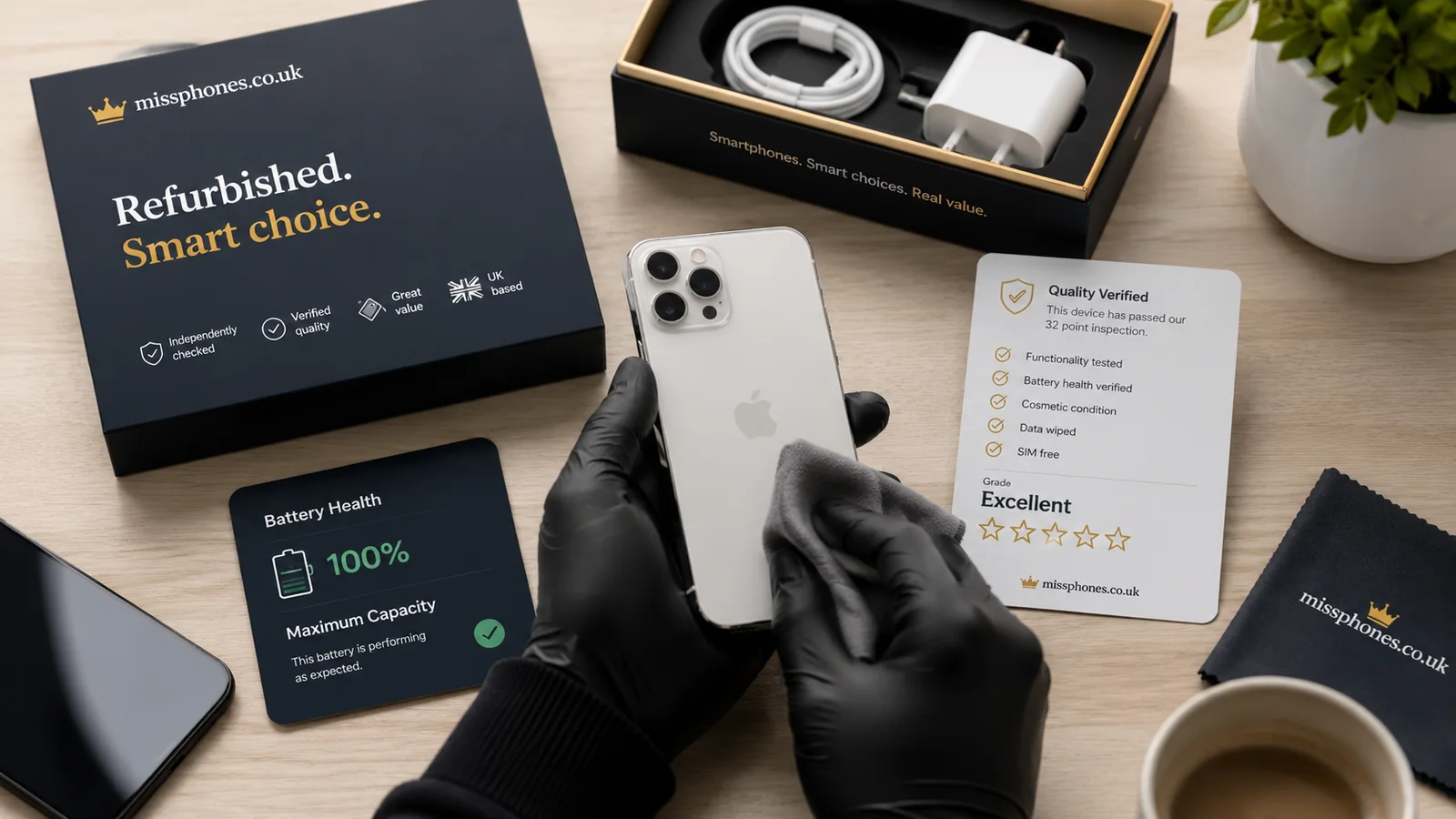
The label does not tell you which tests were completed, which parts were replaced or how the phone's condition was judged. Read the seller's refurbishment process and save it with the order.
2. Comparing grade names across sellers
“Excellent” at one retailer may permit more wear than “Good” elsewhere. Compare the written definitions, not the labels. The article on refurbished grades explains what to separate from cosmetic condition.
3. Choosing appearance before useful life
A flawless older phone can be close to the end of security support. Check the exact model's published update period, repair options and app compatibility before paying more for appearance.
4. Accepting “battery tested” without a threshold
A phone can power on and still have poor endurance. Ask what battery result is guaranteed, how it is measured and what happens if the device arrives below it. Use the battery-health guide to set your own buying rule.
5. Assuming a high battery percentage proves a healthy phone
A percentage is an estimate. It does not rule out heat, shutdowns, poor calibration, heavy drain or an unverified replacement. Combine the reading with practical use and parts information.
6. Ignoring parts and repair history
A replaced display or battery is not automatically a reason to reject the phone. The mistake is buying without knowing what changed, whether the phone reports a warning and whether linked features work correctly.
7. Believing a clean IMEI check guarantees everything
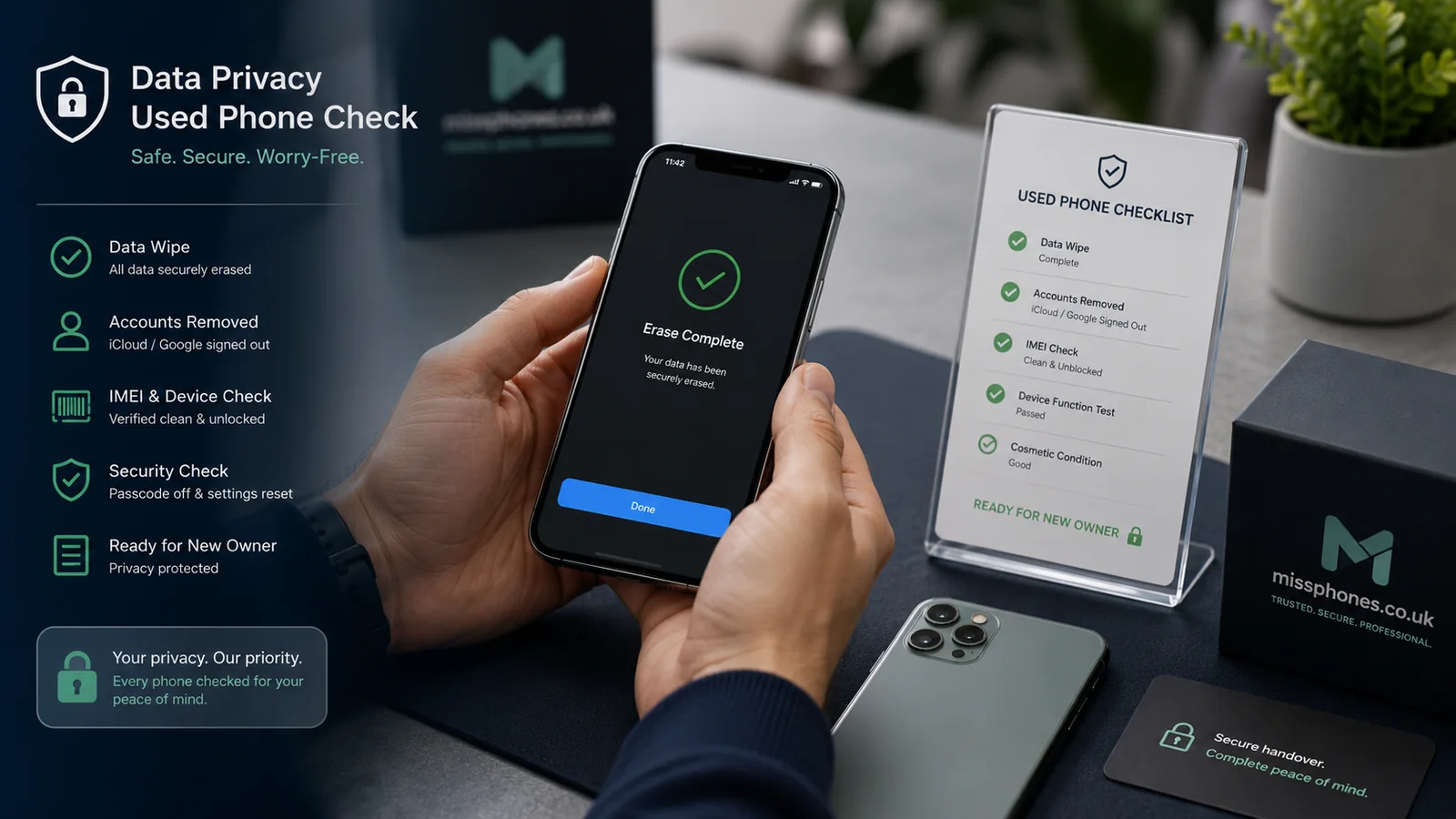
An identifier check can be useful evidence, but it cannot prove lawful ownership, future network status, absence of every finance issue or removal of account locks. Match identifiers, inspect the invoice and complete device-specific activation checks.
8. Confusing warranty with consumer rights
A warranty is a contractual promise with its own exclusions. It does not replace statutory rights where a trader supplies goods that are faulty, unsatisfactory or not as described. Read the remedy and postage terms rather than comparing warranty length alone.
9. Reading the returns policy after delivery
Before paying, establish:
- where the phone must be returned;
- who pays postage;
- whether prior authorisation is required;
- how condition mismatch should be reported;
- whether the seller claims a restocking fee;
- how refunds are processed.
For a UK trader's distance sale, arbitrary restocking fees should not be confused with a possible deduction for handling that goes beyond what is necessary to inspect the goods.
10. Buying from the platform name instead of the actual seller
A marketplace may host many independent traders. Check the legal seller on the listing, invoice and payment record. The platform's reputation does not automatically transfer to every seller.
11. Paying outside the normal checkout
A request to move the conversation or payment away from the platform can remove useful evidence and protections. Keep the listing, messages and payment trail together.
12. Fitting accessories and transferring everything before testing
Inspect the phone first. Photograph its condition, check identifiers and activation, test major functions, install updates and observe battery behaviour before making it your fully configured daily device.
13. Accepting damage that does not match the grade
Do not let “it is refurbished” become an excuse for undisclosed wear or a functional fault. Compare the actual phone with the saved listing. Deep scratches, bent frames, lifted screens and damaged ports deserve more attention than ordinary surface marks.
14. Waiting too long to report a problem
Document discrepancies as soon as you find them. Contact the seller in writing and preserve photographs, diagnostic screens and the packaging. Delay can make a simple condition dispute harder to evidence.
A safer buying routine
| Before payment | On arrival | If something is wrong |
|---|---|---|
| Verify seller, model, grade, battery promise, parts, returns and warranty | Photograph, match identifiers, clear account locks and test all major functions | Stop personalising the phone, save evidence and contact the seller promptly in writing |
Where the warning signs suggest deliberate deception rather than a weak process, read Refurbished Phone Scams to Watch For.
Use the complete refurbished buying guide for the full decision and the arrival checklist once the parcel is delivered.