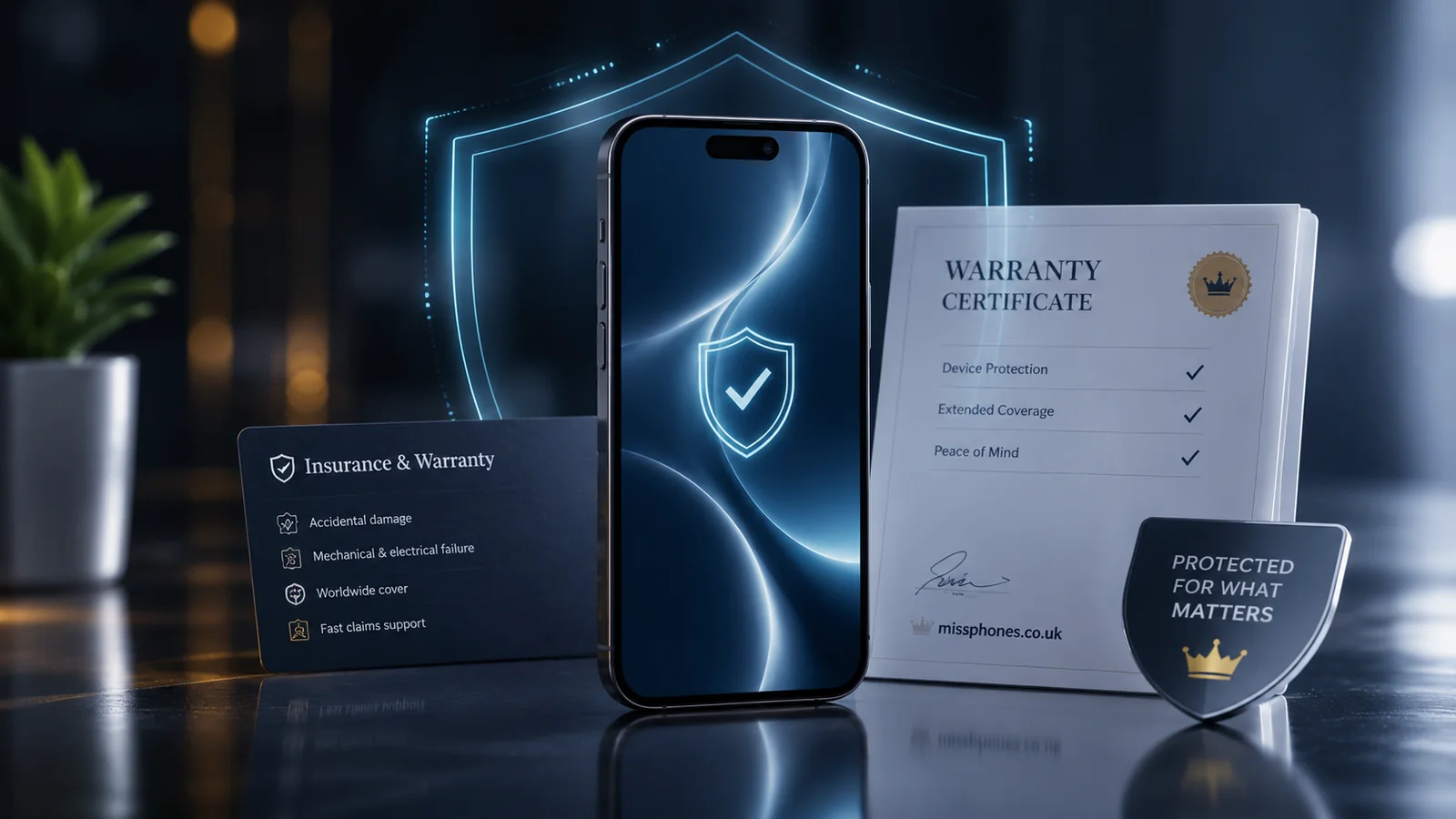
Warranty protects against certain faults; insurance protects against selected insured events. Neither is a universal promise to replace a phone. The useful comparison is the event covered, the evidence required and the total cost of the remedy.
Insurance, warranty and consumer rights compared
| Route | Typical purpose | Common limitations | Who handles it? |
|---|---|---|---|
| Manufacturer warranty | Defects covered by the manufacturer’s terms | Time limit, excluded damage, authorised repair requirements | Manufacturer or authorised service partner |
| Seller warranty | Additional promise from the retailer or refurbisher | May differ from manufacturer cover; read battery and parts clauses | Seller or its repair partner |
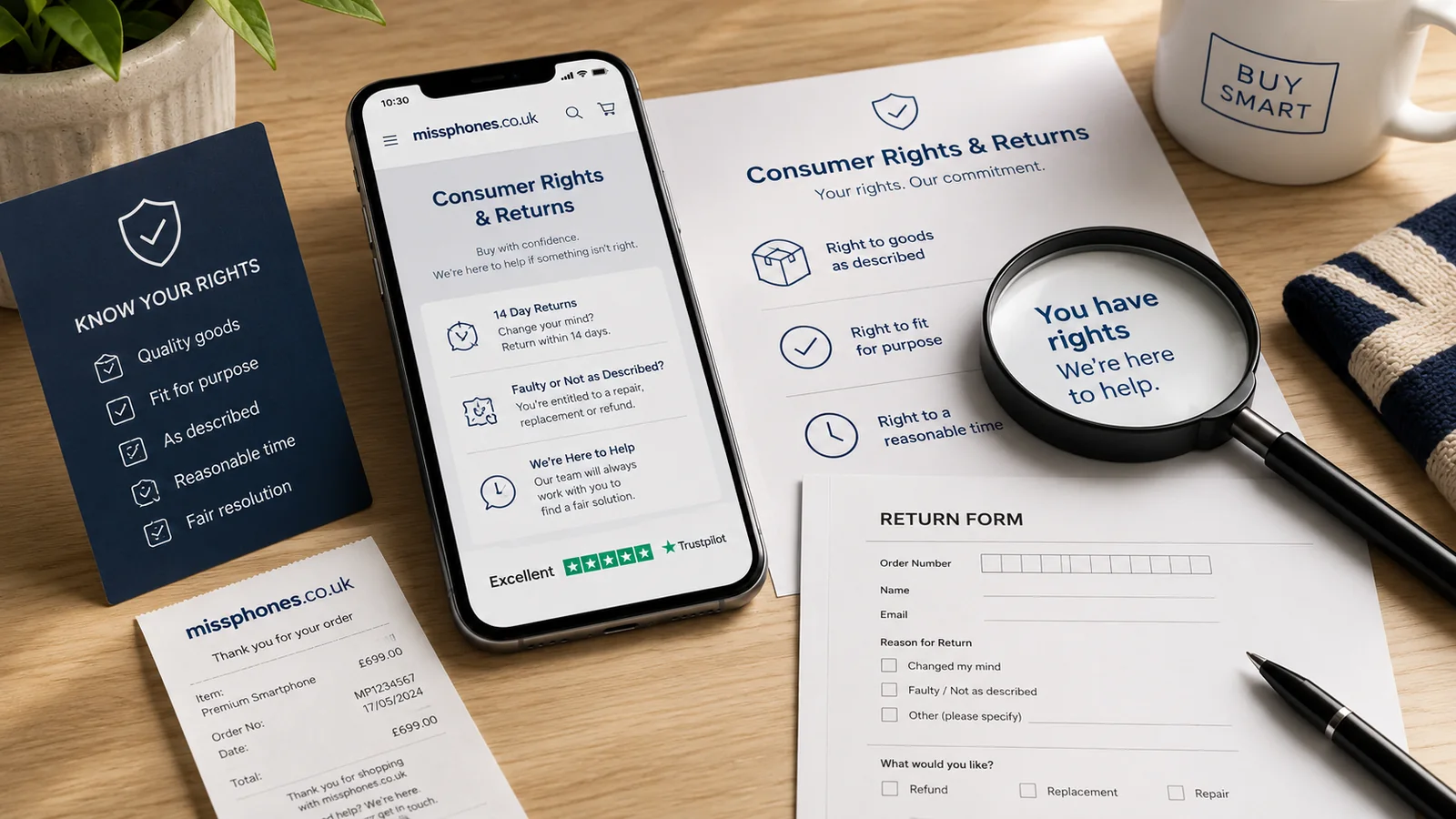
| Consumer rights | Goods that were not of satisfactory quality, fit for purpose or as described | Remedy and evidence depend on timing and circumstances | The trader that sold the phone |
| Insurance | Selected events such as accidental damage, theft or loss | Excess, exclusions, claim limits, eligibility and evidence | Insurer, administrator or claims partner |
Map the gaps before buying cover
Start with what you already have. A manufacturer warranty may cover defects. A packaged bank account may include phone insurance. Home contents insurance may cover theft at home and, if selected, personal possessions away from home. A retailer or network may offer an optional policy. Paying twice does not normally produce two full settlements for the same loss.
Calculate the real insurance cost
Illustrative figures only — not a current quote.
A policy at £10 a month for 24 months costs £240 in premiums. If the excess for accidental damage is £100, one accepted claim has cost £340 before considering any uncovered postage, temporary phone or loss of no-claims benefit. Compare that figure with a credible repair price and the cost of holding an emergency fund.
Read the small print in this order
- Events covered: damage, breakdown, liquid, loss and theft.
- Events excluded: unattended property, cosmetic damage, wear, prior faults and prohibited use.
- Eligibility: phone age, purchase source, ownership, UK residency and registration requirements.
- Claim cost: excess, premium continuation, delivery and any contribution to replacement.
- Remedy: repair, refurbished replacement, equivalent device or cash settlement.
- Evidence and deadlines: receipt, IMEI, police reference, network block and prompt notification.
When both insurance and warranty may matter
A new phone can have a manufacturer warranty for defects and insurance for accidental damage or theft. That does not mean every problem is covered. A cracked screen may be an insurance event, while random shutdowns may be a warranty or retailer-rights issue. Liquid damage discovered during a warranty inspection can complicate a fault claim even if the reported fault appears unrelated.
When self-insurance is rational
Holding money in an emergency fund can be sensible when the phone is inexpensive to replace, the excess is high, you already have overlapping cover or you can tolerate temporary loss. It is less comfortable when replacement would disrupt work, accessibility, authentication or family responsibilities.
Choose the correct protection route
Use Is Phone Insurance Worth It? to test value, Phone Insurance Exclusions to Watch For to read the policy and What Does a Phone Warranty Cover? for faults.
Work through a real scenario
Suppose a two-year-old phone suddenly stops charging. There is no visible impact or liquid exposure. Before paying an insurance excess, check whether the issue could be a covered fault under a retailer or manufacturer route. Now change the facts: the charging port was damaged when the cable was pulled sharply. That is more likely to be treated as accidental damage, subject to the policy. The same symptom can therefore lead to a different route because the cause matters.
Check ownership and purchase evidence
Insurance and warranty providers can ask who owns the phone, who bought it and whether it came from an eligible seller. This becomes important for gifts, family phones, second-hand purchases and devices supplied through work. Keep the invoice, order confirmation, IMEI and any document showing transfer of ownership. Do not assume that a policy covering “your phone” automatically covers every handset used by the household.
Compare the quality of the remedy
A successful claim can still produce a poor practical outcome if the remedy is unclear. Check whether the provider may repair the phone, supply a refurbished equivalent or make a cash settlement. Ask about storage capacity, colour, battery condition, remaining warranty, water-resistance claims and the standard of replacement parts. “Equivalent” need not mean a factory-new device or the newest version of the same model.
Plan for data and authentication
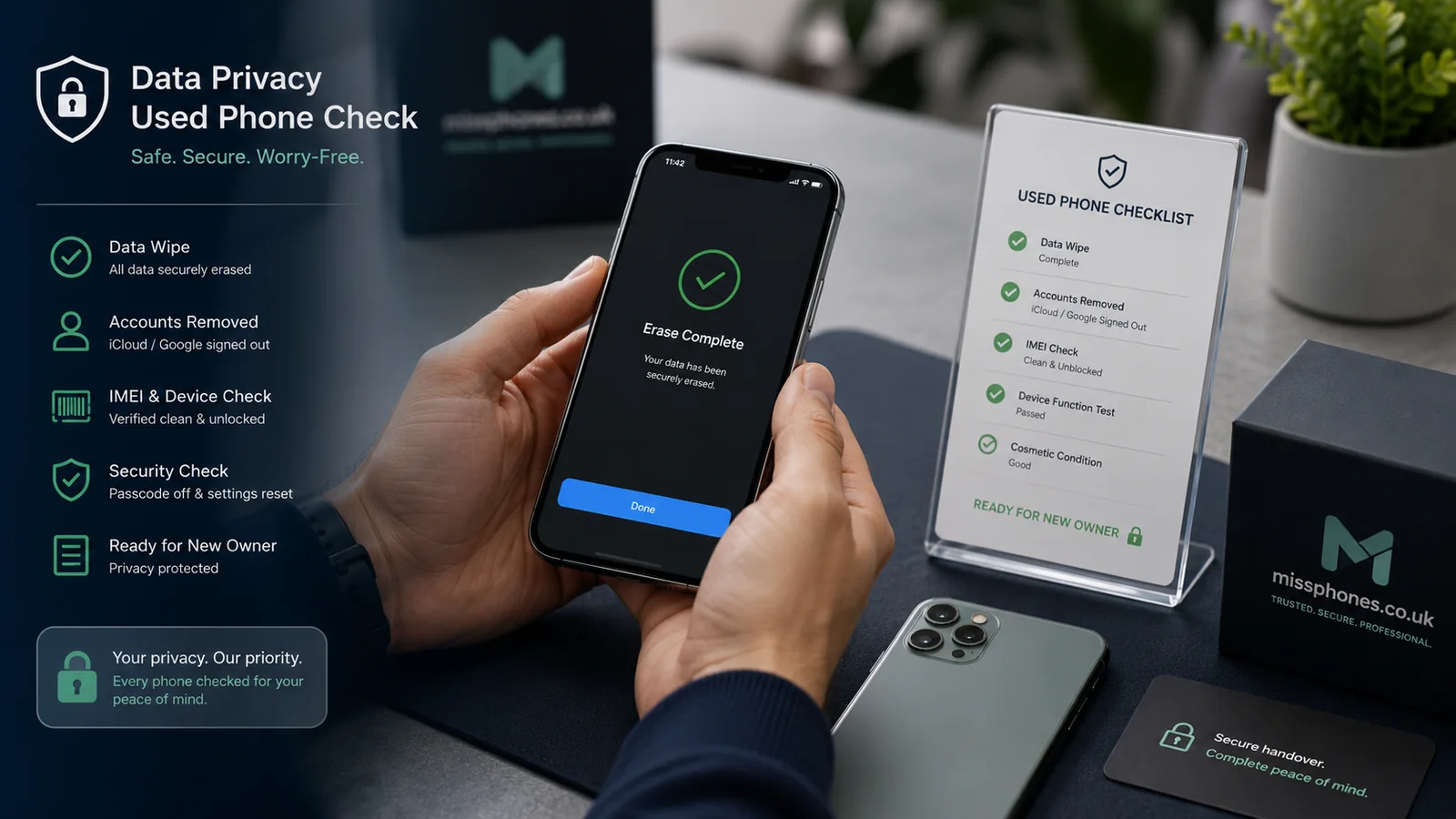
Neither insurance nor warranty normally restores personal data. Before a problem occurs, maintain backups and recovery methods for banking, email and two-factor authentication. When sending a phone away, record its condition, follow account-removal instructions and understand whether the repair process may erase it. Do not share passwords simply because a courier or repair partner asks informally.
Complaint routes are different
An insurance complaint normally follows the financial business’s formal process and may later be eligible for the Financial Ombudsman Service. A dispute about faulty goods is usually with the trader. A complaint about poor repair work may involve the repairer’s service obligations. Address the complaint to the organisation responsible for the disputed decision rather than copying the same message to every company.