An accessory has value when it reduces a larger expected cost or materially improves daily use. Price alone does not establish either.
Use an avoided-cost test
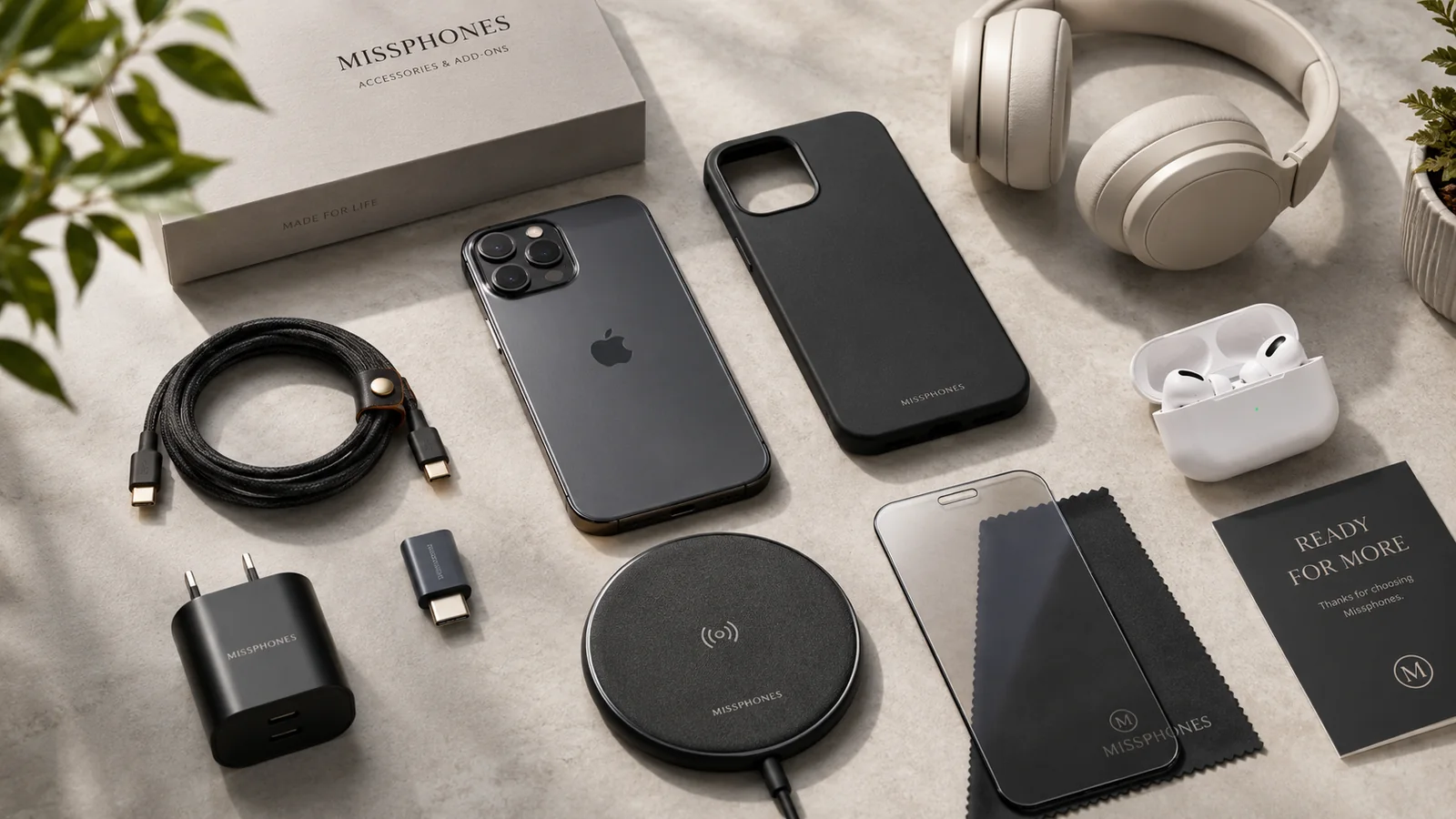
| Purchase | Potential value question |
|---|---|
| Case | Does it materially reduce the chance or severity of an expensive drop? |
| Screen protector | Is scratch exposure high enough to justify replacements? |
| Quality charger | Will it safely serve several devices and ownership cycles? |
| Power bank | Does it solve frequent lack of power rather than occasional anxiety? |
| Specialist mount | Does it improve safe use in a real routine? |
Accessory Costs and Value: illustrative comparison
A £28 case used for three years costs about 78p a month. A £65 premium case replaced after one year costs far more without necessarily providing proportionally greater protection. These figures are illustrative.
Include inconvenience and compatibility
A cheaper cable that charges slowly, cannot carry required data or fails during travel can have poor practical value. Conversely, paying for maximum specification is wasteful when the phone cannot use it.
Resale value is secondary
Accessories can help preserve condition, but rarely recover their full cost at resale. Buy them for protection and use, not as an investment.
Use a break-even question
If a case costs £35 and is expected to reduce the chance or severity of a £250 repair, the purchase may be rational even though no saving is guaranteed. If a cosmetic accessory costs £70 and offers no identified functional benefit, it belongs in discretionary spending.
Value the seller and warranty
Two visually identical products can have different value when one has a traceable supplier, accurate specification and workable remedy. The cheapest listing is not the cheapest outcome if failure leaves no recourse.
Related decisions around Accessory Costs and Value
- Accessory Costs Over Time
- How Much to Spend
Useful official references: Accessory Costs and Value
Before deciding on Accessory Costs and Value
- Safety before marginal savings:for powered accessories, use reputable products with clear specifications and appropriate UK compliance information; in Accessory Costs and Value, do not treat an unknown high-wattage claim as proof of quality.
- Protect the expensive failure modes:spend first on the accessory that reduces the most likely costly damage for your use: drop protection, screen protection, safe charging or weather protection; apply this point to the accessory costs value question.
- Avoid duplicate spending:check what is already supplied with the phone and what you already own; the cheapest accessory may be the one you do not need to replace or buy twice before applying it to this particular case.
- Compatibility first:match the exact phone model, connector, charging standard, dimensions and any case or screen-protector interaction before buying in the context of this page.