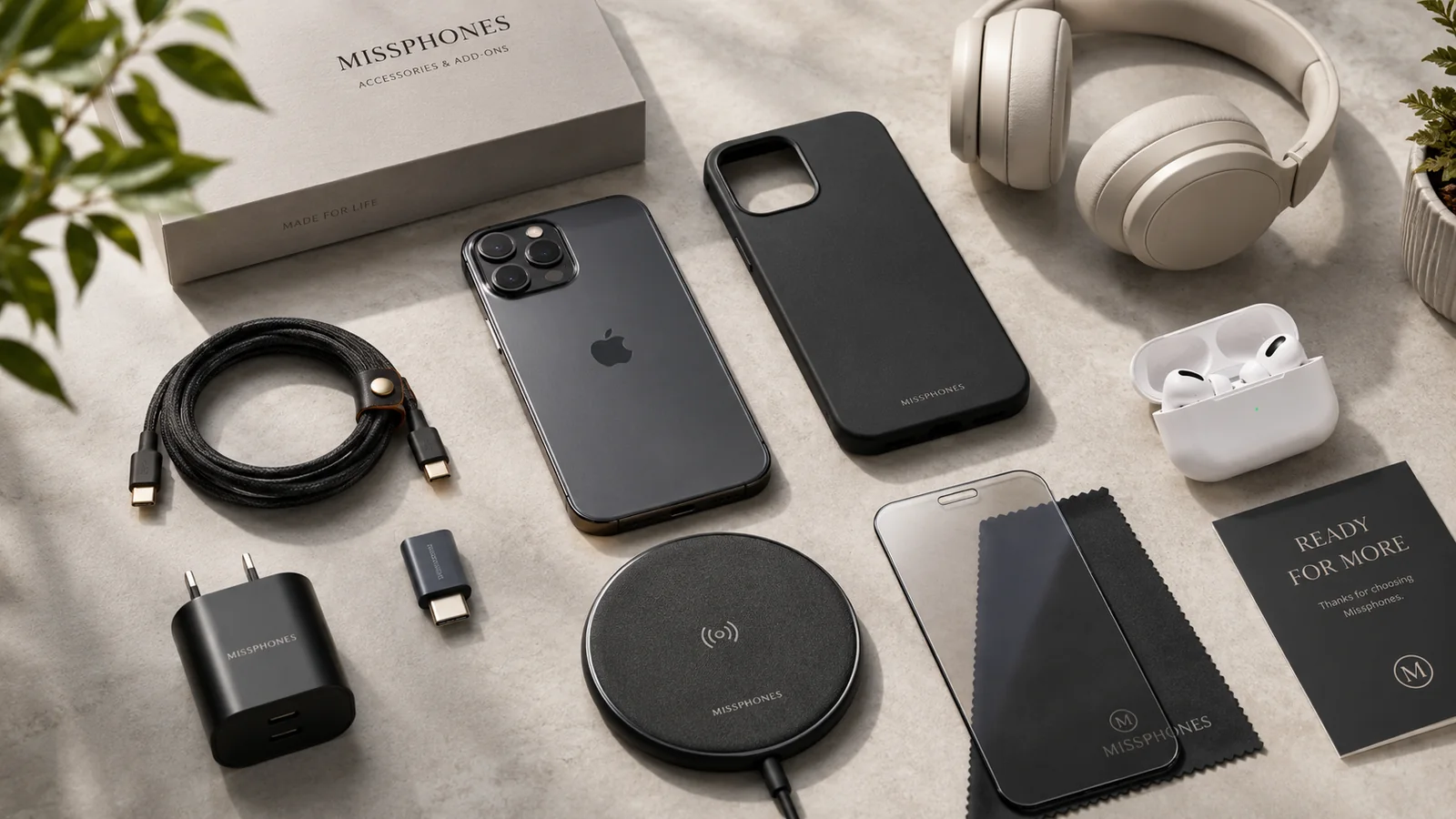
A case cannot make a phone indestructible. Its job is to reduce specific risks without making the device impractical to hold, charge or use.
Match the case to the environment
| Use | Features worth checking |
|---|---|
| Desk and home | Grip, raised edges and comfortable size |
| Outdoor or manual work | Stronger corner protection, secure fit and port access |
| Frequent photography | Camera clearance and stable handling |
| Wireless charging | Alignment and thickness compatibility |
| Accessibility needs | Grip, buttons, straps or stands that improve control |
Check fit before trusting protection
The case should not lift a screen protector, press buttons continuously, obstruct microphones or leave the camera ring bearing weight. Remove grit trapped inside because it can mark the finish.
Ignore unsupported protection theatre
Words such as military-grade or shockproof are not a guarantee of a particular real-world outcome unless a specific test and limitation are explained. Treat dramatic drop claims as marketing evidence to verify, not certainty.
Consider total cost
A £20 case that remains usable can be better value than several cheap replacements. A £90 case is not automatically rational for a low-value temporary phone.
Replace a case for function, not appearance alone
Replacement is sensible when the case has stretched, cracked around retention points, lost grip or no longer protects raised edges. Cosmetic discolouration can be harmless if the structure remains sound.
Remove and inspect periodically
Check for trapped grit, moisture, frame damage and battery swelling. A case can hide an expanding back or lifted screen that needs urgent professional attention.
Related guides
Sources and date checked
Official information checked 26 July 2026. Product prices, contract terms and retailer policies can change, so verify the current document before acting.