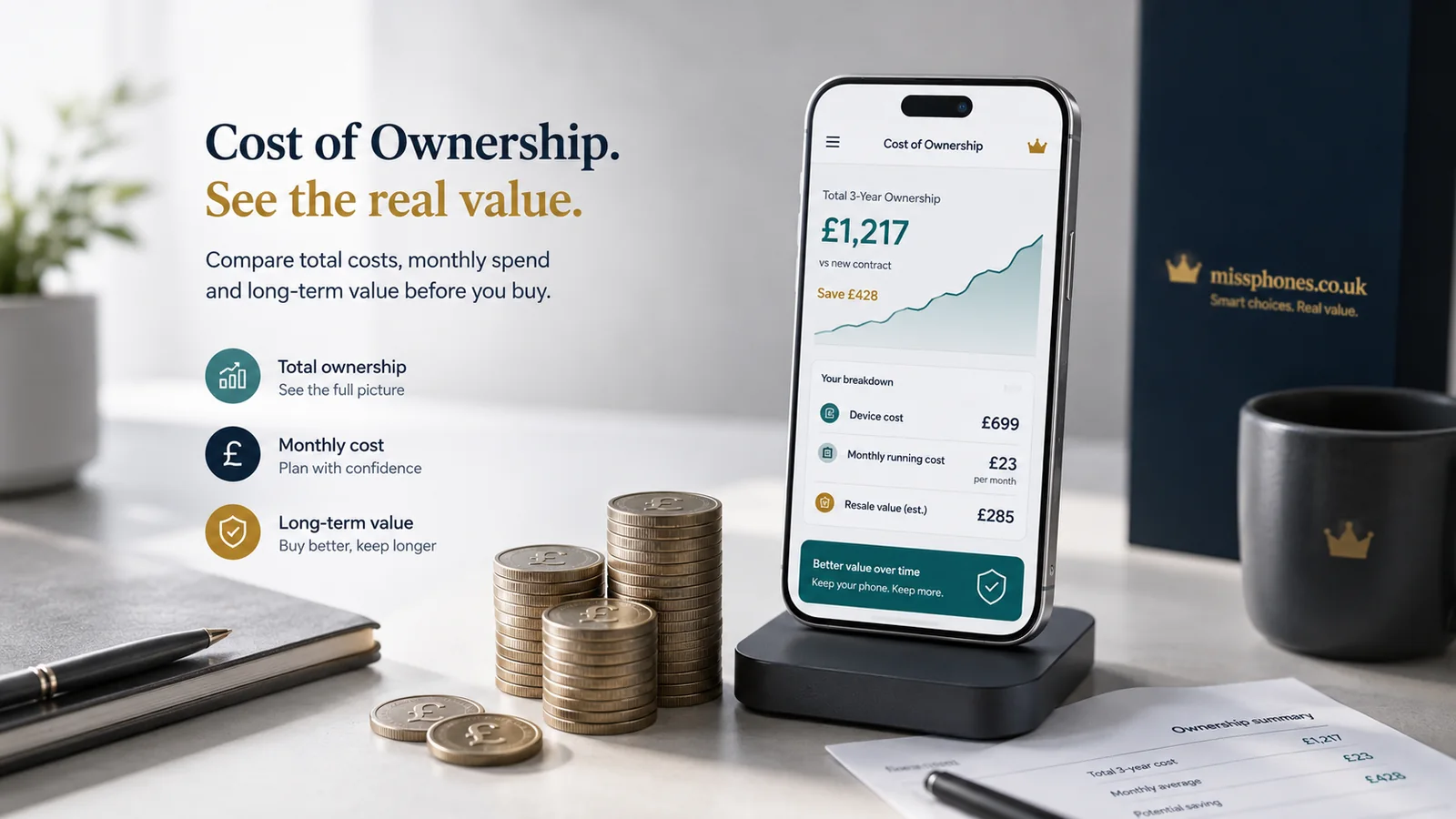
iPhone and Android are platforms containing many models and price tiers, not two single products. A useful comparison must use exact devices that can meet the same tasks for the same period.
Compare model with model
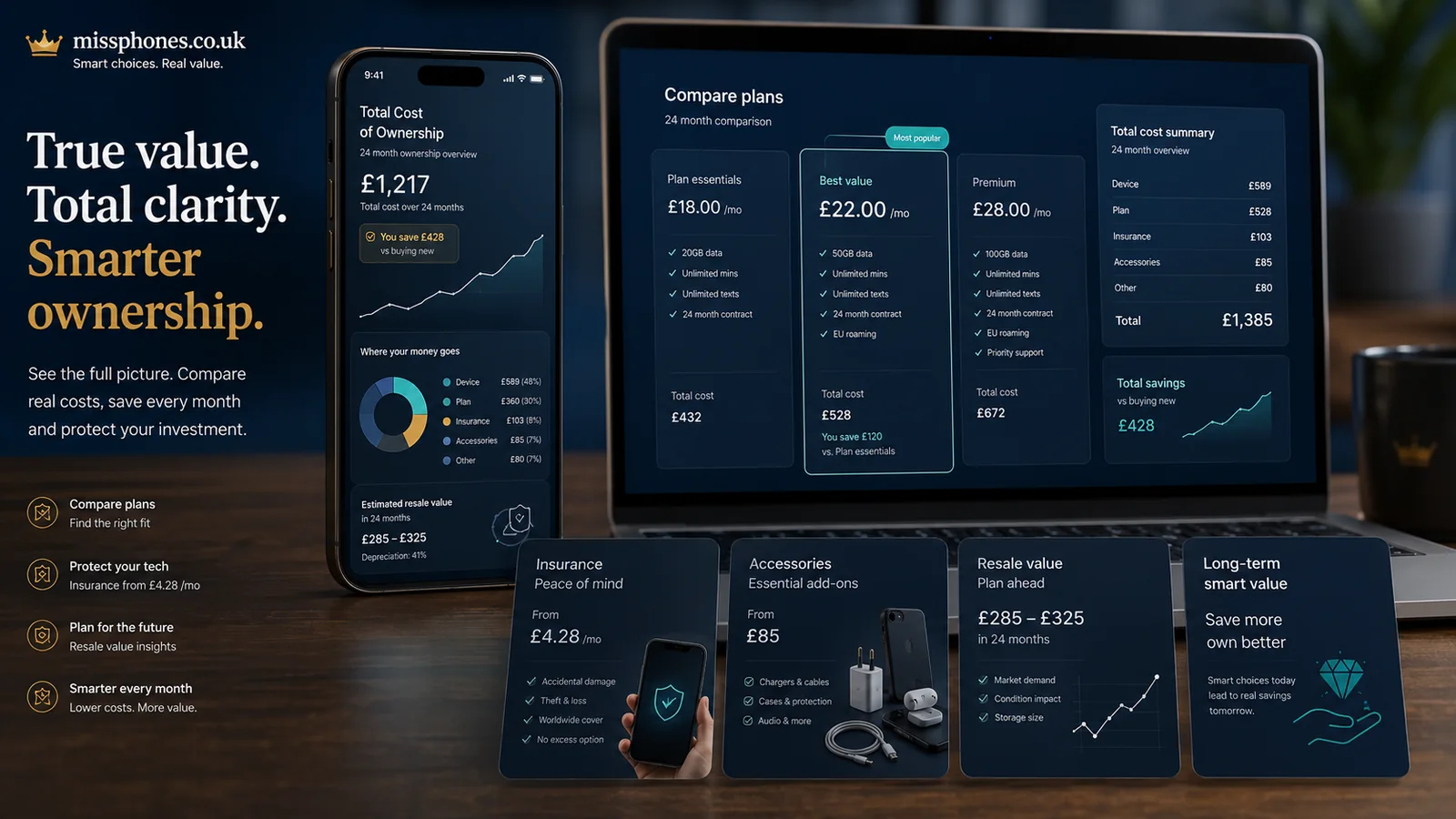
| Factor | What to verify |
|---|---|
| Purchase price | Current transaction price for matching storage and condition |
| Support | Published security and operating-system position for that model |
| Battery service | Availability, price and diagnostic visibility |
| Repair | Parts, service channels and likely major repair cost |
| Accessories | What you already own and what must be replaced |
| Resale | Current net evidence for comparable age and condition |
Do not assume the resale winner is the ownership winner
A phone that retains more value can still lose more pounds if its purchase price is much higher. Calculate purchase price minus net resale, then add every other cost.
Support policies differ inside Android
Do not use one Android support assumption. Check the exact manufacturer and model. The same applies to repair options, battery-health visibility and accessory standards.
Use your ecosystem only where it changes cost
Existing watches, computers, paid services or accessibility workflows can create real switching costs. List them rather than treating “ecosystem” as an automatic reason to stay.
Illustrative method
Phone A costs £760 and is expected to sell for £260 after four years, producing £500 of device depreciation. Phone B costs £520 and is expected to sell for £90, producing £430. Add repair, accessories and any ecosystem-switching costs before deciding. The figures are illustrative.
Avoid platform stereotypes
There are inexpensive and premium devices on both sides, and support or repair policies vary by model. The operating system does not determine the total on its own.
Related guides
Sources and date checked
Official information checked 26 July 2026. Product prices, contract terms and retailer policies can change, so verify the current document before acting.