The most expensive phones to own are not always those with the highest purchase price. Expensive ownership often comes from a combination of rapid depreciation, costly repairs, unnecessary finance and short actual use.
Patterns that raise the total

| Pattern | Why it costs more |
|---|---|
| Frequent upgrades | Restarts early depreciation repeatedly |
| High price plus short ownership | Spreads the largest loss over few months |
| Fragile or costly-to-repair design | Makes an ordinary accident expensive |
| Overspecified storage or features | Adds cost without extending useful life |
| Insurance with high premium and excess | Can exceed the risk being transferred |
| Long device finance after needs change | Reduces flexibility |
Illustrative comparison
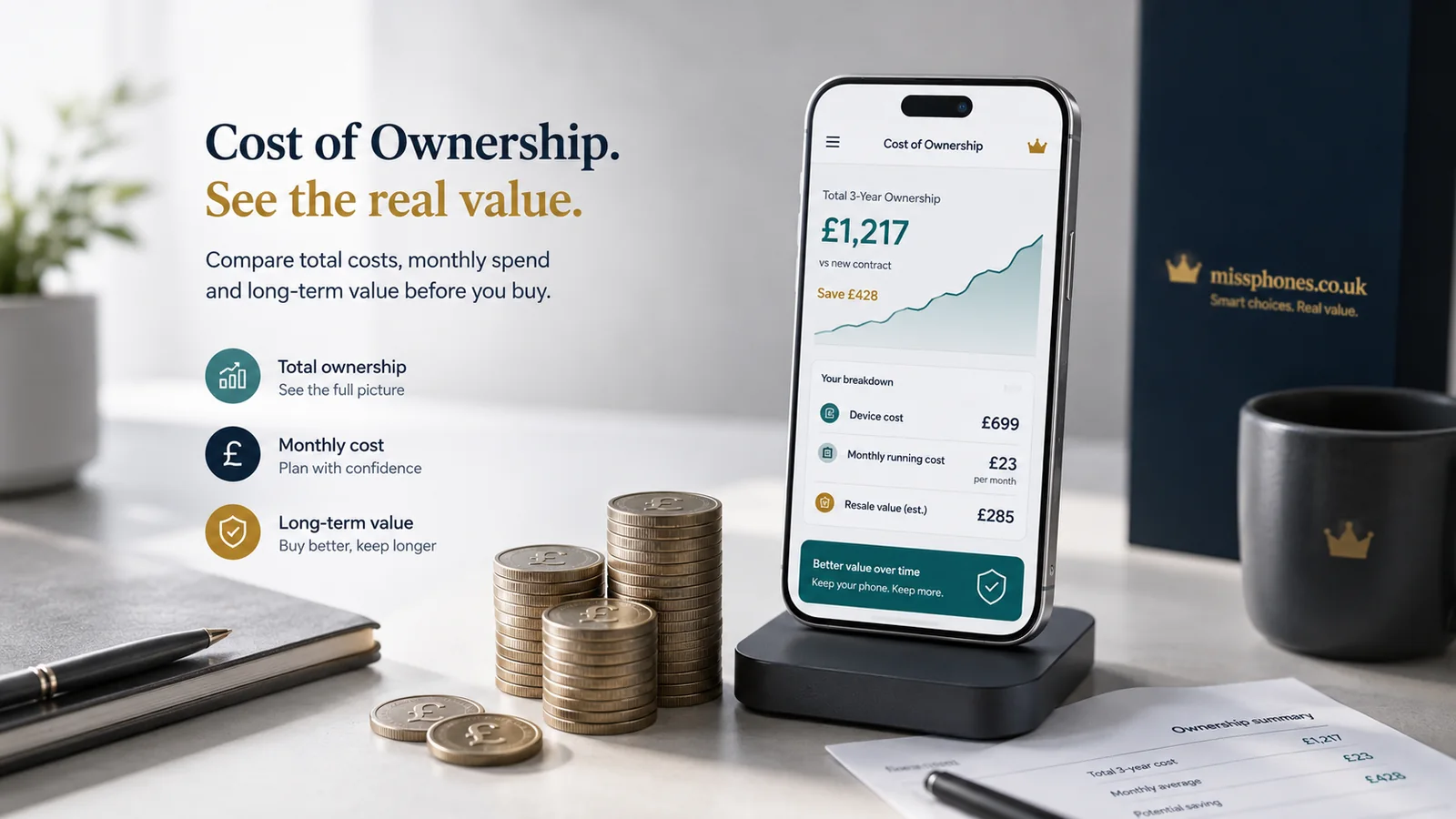
A £1,100 phone sold after eighteen months for £520 loses £580 before airtime and protection. A £550 phone kept for three years and sold for £120 loses £430. The more expensive device may still be the correct tool, but the cost must be intentional.
Premium is not automatically wasteful
If a feature is necessary for work, accessibility or a long ownership period, a premium phone can be rational. The mistake is paying for capability that does not change the user’s outcome.
Control the decision
Set the required tasks and ownership period first. Then compare the net pounds lost, likely repair cost and exit flexibility.
Warning signs before purchase
- The upgrade plan depends on a perfect future trade-in.
- The monthly payment hides a long device balance.
- A major repair would exceed the available emergency fund.
- The chosen storage or feature tier has no identified use.
- The user expects to change phones before the steep early depreciation has passed.
Calculate the cost of changing your mind
Before committing, request the settlement or return position and calculate the likely loss if the phone is unsuitable after six or twelve months. Flexibility has a value, particularly for expensive niche devices.
Related guides
Sources and editorial method
Information checked 26 July 2026. The comparisons in this guide are editorial methods, not current market averages or guaranteed valuations. Recheck seller, platform and provider terms before acting.