No public check can prove with certainty that a second-hand phone was lawfully acquired and will never be blocked later. A safer purchase combines device identifiers, seller identity, ownership evidence, account-lock checks and a written transaction record.
In brief: obtain the IMEI from the phone itself, compare it with the receipt and settings, check available blocklist information, verify that previous accounts are removed and do not pay an unidentifiable seller.
Understand what the IMEI can and cannot show
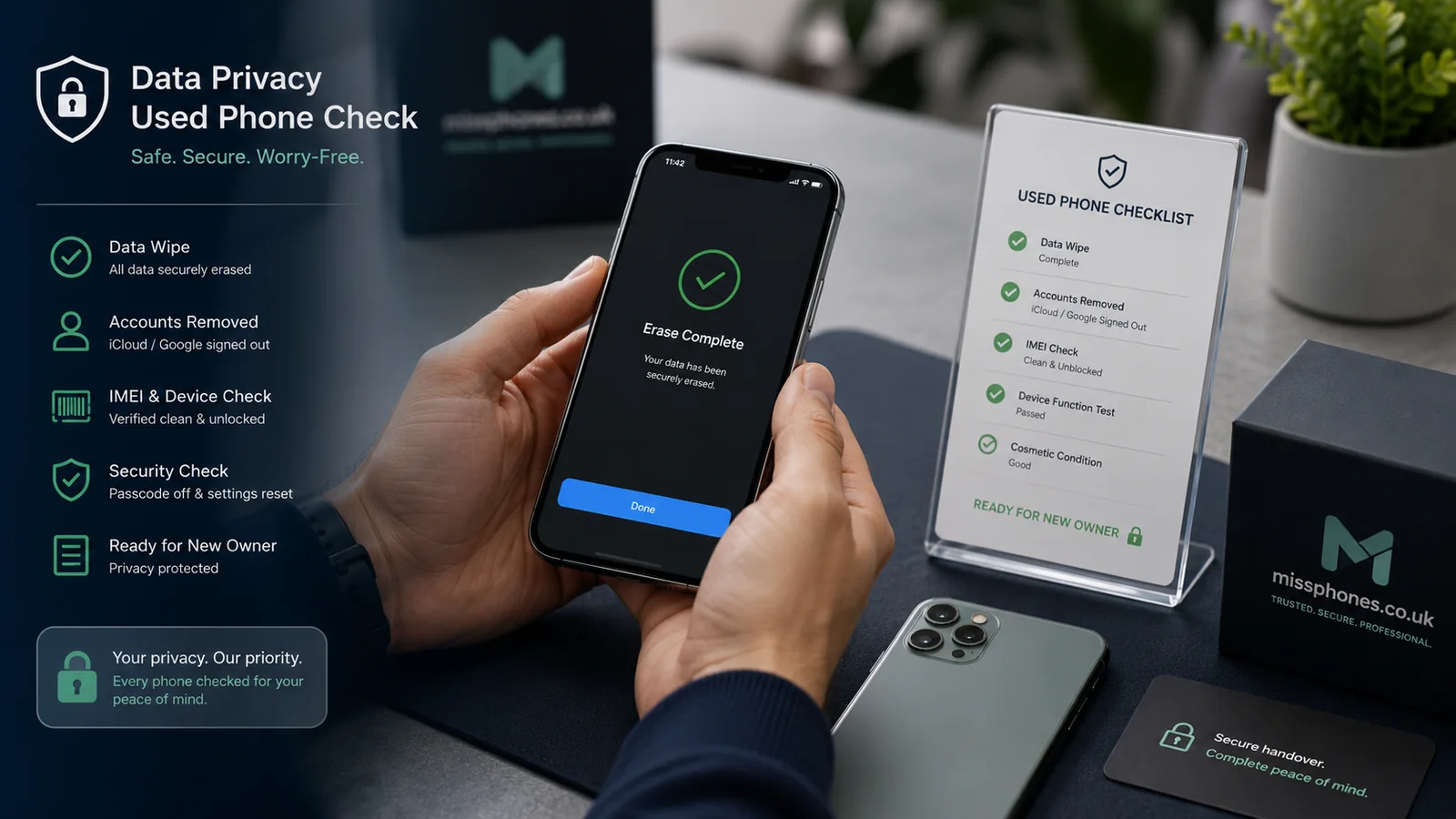
The IMEI is a 15-digit identifier used by mobile networks. UK providers can block a phone reported lost or stolen, preventing it from connecting to mobile networks. Ofcom advises owners to record the IMEI so a lost or stolen handset can be blocked.
A current clean result is useful but limited. It may not show:
- a theft or loss that has not yet been reported;
- a later fraudulent report;
- every financing or ownership dispute;
- an Apple, Google or organisation account lock;
- whether the person selling the phone is the lawful owner.
1. Read the IMEI from the device
Use the device settings or dial *#06# where supported. Do not rely only on a screenshot sent by the seller. Compare the identifier with:
- the box, if supplied;
- the seller's original receipt or invoice;
- the sale receipt you create;
- any reputable status check used for the transaction.
A mismatch needs an explanation. It can result from a replacement device or mixed packaging, but it should not be ignored.
2. Check available lost-or-stolen status
Use a reputable UK device-status service where appropriate, and save the dated result. Treat it as one layer of evidence, not a certificate of ownership. Avoid websites that claim to reveal extensive personal or financing information from an IMEI without explaining their data source.
3. Verify account removal
For an iPhone, do not buy if Activation Lock remains enabled. Apple advises buyers to ensure the device is erased and no longer linked to the previous owner's account.
For Android, Factory Reset Protection can require the Google Account previously used on the device after a reset. Complete enough of the setup process to confirm that the phone does not ask for the seller's credentials. Also check manufacturer-specific accounts and organisation management.
4. Check the seller and the story
- Ask how and when the seller obtained the phone.
- Compare their name with the original proof of purchase where available.
- Be cautious if the seller refuses identification for an in-person high-value sale.
- Look for repeated sales that suggest an undeclared trader.
- Do not accept urgency as a reason to skip setup or identifier checks.
5. Create a written receipt
For a private purchase, record:
- date and amount;
- seller and buyer names;
- make, model, storage and colour;
- IMEI and serial number where appropriate;
- known faults and included accessories;
- the seller's statement that they are entitled to sell the phone;
- payment method.
A receipt cannot make a stolen phone lawful, but it preserves evidence and discourages anonymous transactions.
Walk away when the checks cannot be completed
Do not buy when the seller will only provide an IMEI after payment, the phone cannot be reset and set up, the identifiers conflict without credible evidence, or the seller insists on an irreversible payment while remaining anonymous.
Also review Signs a Used Phone Has Problems and the relevant iPhone or Android checklist.
Sources and date checked
- Ofcom: Lost or stolen phone
- Apple Support: If you want to buy a pre-owned iPhone
- Android Help: Device protection after factory reset
Facts checked: 25 July 2026. IMEI databases and platform processes can change; verify the service used at the time of purchase.