Donation can mean the phone is given directly to a beneficiary, sold to raise funds or passed to a recycling partner. Ask which outcome applies before assuming how the device will be used.
Check the programme

- Is the organisation a registered charity or an authorised collection partner?
- Does it accept the exact condition of your phone?
- Will the phone be reused, sold or recycled?
- How does the charity receive value?
- Does it provide a receipt or tracking for posted devices?
- What does it instruct you to do about data and accounts?
Verify the collection
Use the charity’s official website or verified contact details rather than a link in an unsolicited message or an unbranded collection bag. Check whether a commercial recycling partner runs the programme and whether the charity receives a fixed payment, a percentage or another benefit. If direct reuse matters to you, ask rather than infer.
Prepare it as carefully as a sale
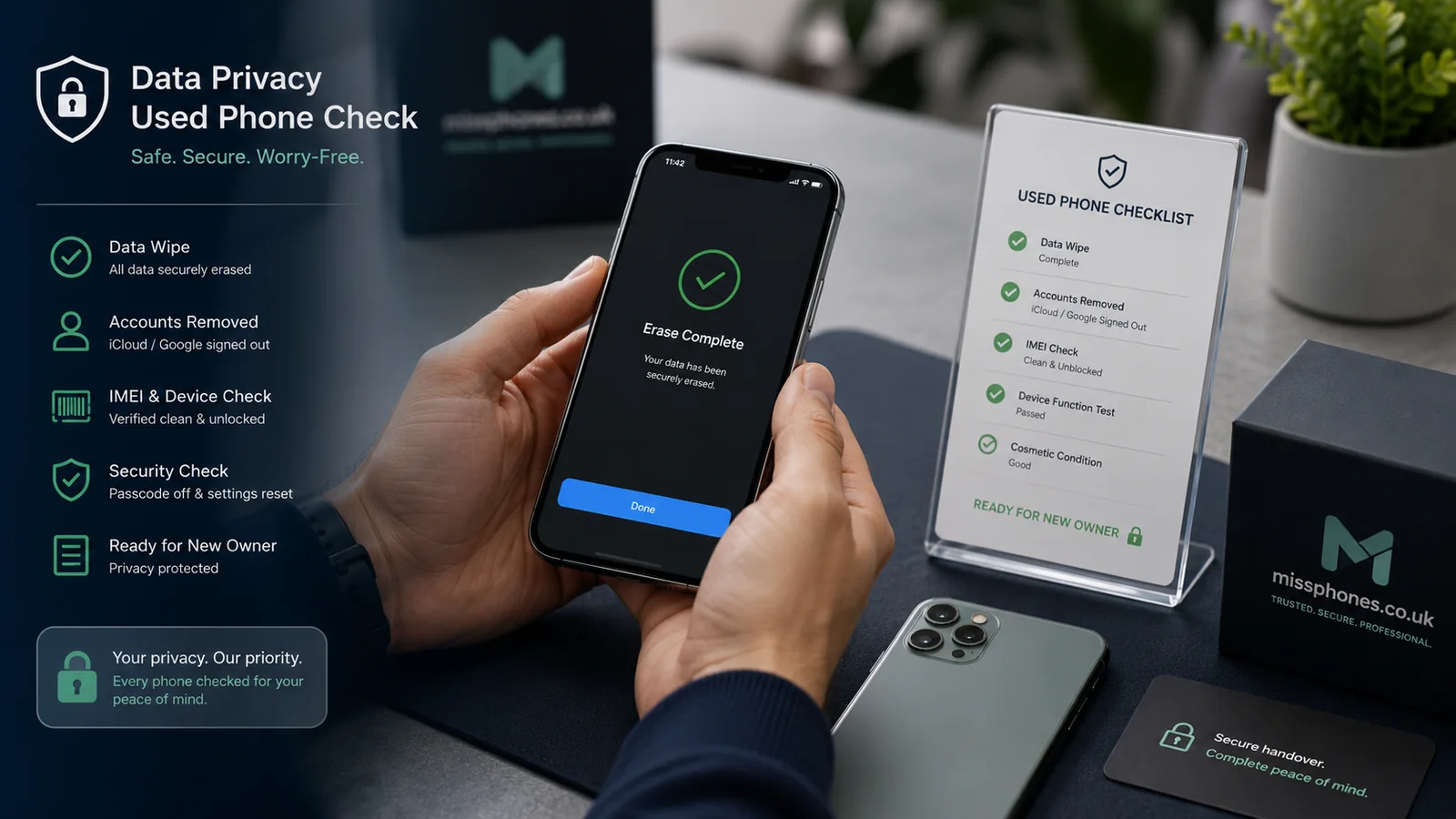
Back up, remove accounts and activation locks, erase the phone, remove SIM and memory cards and disclose faults. A donated phone can still reach another user; leaving Activation Lock active can make a valuable device unusable.
Do not post a dangerous battery
If the battery is swollen, hot, leaking or physically damaged, do not put the phone into an ordinary charity envelope. Contact the programme and local recycling service for a safe route.
Tax claims
Do not assume that donating a personal used phone creates a personal tax deduction. UK Gift Aid and tax treatment depend on the arrangement and taxpayer circumstances. Use the charity’s and HMRC’s current instructions rather than making a value claim yourself.
Keep the environmental claim modest
Reuse can extend useful life; recycling can recover materials. Neither makes an unnecessary replacement impact-free. The most useful donation is a device that is honestly described, unlocked and prepared for reuse.
After Donating a Phone to Charity, the closest next step is Selling and Recycling, then Selling and Trade-In Guide.
Useful official references: Donating a Phone to Charity
- NCSC: securely erasing a device before sale or disposal
- GOV.UK: retailer take-back duties for electrical waste
A final check on Donating a Phone to Charity
- Payment and delivery fit:use a payment and delivery method that matches the marketplace or buyer-protection rules; do not change the delivery address or payment route simply because a buyer asks in a message before applying it to this particular case.
- Value versus certainty:a higher private-sale price can require more time and carry more dispute risk; a trade-in may pay less but provide a simpler documented process; compare the net amount rather than the headline quote for the situation covered on this page.
- Evidence before handover:keep the advert or quote, photographs of condition, serial/IMEI records kept privately, and the payment or collection record; this keeps the Donating a Phone to Charity transaction documented without publishing device identifiers in the listing.
- Account and data separation:back up what you need, remove account locks using the manufacturer’s supported process, and complete the appropriate erase procedure before the phone leaves your control for the situation covered on this page.