The details change, but most seller scams attempt to obtain the phone, your money or your marketplace account before the transaction is independently verified.
| Pattern | What the seller sees | Safe response |
|---|---|---|
| Fake payment confirmation | Email or screenshot saying money is sent or held | Check your own bank or platform account; do not post |
| Release-fee scam | Instruction to pay insurance, courier or account-upgrade fee | Stop; incoming legitimate sale funds do not require payment to a buyer-provided account |
| Overpayment | Buyer sends or claims to send too much and asks for the difference | Do not refund or proceed; contact the bank or platform |
| Account phishing | Fake login page or one-time-code request | Use the official app; never share the code |
| Address switch | Buyer requests postage to a new person or location | Use only the protected order address or cancel correctly |
| Return substitution | Buyer returns a different or more damaged phone | Use IMEI, condition and packing records; follow the formal dispute process |
False courier and collection stories
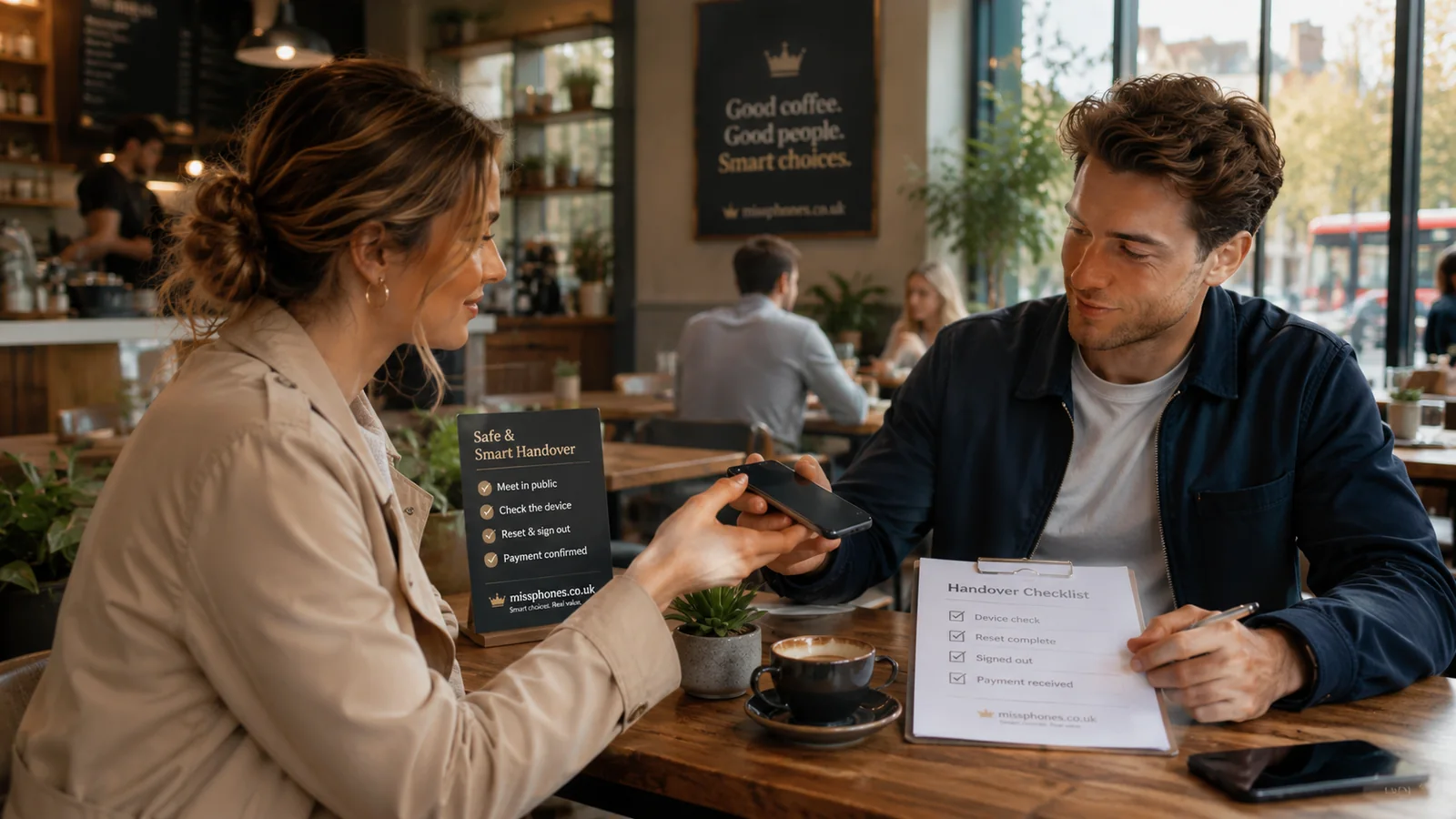
A buyer may claim that a courier will bring cash, that a platform has arranged collection, or that you must purchase insurance before collection. Verify any courier through the marketplace or carrier using details you find independently. Ordinary parcel services do not need you to transfer money to the buyer or send gift-card codes to release an incoming payment.
Payment from an unrelated person
A genuine explanation is possible, but third-party payment increases fraud and dispute risk. Pause and require the buyer, payer, order and collection details to align through the platform’s supported process.
False urgency
Scammers often claim that a courier is waiting, a transfer will expire or the phone is needed for a family emergency. Urgency is not evidence. A genuine buyer can wait while you verify the order.
After suspected fraud
Preserve messages, usernames, payment details and tracking. Contact the platform and bank through verified channels. If money or the phone has been lost through fraud, use the appropriate official reporting route.
For a controlled prevention process, read How to Avoid Marketplace Scams When Selling.
After Common Phone-Selling Scams in the UK, the closest next step is Selling and Recycling, then Selling and Trade-In Guide.
Primary references used for this guide: Common Phone-Selling Scams in the UK
- Report Fraud: customer fraud and suspicious payment behaviour
- Report Fraud: auction and online shopping fraud
Checks that matter for Common Phone-Selling Scams in the UK
- Payment and delivery fit:use a payment and delivery method that matches the marketplace or buyer-protection rules; do not change the delivery address or payment route simply because a buyer asks in a message using the assumptions relevant to this guide.
- Value versus certainty:a higher private-sale price can require more time and carry more dispute risk; a trade-in may pay less but provide a simpler documented process; compare the net amount rather than the headline quote for the situation covered on this page.
- Evidence before handover:keep the advert or quote, photographs of condition, serial/IMEI records kept privately, and the payment or collection record; this keeps the Common Phone-Selling Scams in the UK transaction documented without publishing device identifiers in the listing.
- Account and data separation:back up what you need, remove account locks using the manufacturer’s supported process, and complete the appropriate erase procedure before the phone leaves your control; apply this point to the common selling scams uk question.