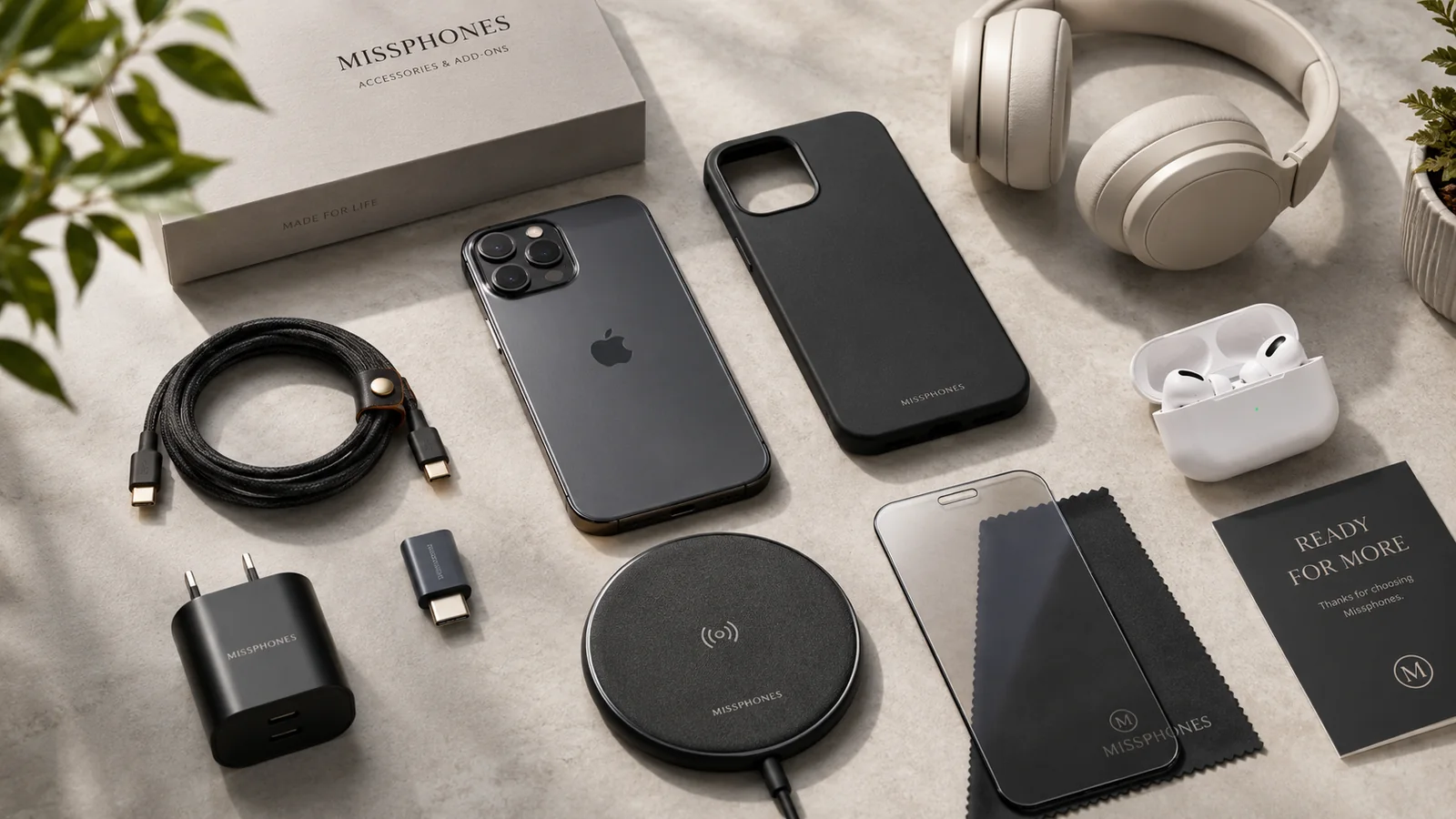
Choose an accessory by the job it must perform, the exact phone and the cost of failure. Reviews and brand familiarity are secondary to compatibility, safety and a usable returns route.
A six-step check
- Write the problem the accessory must solve.
- Confirm the exact phone model, dimensions and connector.
- For charging products, confirm output and supported protocol.
- Identify the manufacturer, importer and seller.
- Read the return and warranty terms before opening packaging that may affect returnability.
- Test every promised function promptly and keep the order record.
Compare evidence, not star averages
Look for recurring reports about fit, overheating, premature failure or misleading specifications. A large number of ratings is not proof that the exact variant currently supplied is identical.
Use a failure-cost rule
| Low consequence | Higher consequence |
|---|---|
| Simple stand or decorative grip | Mains charger or power bank |
| Basic desk holder | Vehicle mount carrying an expensive phone |
| Inexpensive non-electrical item | Accessory whose failure could damage the device |
Spend more effort on seller traceability and testing when failure could cause injury, device damage or loss.
Test against the exact use
For a vehicle mount, test stability and visibility without obstructing controls. For a case, test charging and buttons. For headphones, test microphone and call behaviour. A product can be technically compatible but unsuitable for the real task.
Record electrical specifications
Keep a photograph of the label and order page for chargers and power banks. If a problem later appears, model, batch and seller information make a recall check or complaint much more useful.
Where to go next from Choosing and Buying Accessories
- Genuine vs Third-Party Accessories
- Accessory Warranties and Returns
Reference points for current UK rules: Choosing and Buying Accessories
- UK Product Safety Alerts, Reports and Recalls
- Electrical Equipment (Safety) Regulations 2016 guidance
- GOV.UK: online and distance selling
What can change the answer on Choosing and Buying Accessories
- Avoid duplicate spending:check what is already supplied with the phone and what you already own; the cheapest accessory may be the one you do not need to replace or buy twice using the assumptions relevant to this guide.
- Compatibility first:match the exact phone model, connector, charging standard, dimensions and any case or screen-protector interaction before buying; apply this point to the choosing buying accessories question.
- Safety before marginal savings:for powered accessories, use reputable products with clear specifications and appropriate UK compliance information; in Choosing and Buying Accessories, do not treat an unknown high-wattage claim as proof of quality.
- Protect the expensive failure modes:spend first on the accessory that reduces the most likely costly damage for your use: drop protection, screen protection, safe charging or weather protection; apply this point to the choosing buying accessories question.