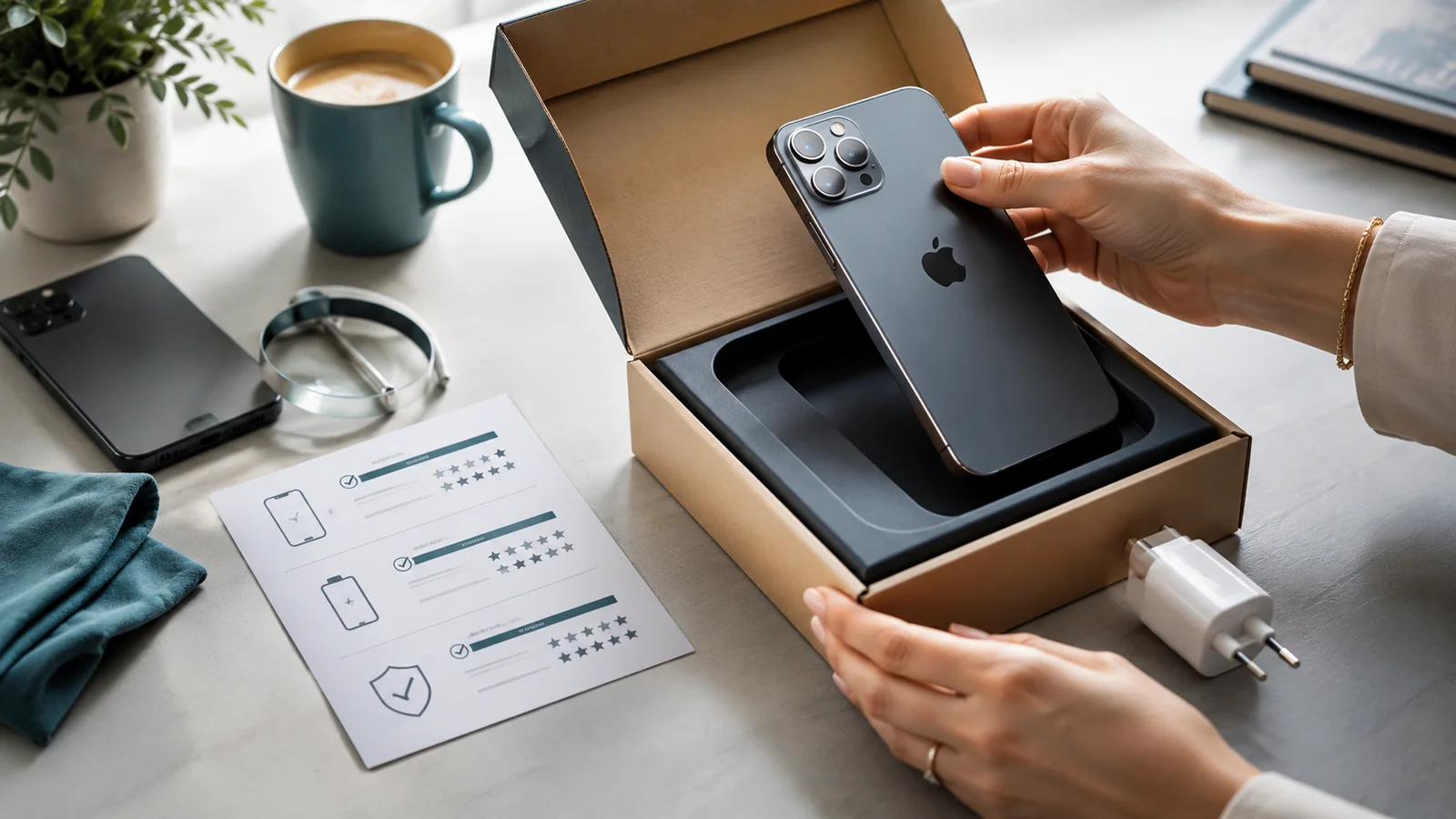
A safe sale is a controlled sequence. Decide the route, describe the phone accurately, prepare it correctly, verify payment yourself and retain evidence. Most avoidable losses happen when one of those stages is skipped because a buyer is rushing the transaction.
1. Confirm that the phone can be sold
Check for a remaining device plan, employer ownership, a pending insurance claim, activation locks and any lost-or-stolen report. Record the IMEI privately. If the phone has been reported lost or stolen, contact the network or relevant organisation rather than trying to sell it.
2. Test and disclose
Test charging, screen, touch, buttons, cameras, speakers, microphones, biometrics and connectivity appropriate to the device. Describe faults and repairs in plain terms. In a genuine private sale, trader-style quality rights do not generally apply in the same way, but the phone must still match what you say about it. Citizens Advice provides guidance for goods misdescribed by a private seller.
3. Back up, remove accounts and erase
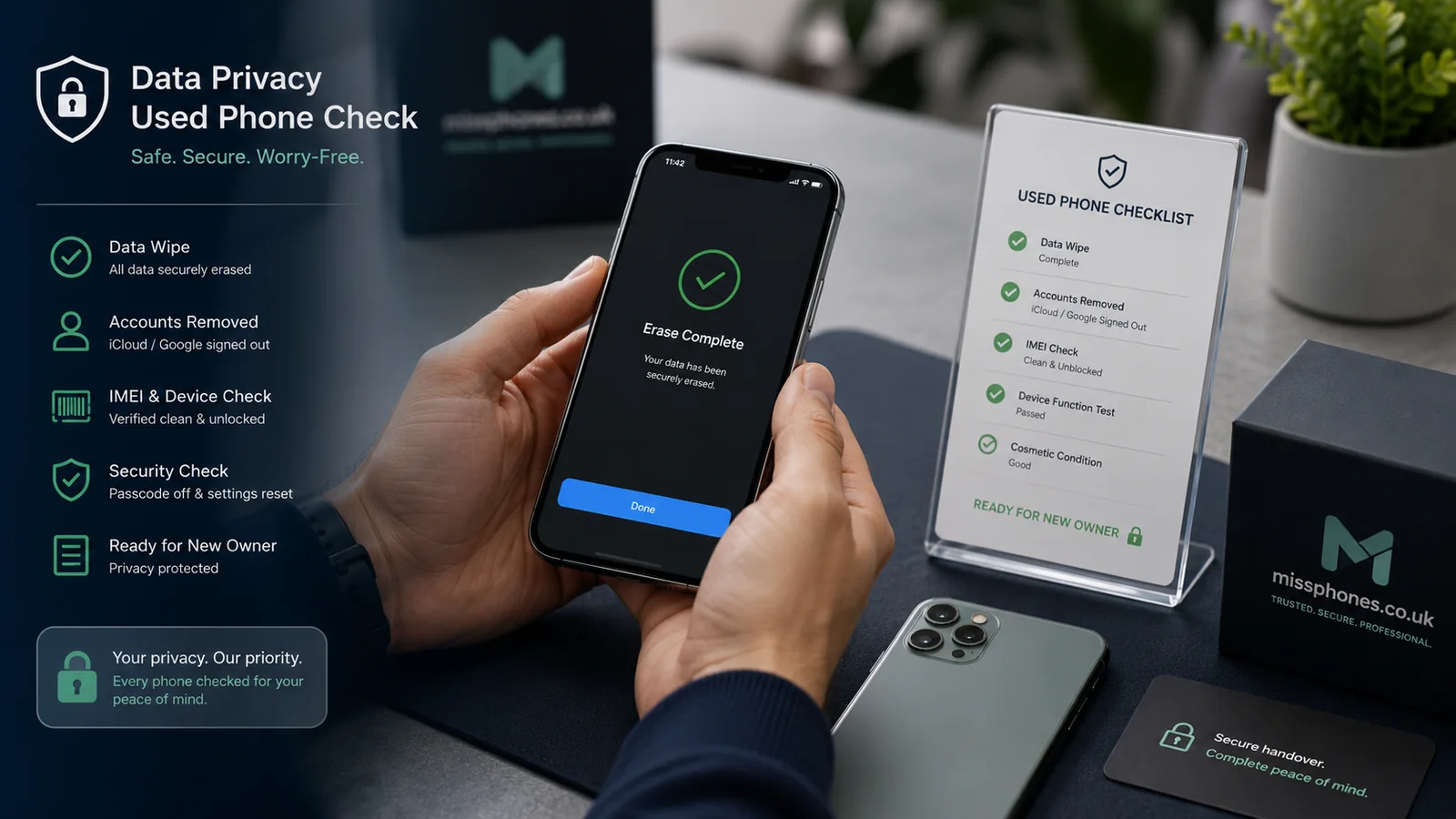
Follow the manufacturer-supported order. On iPhone, sign out and erase so Activation Lock is removed. On Android, remove Google and other manufacturer accounts before the factory reset to avoid Factory Reset Protection blocking the next owner.
4. Control the meeting or delivery
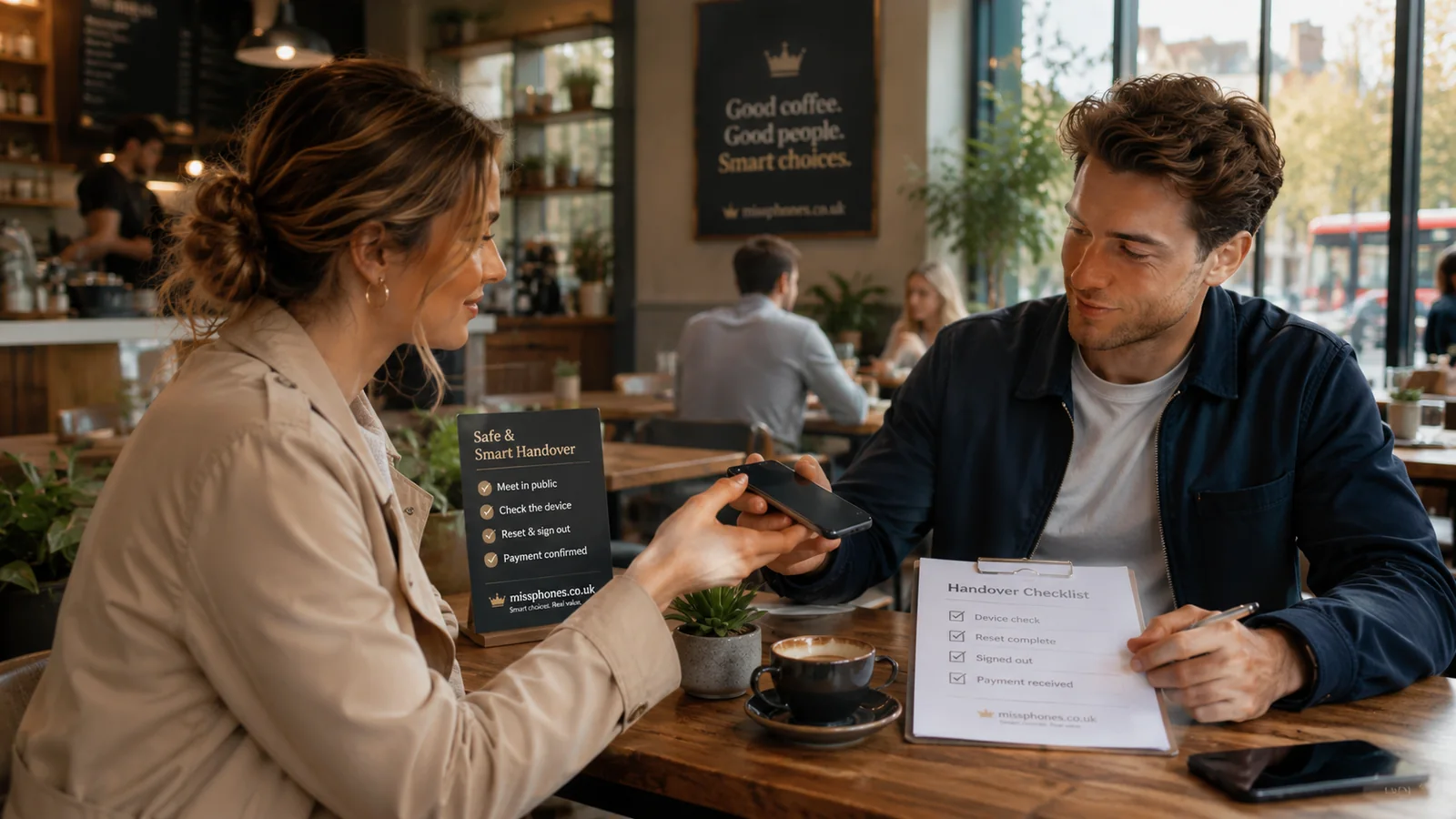
- Meet in a public, well-lit place where you can take time to verify payment.
- Do not let a buyer leave with the phone for an unsupervised test.
- For postage, use a service that accepts a phone with its installed lithium battery and provides suitable tracking and compensation.
- Keep the parcel within the marketplace’s official address and tracking process where protection depends on it.
5. Verify payment independently
Open your own banking or platform app. Do not use a link supplied by the buyer and do not rely on a screenshot, email, pending status or supposed courier collection fee. A bank transfer appearing in your account is stronger evidence than a message, but no method should be described as absolutely irreversible or fraud-proof.
6. Keep a transaction record
Retain the listing, messages, receipt or written handover note, payment record, IMEI, photographs and postage evidence. Do not retain unnecessary buyer identity documents.
Related decisions around How to Sell an Old Phone Safely
- How to Write a Phone Listing That Sells
- Safe Payment Methods for Private Phone Sales
- How to Avoid Marketplace Scams When Selling
- How to Package a Phone for Posting