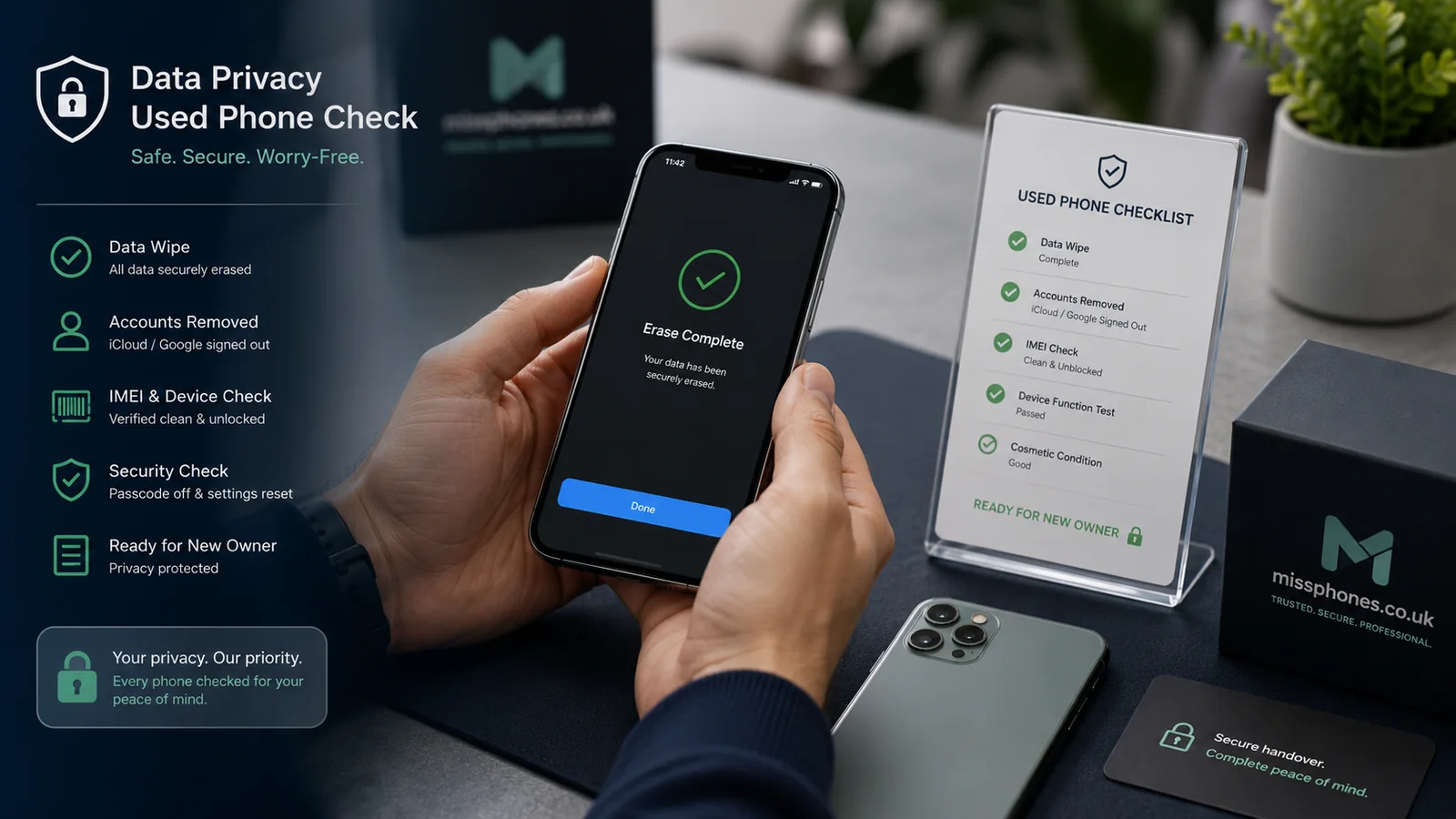
No payment method removes all risk. The safest method is one whose rules you understand, whose status you can verify independently and whose transaction matches the way the phone is handed over.
Compare common methods
| Method | Useful controls | Important limitation |
|---|---|---|
| Marketplace payment | Official order record, address and dispute process | Protection may fail if you move off-platform or use different delivery details |
| Bank transfer | You can check your own bank account before handover | Screenshots are worthless; suspected fraud can still lead to investigation or frozen funds |
| Cash in person | Immediate and no remote payment message | Counterfeit risk, personal-safety risk and weak remote evidence |
| Card or payment service | May provide a formal transaction and dispute process | Seller eligibility, fees, chargebacks and prohibited transaction types vary |
Never verify payment through the buyer
Do not click a payment link, call a number in a buyer’s message or trust an email saying you must pay a fee to release funds. Open your bank or marketplace app independently. A “pending” or “processing” screen is not cleared money.
Do not describe bank transfer as irreversible
UK APP-fraud reimbursement protections help eligible victims who were tricked into sending money, subject to scope and rules. That does not turn every buyer claim into a refund, but it means a seller should not treat a bank credit as legally untouchable. Keep evidence of the genuine transaction and never accept money from an unrelated third party.
For collection
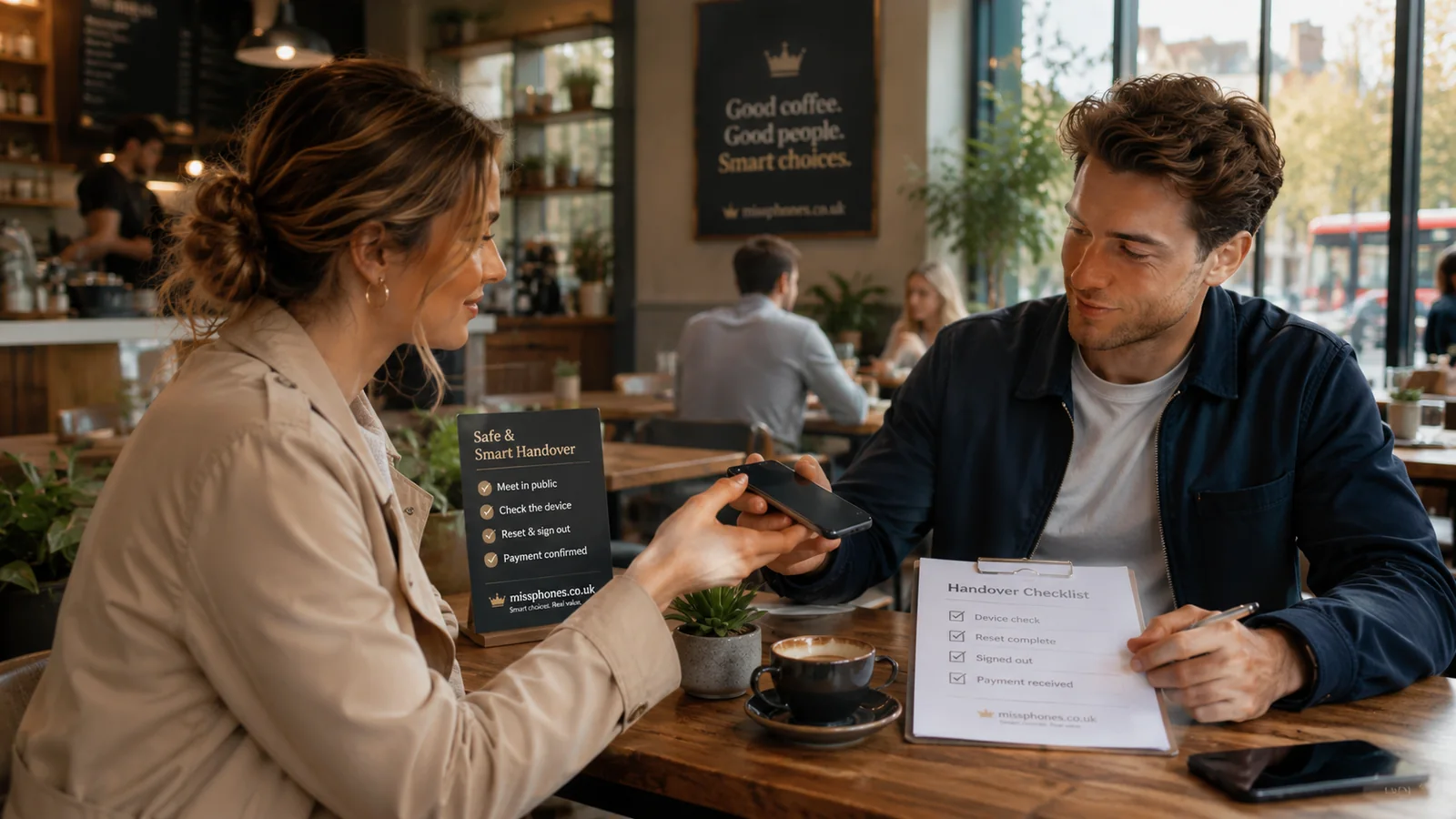
- Meet in a public place and do not attend alone for a high-value sale where practical.
- Confirm payment in your own app before releasing the phone.
- Use a short written receipt recording date, device, amount and both parties’ acknowledgement, without collecting unnecessary identity data.
- Do not hand over the phone for an unsupervised test or allow the buyer to leave “to get cash”.
Postal sales need aligned evidence
The buyer name, payment, order address and tracking should fit one coherent transaction. Sending to a different address because the buyer asks in a message can remove platform protection. If the payment comes from another person, pause and use the platform’s supported process rather than accepting an explanation you cannot verify.
If something looks wrong
Pause the transaction. Contact your bank using a verified number. In England, Wales and Northern Ireland, fraud can be reported to Report Fraud; in Scotland, contact Police Scotland. Do not send money to a supposed recovery agent.
For the wider Safe Payment Methods for Private Phone Sales decision, continue with Selling and Recycling, then Selling and Trade-In Guide.
Reference points for current UK rules: Safe Payment Methods for Private Phone Sales
- Payment Systems Regulator: APP fraud reimbursement protections
- Report Fraud: where and how to report
Before deciding on Safe Payment Methods for Private Phone Sales
- Account and data separation:back up what you need, remove account locks using the manufacturer’s supported process, and complete the appropriate erase procedure before the phone leaves your control in the context of this page.
- Payment and delivery fit:use a payment and delivery method that matches the marketplace or buyer-protection rules; do not change the delivery address or payment route simply because a buyer asks in a message for the situation covered on this page.
- Value versus certainty:a higher private-sale price can require more time and carry more dispute risk; a trade-in may pay less but provide a simpler documented process; compare the net amount rather than the headline quote in this specific comparison.
- Evidence before handover:keep the advert or quote, photographs of condition, serial/IMEI records kept privately, and the payment or collection record; this keeps the Safe Payment Methods for Private Phone Sales transaction documented without publishing device identifiers in the listing.