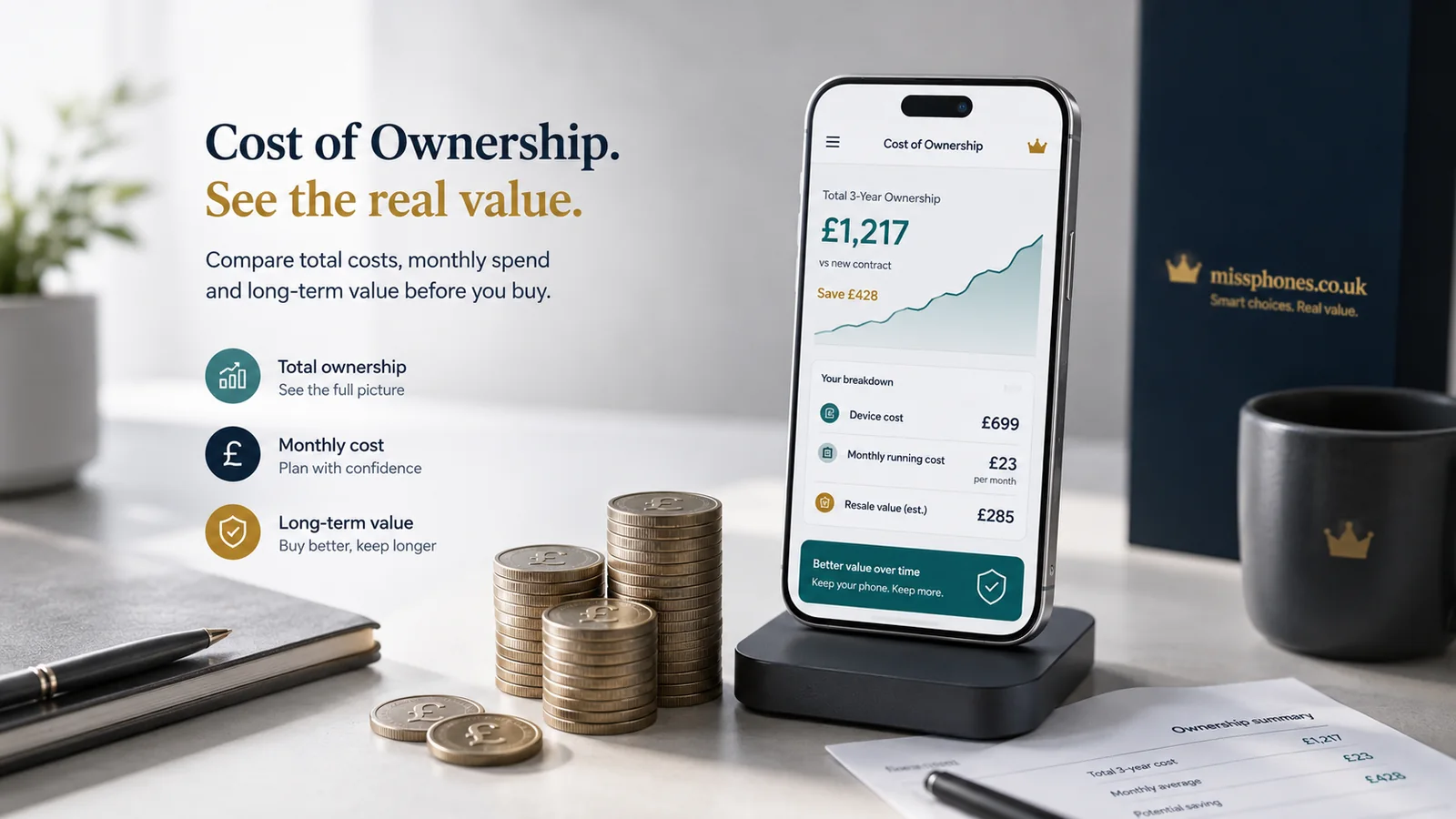
Compare phone deals in two passes. First make them equivalent; then calculate what each one costs. A smaller monthly number is meaningless if the phone, storage, allowance, term or scheduled rises are different.
Step 1: Fix the specification

Record the exact:
- handset model and storage;
- new, used or refurbished condition;
- minimum term;
- data, calls and texts;
- network;
- required extras.
Remove offers that do not meet the requirement rather than trying to compensate for the difference later.
Step 2: Calculate the contractual total
For each offer:
- Add the upfront payment.
- Add every monthly payment at each stated price.
- Add compulsory one-off and final payments.
- Keep optional extras and usage charges on separate lines.
- Do not deduct conditional cashback as though it were guaranteed.
Step 3: Compare the service separately
A larger data allowance is valuable only if you need it. Coverage and service quality in your regular locations can matter more than an additional allowance that goes unused.
Step 4: Compare the exit and ownership position
| Field | Offer A | Offer B | Offer C |
|---|---|---|---|
| Full contractual total | |||
| Highest monthly payment | |||
| Minimum term | |||
| Device ownership date | |||
| Early-exit method | |||
| Cashback conditions | |||
| Coverage confidence |
Step 5: Stress-test affordability
Use the highest scheduled monthly payment, not only the starting price. Ask whether the commitment remains comfortable if another household cost increases or your income falls temporarily.
Step 6: Verify the final checkout
Before consent, compare the checkout, contract summary and your calculation. Stop if:
- the handset or storage changed;
- the price rise is missing from your calculation;
- an optional product became pre-selected;
- the cashback terms differ;
- the lender or ownership position is unclear;
- the total is no longer within budget.
Normalise gifts, trade-in and cashback
Keep each incentive on a separate line:
- Gift: value it at what it is worth to you, not the retailer’s claimed retail price.
- Trade-in: use the final confirmed value, not the maximum estimate.
- Automatic cashback: record the payment date and responsible company.
- Redemption cashback: treat it as conditional until every claim is accepted.
An incentive should not compensate for an unsuitable network, unaffordable total or unclear agreement.
Compare coverage and support
Use the provider’s coverage information as a starting point, then consider real experience in the locations that matter. Also compare how faults, returns and complaints are handled when the handset seller, airtime provider and lender are different companies.
Use a dated evidence pack
Save a copy or screenshot of:
- the offer page;
- the final checkout;
- contract summary;
- cashback or gift terms;
- trade-in estimate and condition rules.
Deals change. A dated evidence pack lets you verify what was offered if the first bill or fulfilment differs.
Illustrative scoring rule
Do not create a universal score that hides trade-offs. Mark each offer only on your own non-negotiables: affordable total, suitable network, required storage, acceptable term and clear ownership. If an offer fails one essential requirement, a promotional gift should not rescue it.
Build your comparison sheet
Use the the full-term cost guide for the arithmetic, then check Phone Deal Red Flags before ordering.