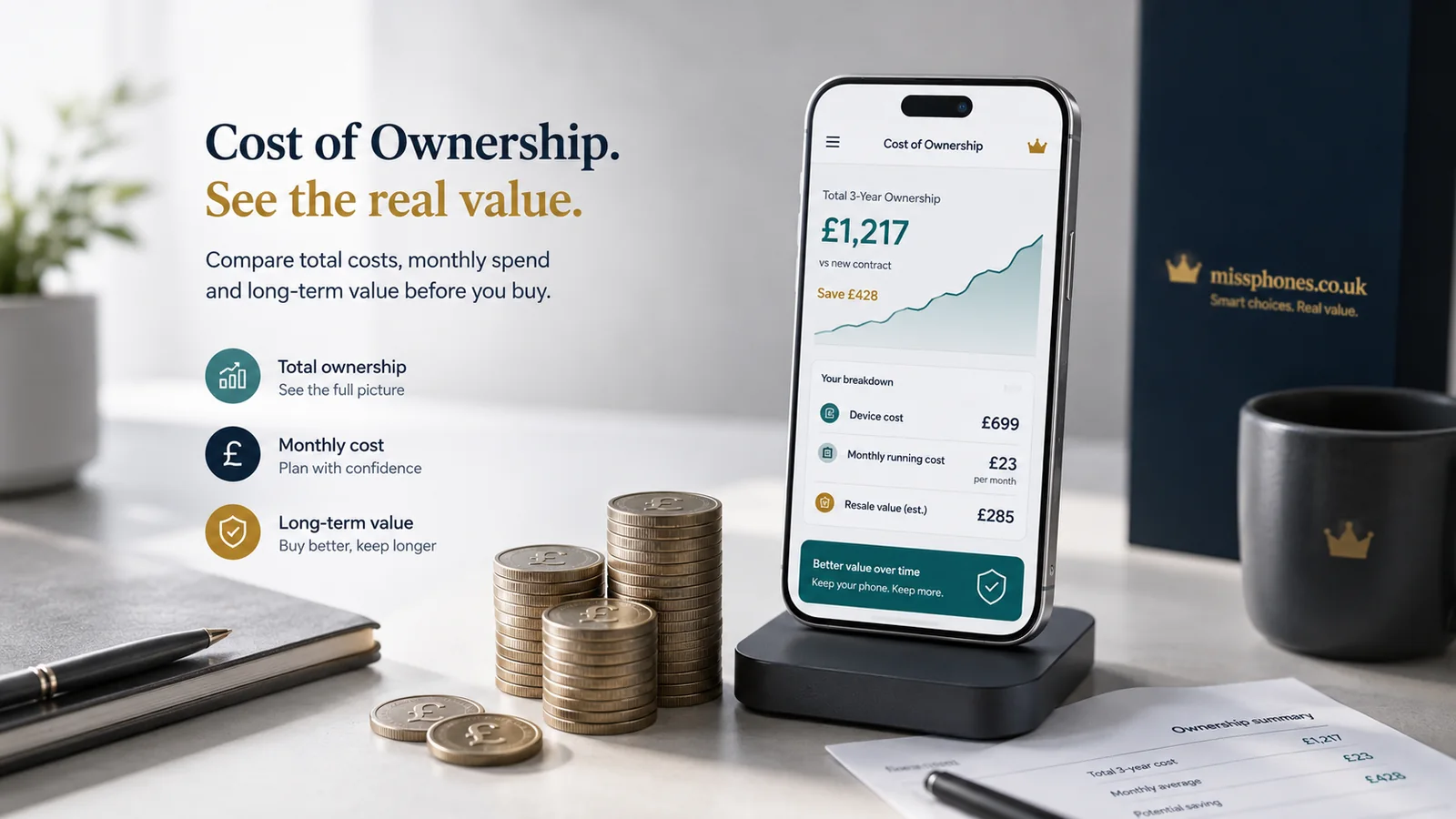
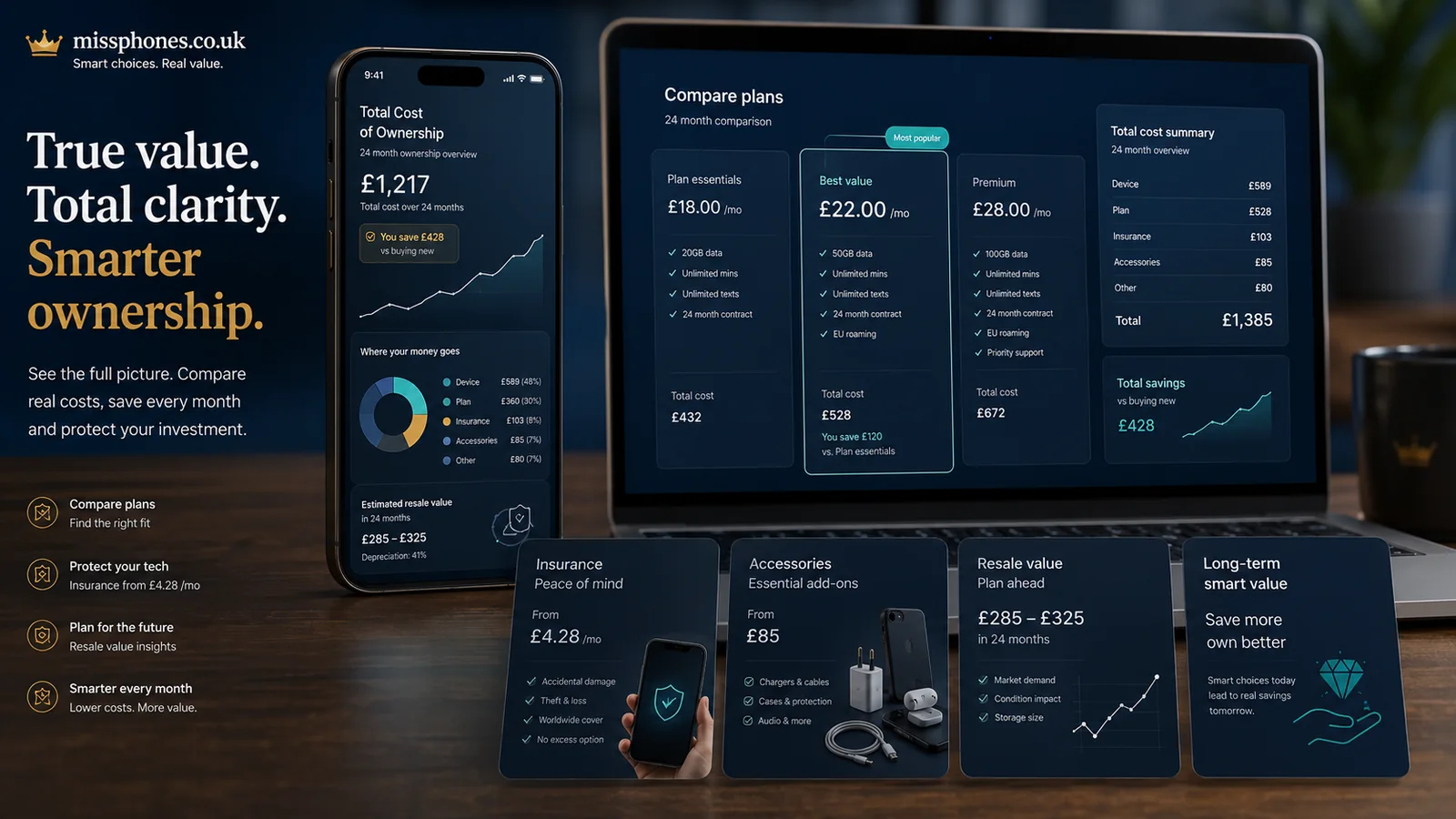
The strongest budget strategy depends on which compromise you can safely accept. A new entry-level phone protects condition and battery certainty; an older flagship may offer better hardware; a refurbished mid-range phone can balance both. Compare useful life and ownership risk, not the old launch price.
Older flagship versus new budget phone
| Criterion | Older flagship may win | New budget phone may win |
|---|---|---|
| Display and cameras | Higher original component quality | Known condition and no hidden wear |
| Battery | Only where health or replacement is evidenced | Fresh battery and clearer warranty |
| Support | Where a long original policy leaves enough time | Where the newer release provides longer remaining support |
| Repairs | Parts may be available but premium components can cost more | Lower device value, though parts availability varies |
| Everyday speed | Often stronger processor and storage speed | Can be sufficient for ordinary use with lower power demand |
Do not assume camera sensors “do not degrade” or that a premium phone remains superior regardless of age. Lens damage, stabilisation faults, worn coatings, battery throttling and software support can change the practical result.
Refurbished handset plus SIM-only
This route can separate the phone decision from the network decision and make total cost easier to see. It works best where:
- the seller defines condition clearly;
- battery information or replacement policy is available;
- returns and warranty are usable;
- the exact model has sufficient remaining support;
- the SIM allowance is chosen independently from the device price.
It works poorly when the refurbished price is only slightly below new, the battery is unknown or the phone is near the end of useful support.
Previous-generation mid-range phone
This is often overlooked between a new budget model and an old flagship. It can provide a better balance of:
- remaining support;
- reasonable repair cost;
- adequate performance;
- larger storage;
- lower insurance or replacement exposure.
Compare the exact model, not merely the product family. A small storage option or regional variant can change value materially.
Repair and keep
A battery or screen repair can be the lowest-cost strategy when the current phone remains supported, has sufficient storage and has no other developing faults. Obtain a written quote and compare it with the annualised cost of replacement. Do not repair solely because the original phone was expensive.
Avoid overspending on headline features
| Feature | Pay more when | Do not pay more merely because |
|---|---|---|
| Storage | Your current use and growth justify it | The larger model has a bigger discount label |
| Camera | You regularly use low light, zoom or video | The phone advertises more lenses |
| 5G | Coverage and tariff make it useful to you | It appears on the specification list |
| High refresh rate | You notice and value smoother interaction | It is presented as a premium necessity |
| Wireless charging | You already use compatible equipment | It requires buying several new accessories |
Use a budget scorecard
Score each candidate on five items: remaining support, battery certainty, storage, seller/returns and expected repair exposure. A phone that wins on only camera or old launch price is not automatically the strongest budget choice.
For a practical purchase sequence, continue with How to Buy a Good Phone on a Tight Budget.
Related guidance: Use Phone Deals and Contracts to choose the right route. The Phone Contract Cost Guide provides the full checklist for comparing the available options.
Sources and date checked
Last fact-checked: 25 July 2026. Provider terms, product ranges and interfaces can change. Check the documents offered for your own account before acting.