New, refurbished and used phones are not fixed quality levels. They are buying routes with different evidence, protections and costs. A well-documented used phone can be a better purchase than a poorly described refurbished one, while a new phone can be poor value if you pay a large premium for support or features you will not use.
Choose by risk and total cost: decide how much uncertainty you can accept, how long you plan to keep the phone and what protection you need if it is not as described.
What each route normally means
| Route | Typical position | Do not assume |
|---|---|---|
| New | Unused phone supplied by a manufacturer or retailer | Best value, longest support or every accessory in the box |
| Refurbished from a trader | Previously owned or returned phone sold after the trader's stated checks or repairs | New battery, original parts or a universal grade standard |
| Used from a trader | Second-hand phone that may have received limited preparation | No warranty or no consumer rights |
| Used from a private seller | Phone sold in the condition agreed between individuals | The same cancellation and fault remedies as a trader sale |
New: lowest condition uncertainty, highest purchase price
Buying new normally gives the clearest starting condition and straightforward access to the retailer's returns process and any manufacturer warranty. It can also provide the longest remaining software-support period.
The premium is worthwhile where:
- you plan to keep the phone for many years;
- the new model adds a feature you genuinely need;
- the price difference from refurbished stock is small;
- you need predictable battery condition for work or accessibility;
- repair availability or manufacturer cover matters strongly to you.
New does not mean financially optimal. Compare the exact model with the previous generation and calculate likely resale, accessories and airtime rather than looking only at the launch price.
Refurbished: value depends on the seller's process
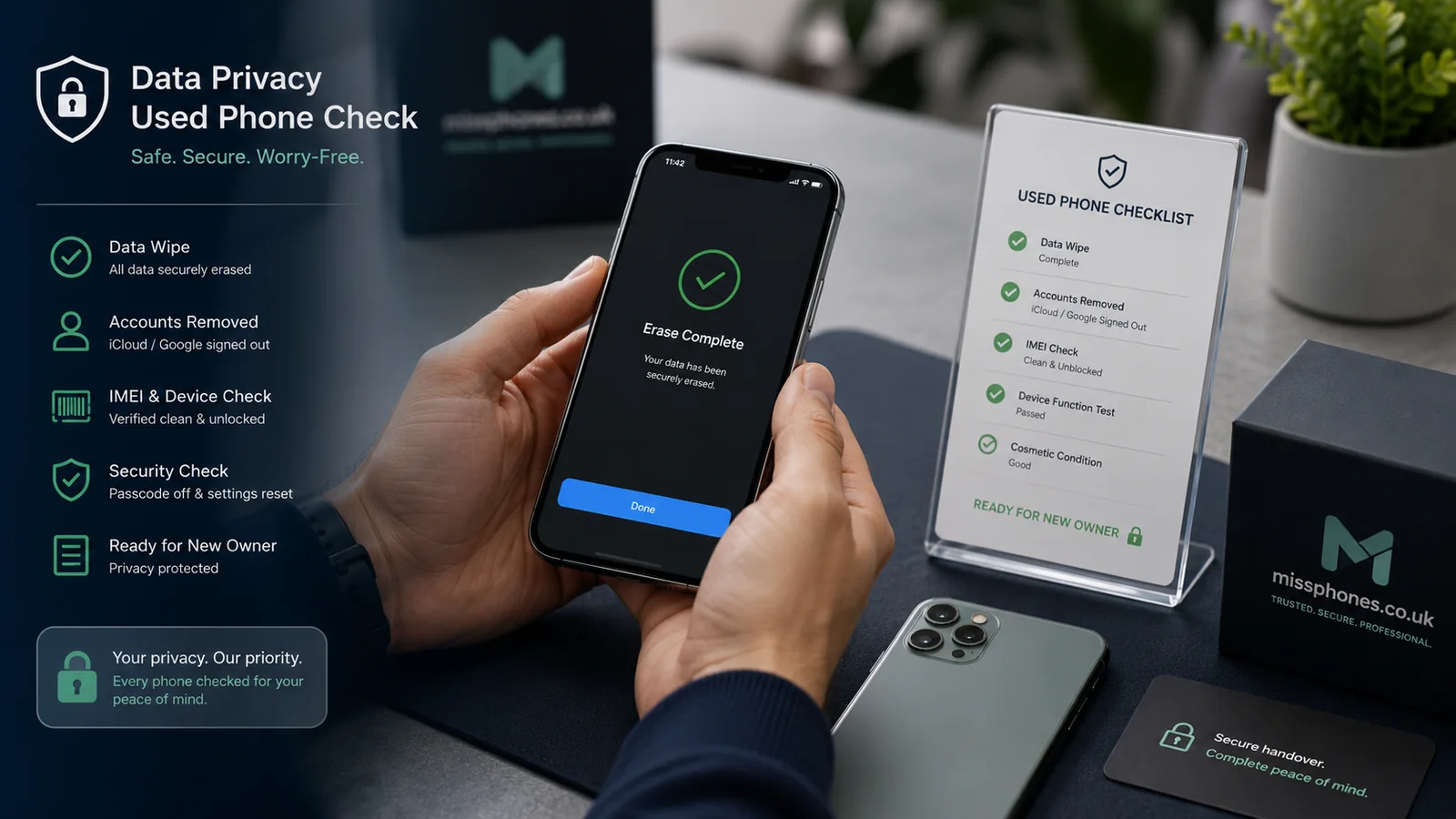
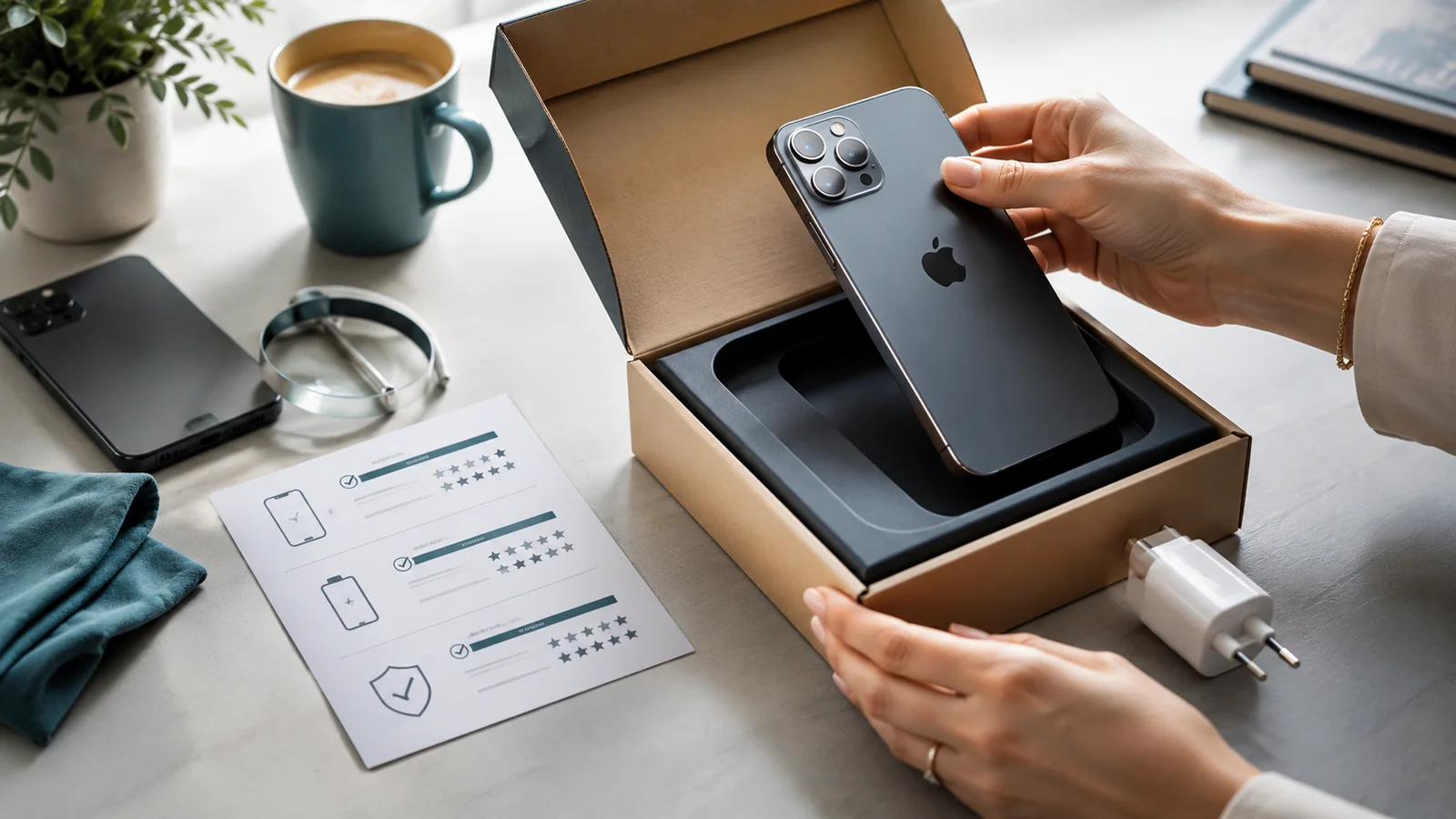
A refurbished phone can offer the best balance of price and protection when the trader is traceable and discloses condition, battery policy, parts, warranty and returns. The word itself does not prove that any specific repair or test occurred.
Refurbished is most attractive where:
- the model still has useful security support;
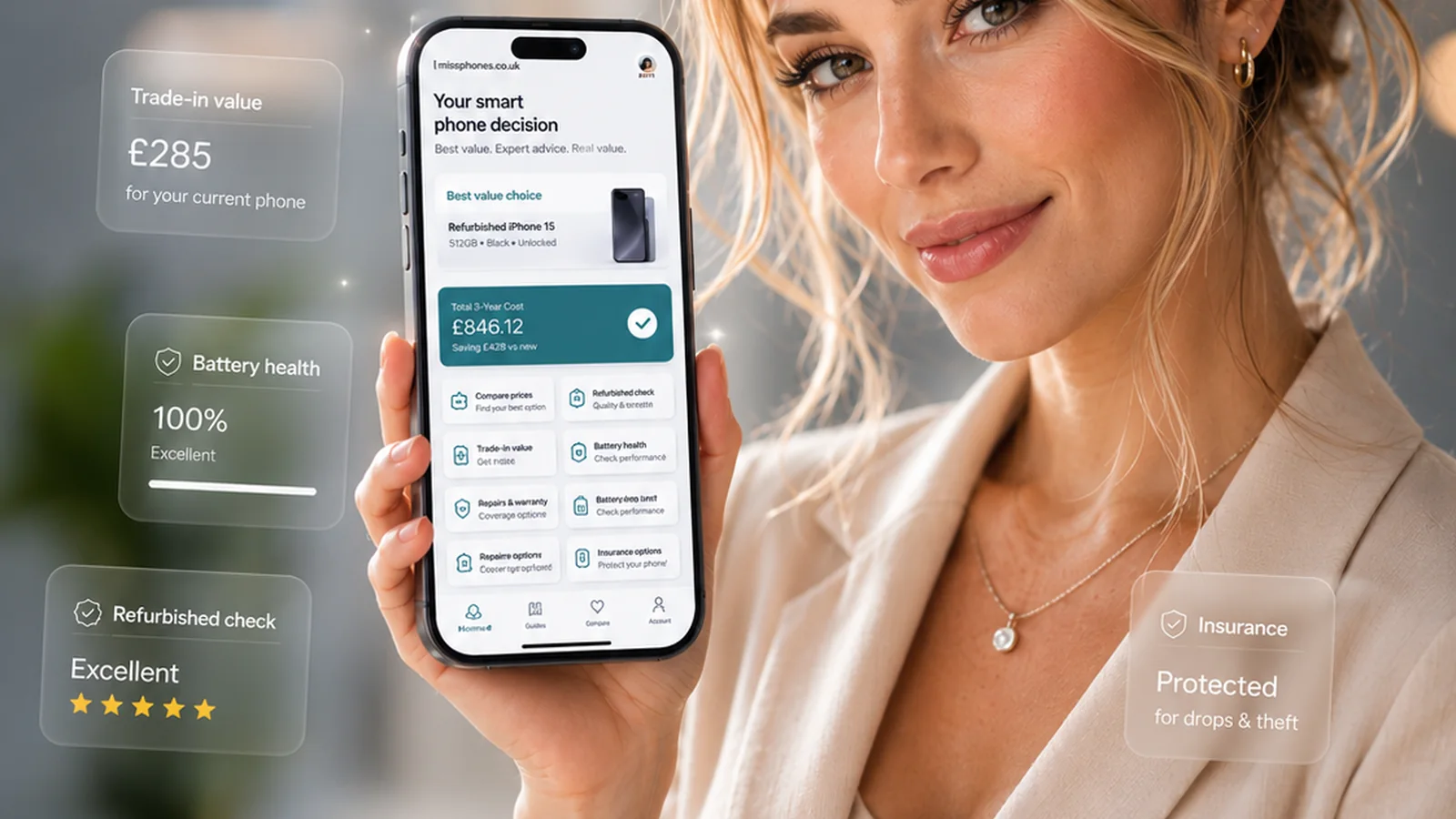
- the seller gives a measurable battery promise;
- the cosmetic saving is meaningful;
- the return route is practical;
- a future battery or screen repair would still leave the total cost below new.
Read the full refurbished buying guide before treating the middle option as automatically safer than used.
Used: potentially lowest price, widest variation
“Used” may describe a phone sold by a trader or a genuine private owner. The condition can range from nearly unused to heavily worn. The price can be excellent, but you may need to do more of the inspection yourself.
Used can suit a confident buyer who can:
- check account and activation locks;
- test the screen, battery, cameras, charging and mobile service;
- verify the exact model and support position;
- assess repair history and physical damage;
- preserve evidence of the listing and payment.
For a private sale, the agreed description is crucial because the full set of trader-to-consumer protections does not apply in the same way.
Compare rights by seller, not by label
A refurbished phone sold by a private individual does not become a trader sale because the seller used the word “refurbished”. Conversely, a trader selling a phone as “used” cannot remove applicable consumer rights merely by choosing that label.
| Question | Why it matters |
|---|---|
| Is the seller acting as a business? | Determines which trader-to-consumer rules may apply |
| Was the purchase online or in a shop? | Affects change-of-mind cancellation rights |
| What condition was described? | Sets the reasonable expectation for wear and function |
| What warranty was offered? | Adds a contractual remedy but does not replace statutory rights |
See the returns guide for the distinction between cancellation, fault remedies and private sales.
Compare total cost, not just price
Illustrative example:
- new phone: £520;
- refurbished phone: £390 with a clear battery minimum and 12-month seller warranty;
- private used phone: £310 with no commercial warranty.
The £80 gap between refurbished and private used may be worthwhile if it buys a practical return route, documented testing and lower expected repair risk. The £130 gap between refurbished and new may be poor value if the refurbished battery needs an £80 replacement soon. Replace the example with actual offers and repair costs.
Use a decision rule
| Choose new when | Choose refurbished when | Choose used when |
|---|---|---|
| You value maximum remaining support, predictable condition and the price premium is reasonable | You can verify the seller's process and obtain a worthwhile saving with usable protection | You can inspect confidently and the lower price compensates for the reduced evidence or protection |
Final checks for every route
- exact model, storage and regional compatibility;
- remaining security-support period;
- battery condition and replacement cost;
- account locks and identifiers;
- returns, warranty and seller identity;
- total ownership cost after accessories and likely repairs.
The best route is the one that gives you enough useful life and evidence at a price that reflects the remaining risk.