Do not choose from age alone. The right phone depends on eyesight, hearing, dexterity, memory, confidence, existing devices and the availability of help. A familiar mainstream phone with well-configured accessibility features can be easier than a specialist handset with an unfamiliar interface.
Test the important actions in person
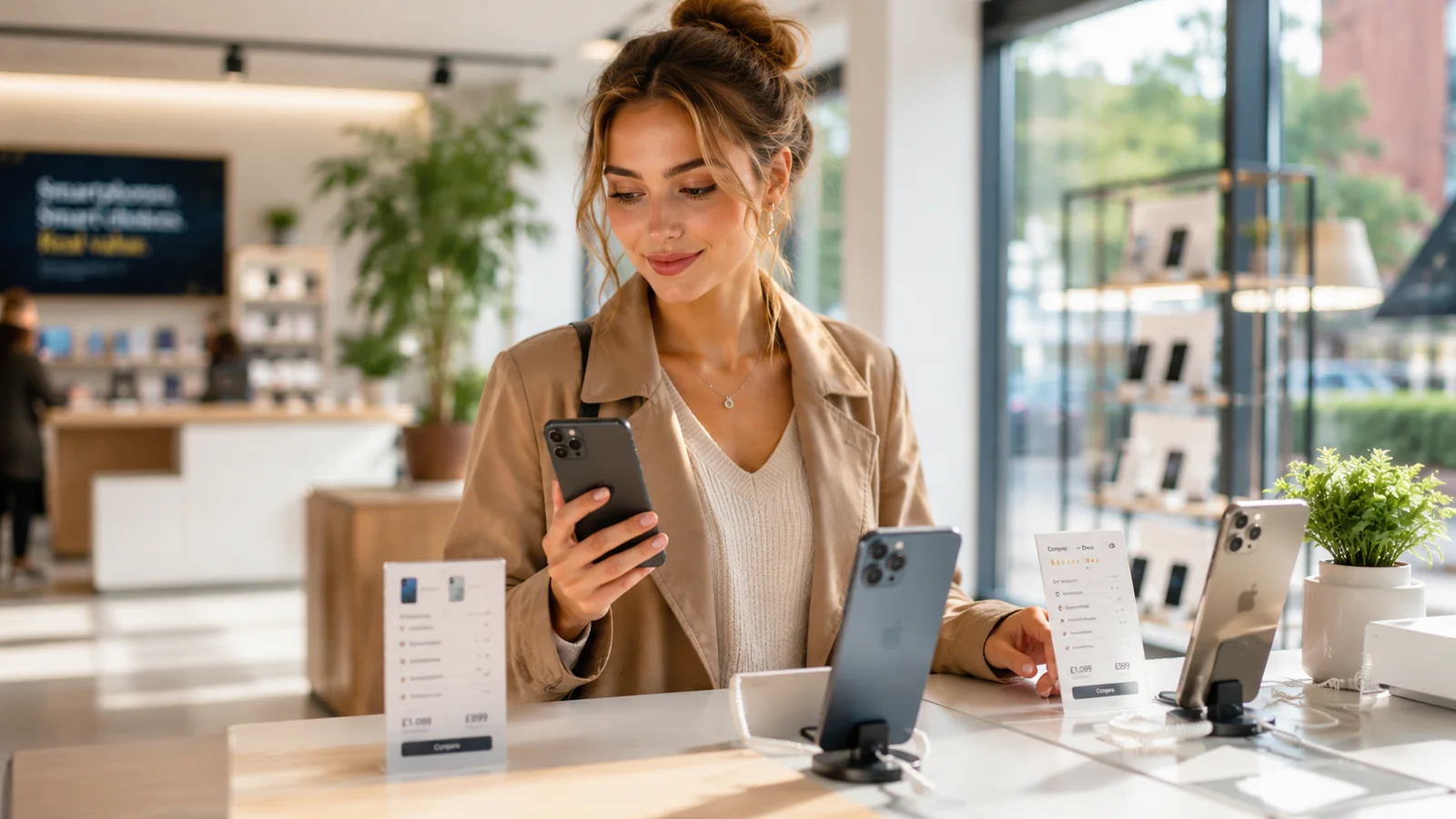
- unlocking the phone;
- answering and ending a call;
- finding a contact;
- reading a message;
- changing volume;
- connecting the charger;
- taking and viewing a photograph;
- using an emergency contact or medical feature where appropriate.
Check accessibility, not only screen size
| Need | Features to test |
|---|---|
| Low vision | Larger text, magnification, contrast, screen reader and physical brightness |
| Hearing | Speaker clarity, hearing-device compatibility, captions and visual alerts |
| Limited dexterity | Weight, grip, button position, voice control and simplified gestures |
| Cognitive support | Simple home screen, reliable contacts, clear recovery process and reduced notifications |
Apple provides features such as VoiceOver, Zoom and display text controls. Android provides tools including TalkBack, Accessibility Menu and other manufacturer-dependent features. The existence of a feature is not enough: confirm that the person can use it on the exact phone.
Plan support and recovery
Record account-recovery details securely, decide who can help and avoid making one family member’s phone the only route to reset the account. Check the security-support period and battery-replacement route so that a familiar setup can remain usable.
Avoid unnecessary complexity
Extra cameras, gaming performance and a very large screen can add cost and weight without improving the person’s main tasks. Spend instead on a comfortable case, dependable charging setup and enough storage for the intended use.
Familiarity can outweigh a specification advantage
If the person already uses one platform confidently, moving to another can create account, gesture and support costs. A switch can still be worthwhile for a required accessibility feature, but test it first and plan assisted setup rather than assuming a new interface will be intuitive.
Check scams and authentication
Banking and government services increasingly use mobile authentication. Confirm that the phone is supported by the required apps and that recovery does not depend on remembering several passwords during an emergency. Configure spam protections where available, but do not promise that the phone can identify every fraudulent call or message.
Plan maintenance
Use a simple charging location, label cables where helpful and schedule updates. Keep the receipt and account details with the trusted support person chosen by the user. Avoid taking control of the person’s account without clear consent.
For the wider Choosing a Phone for an Older Person decision, continue with Buying a Phone, then Complete Phone Buying Guide.