A marketplace is a venue, not a single seller. First identify whether you are buying from a UK trader, an overseas trader or a private individual, and whether payment and messages remain inside the platform’s protected process.
Verify the seller before discussing the phone
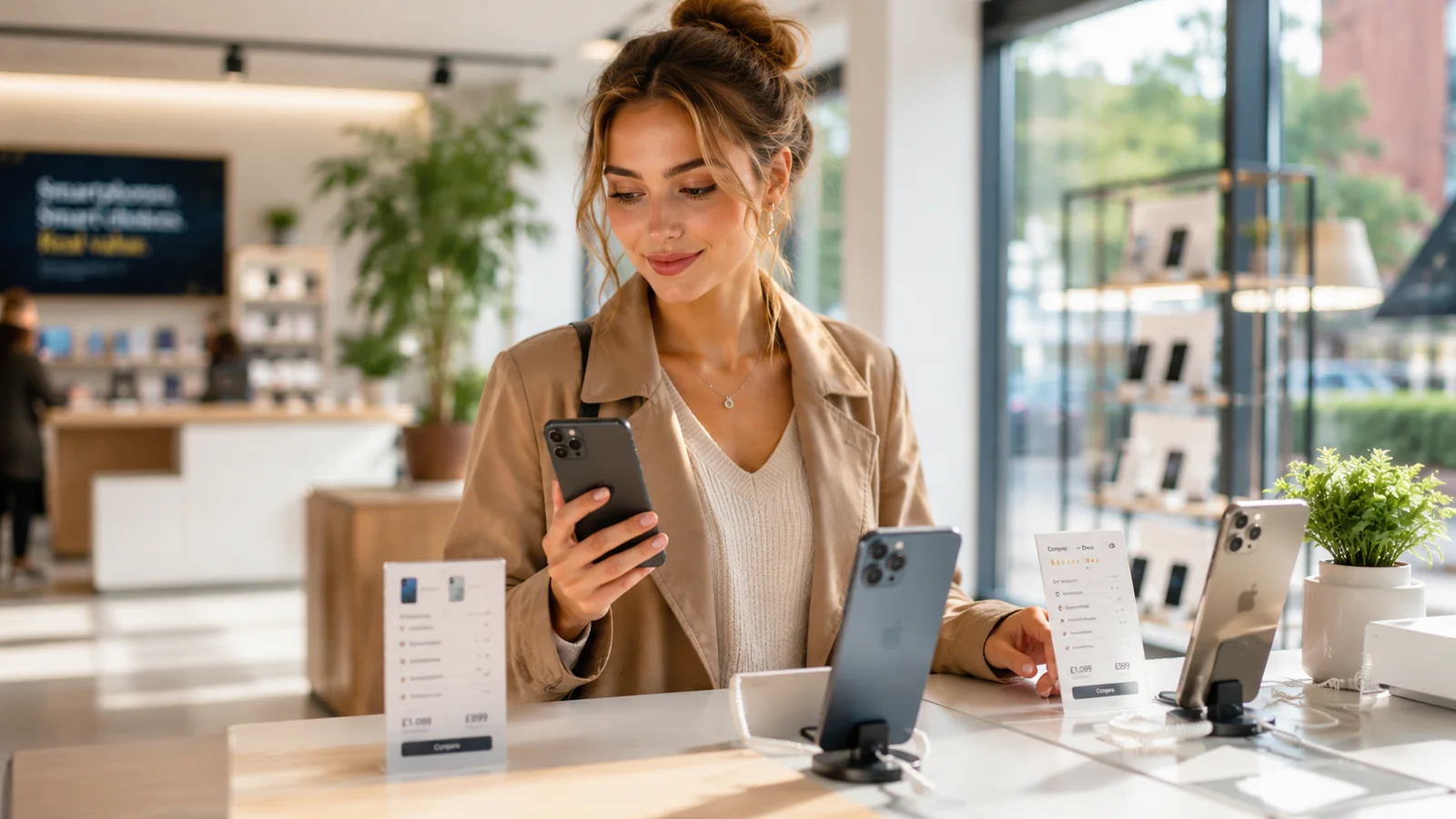
- Read the legal name, location and seller type shown on the listing.
- Check account history, but do not treat reviews as proof of identity.
- Be cautious where a supposed private seller lists many similar phones.
- Keep the original listing, images, messages and payment confirmation.
- Do not move to an unfamiliar payment link sent in chat.
Verify the exact phone
| Check | Why it matters |
|---|---|
| Model and storage | Marketing names can cover several variants |
| Serial and IMEI | They help match the device to evidence, but do not prove ownership alone |
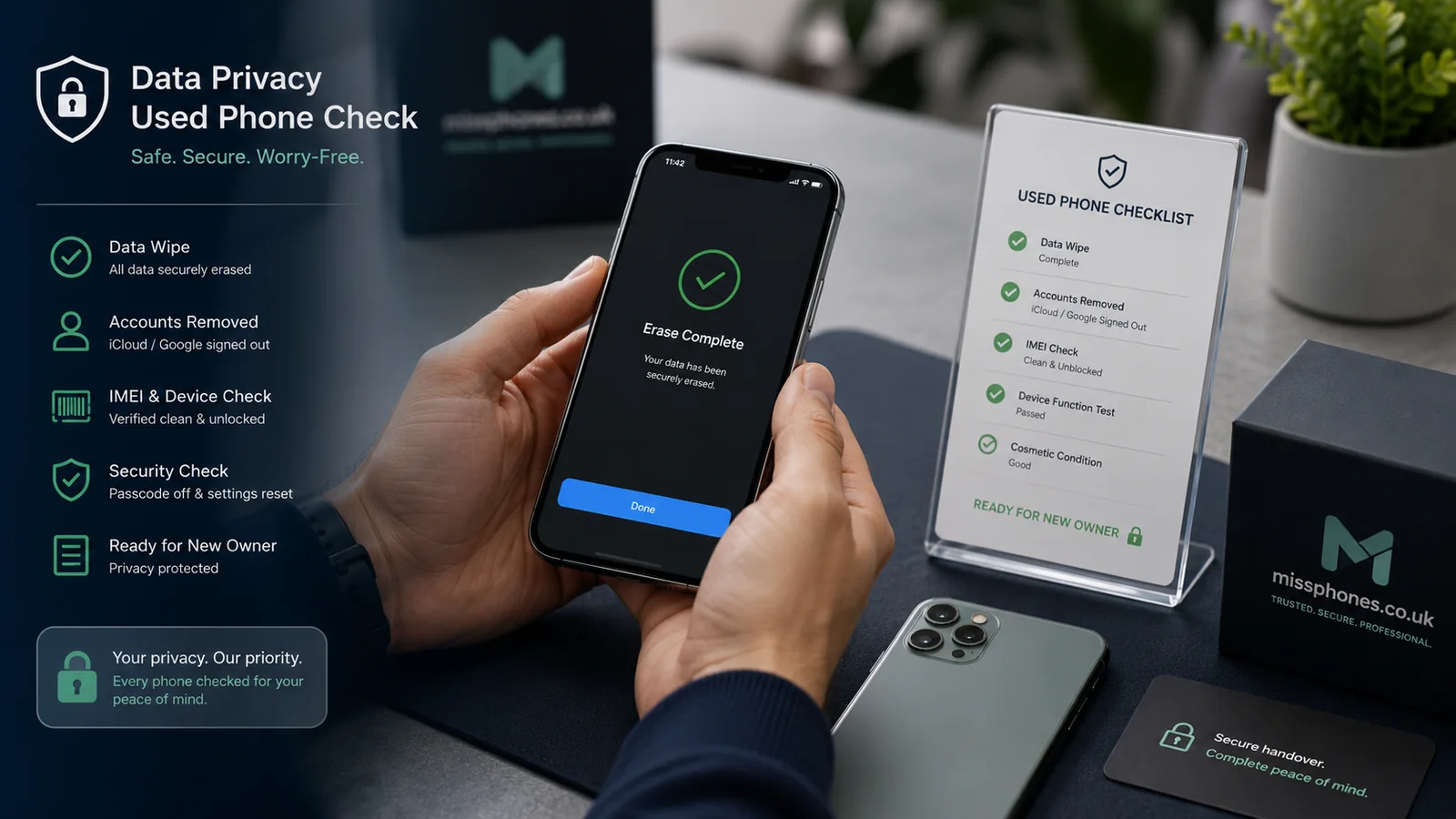
| Account locks | Activation Lock or Factory Reset Protection can make the phone unusable |
| Condition and parts | Photos may not show touch, battery, cameras or repair history |
| Return address | A UK-looking listing can still require an overseas return |
Meeting in person
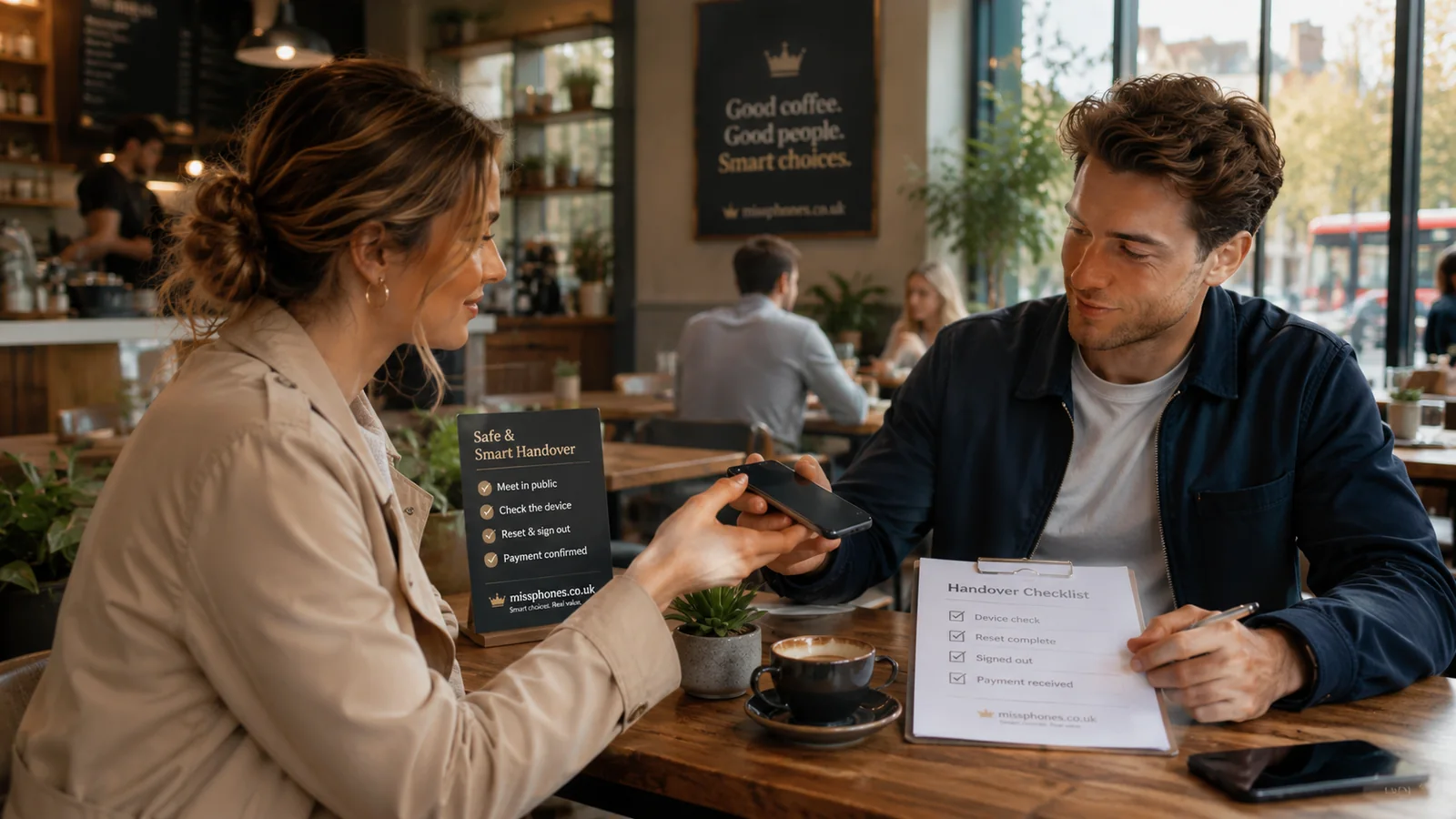
Meet in a public place with enough time and connectivity to test the phone. Check the device itself rather than a box label, complete the relevant account-lock verification and confirm payment independently. Do not allow urgency, a waiting taxi or a story about a dying battery to shorten the inspection.
Delivery purchase
Keep payment inside the marketplace where protection is promised, confirm whether phones are excluded from compensation and record the opening of a valuable parcel. A tracking event proves movement of a parcel, not necessarily its contents or condition.
For a detailed technical inspection, use How to Test a Second-Hand Phone Before Buying.
Trader or private seller?
Look at the substance rather than the label. Repeated sales of similar phones, business-style terms, stock photographs and a returns address may indicate a trader. Save the seller profile and listing before it changes. If the seller is a trader, the transaction should not be presented as a private sale merely to avoid consumer obligations.
Use the platform dispute process correctly
Read the coverage before payment: some platforms exclude collection, off-platform communication, cash, bank transfer or certain electronics. If the phone arrives wrong, damaged or locked, document the packaging, identifiers and fault immediately and use the official dispute route. Do not return a valuable phone to an address supplied only in a message until the platform confirms the process.
Walk-away signs
- Payment is redirected to a different person or company.
- The seller refuses a live test or account-lock check.
- The serial or IMEI is supplied only after payment.
- The listing claims a manufacturer warranty but provides no purchase evidence.
- The seller creates urgency around courier collection or a “release fee”.
To place Buying From Marketplace Sellers in context, see Buying a Phone, then Complete Phone Buying Guide.