A social media advert is only the route by which you discovered the offer. It does not tell you whether you are buying from a recognised retailer, a marketplace trader, a private individual or a cloned website. Identify the transaction before judging the phone.
In brief: leave the advert, find the seller independently, verify the exact legal supplier and avoid pressure to pay by direct transfer or outside the platform.
First identify the type of advert

| Advert leads to | Main risk | Key check |
|---|---|---|
| Official retailer website | Cloned account or lookalike domain | Open the retailer's site independently and find the offer there |
| Online marketplace listing | Confusing the platform with the third-party seller | Read seller identity, status, location and transaction terms |
| Private profile or group post | Anonymous seller, copied photos or no phone | Inspect the device, verify identity and keep a written record |
| Lead form or direct message | Personal-data collection and payment diversion | Do not submit financial or identity data before verifying the business |
Do not use the advert link as your only evidence
Search for the seller independently. Check the domain spelling, legal business name, address and normal contact details. A scam site can copy logos, reviews, product photographs and even terms from a real retailer.
A padlock symbol means that the connection to the site is encrypted; it does not prove that the operator is honest.
Test the price claim
Compare the exact model, storage, condition and included items with current offers from several credible sellers. Be cautious where:
- a current flagship is offered far below comparable stock;
- the discount is calculated from an old launch price;
- the advert hides an upfront payment, trade-in requirement or contract term;
- the displayed phone is not the model covered by the headline price;
- a countdown or “last unit” message appears to reset.
Keep payment inside the verified transaction
Do not move a marketplace purchase to bank transfer, gift card or cryptocurrency because the seller offers a discount. Check the terms of any card, wallet or marketplace protection rather than assuming all payment routes are equivalent.
The National Cyber Security Centre advises researching unfamiliar shops, watching for suspicious links and using payment methods that may provide useful protection. Direct bank transfer can be difficult to recover when a purchase is fraudulent.
For a private sale, inspect before paying
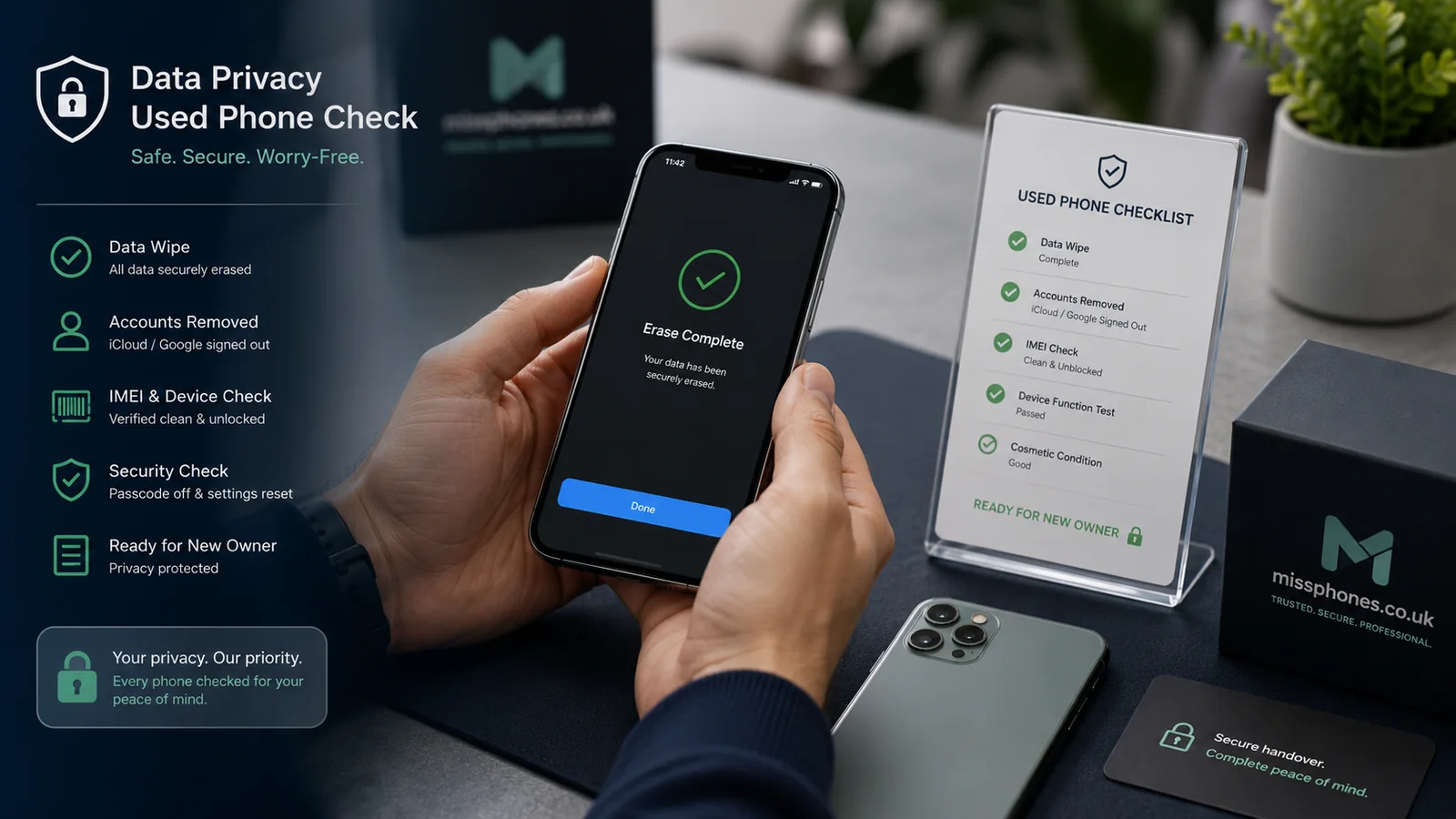
- match the phone to the advert;
- read the IMEI from the device;
- confirm account and organisation locks are removed;
- test core functions;
- check the seller's identity;
- create a receipt;
- do not meet in a location chosen to prevent inspection.
Use How to Check a Phone Is Not Stolen Before Buying and Signs a Used Phone Has Problems.
Report suspicious adverts
Save the advert URL, screenshots, account name and messages. Report the advert to the platform. Report Fraud accepts reports of fraud and cybercrime in England, Wales and Northern Ireland; suspicious adverts and websites can also be reported through the relevant platform, advertising or NCSC route.
If money has already been sent, contact the bank or payment provider immediately using official contact details. In Scotland, fraud is reported to Police Scotland; in England, Wales and Northern Ireland, Report Fraud is the national reporting centre.