A private sale often produces a higher headline price. A trade-in usually reduces effort and contact with unknown buyers. The useful comparison is the value you keep after costs and risk, not the first number shown on screen.
Compare the same phone on the same day

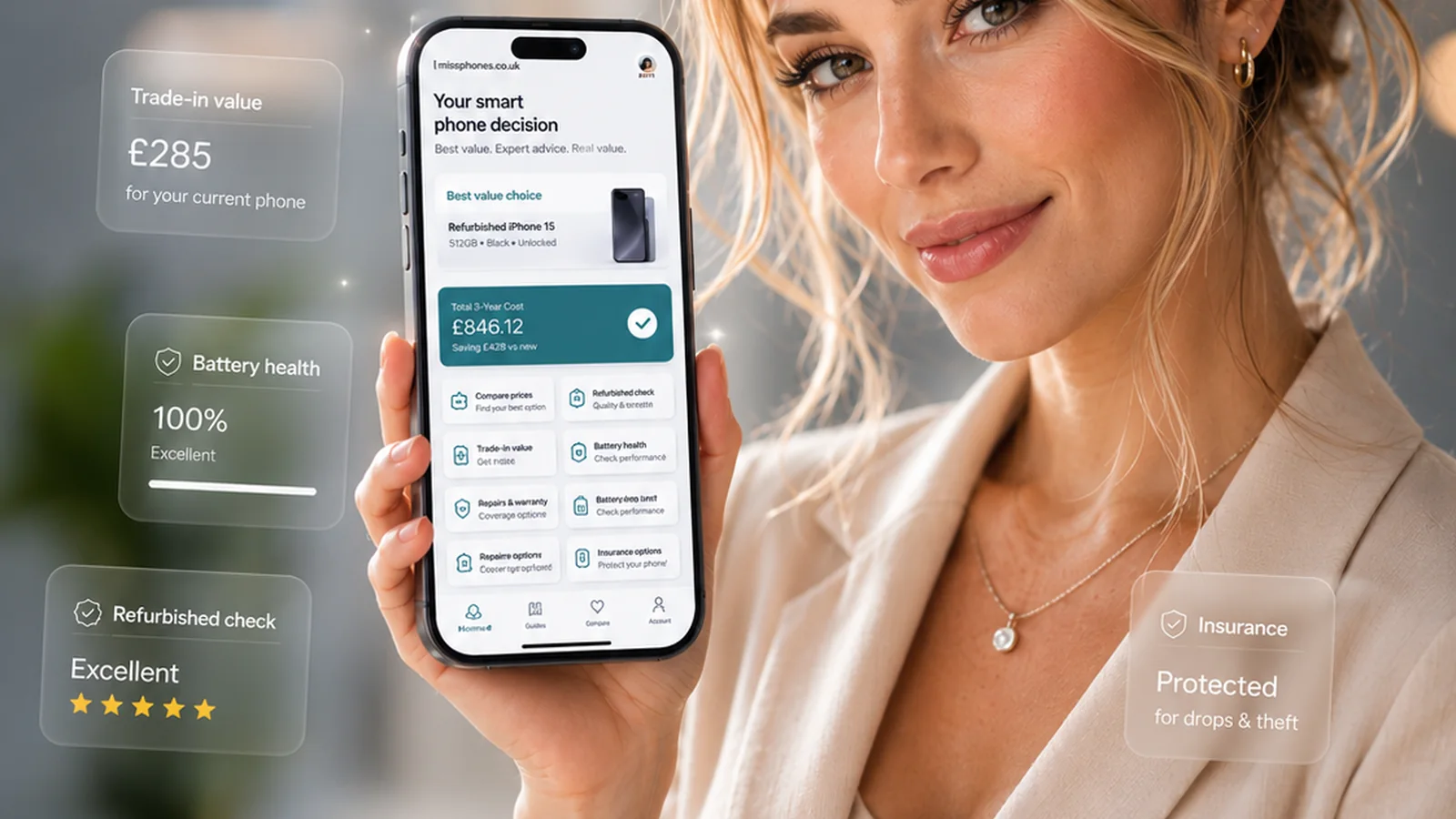
Use the exact model, storage and condition. Compare multiple trade-in quotes with recent sold prices rather than optimistic asking prices. Treat promotional trade-in bonuses separately: a bonus tied to an expensive new phone is not free cash.
| Factor | Trade-in | Private sale |
|---|---|---|
| Value | Usually lower; may be cash, credit or purchase discount | Potentially higher cash price |
| Price certainty | May change after inspection unless genuinely guaranteed | Agreed with buyer, but disputes remain possible |
| Effort | Quote, preparation and dispatch or store visit | Listing, messages, negotiation, payment and delivery |
| Risk | Downgrade, delayed payment, return condition | Fraud, no-shows, charge disputes and return disputes |
| Speed | Often predictable once accepted | Can be immediate or take weeks |
Calculate the net difference
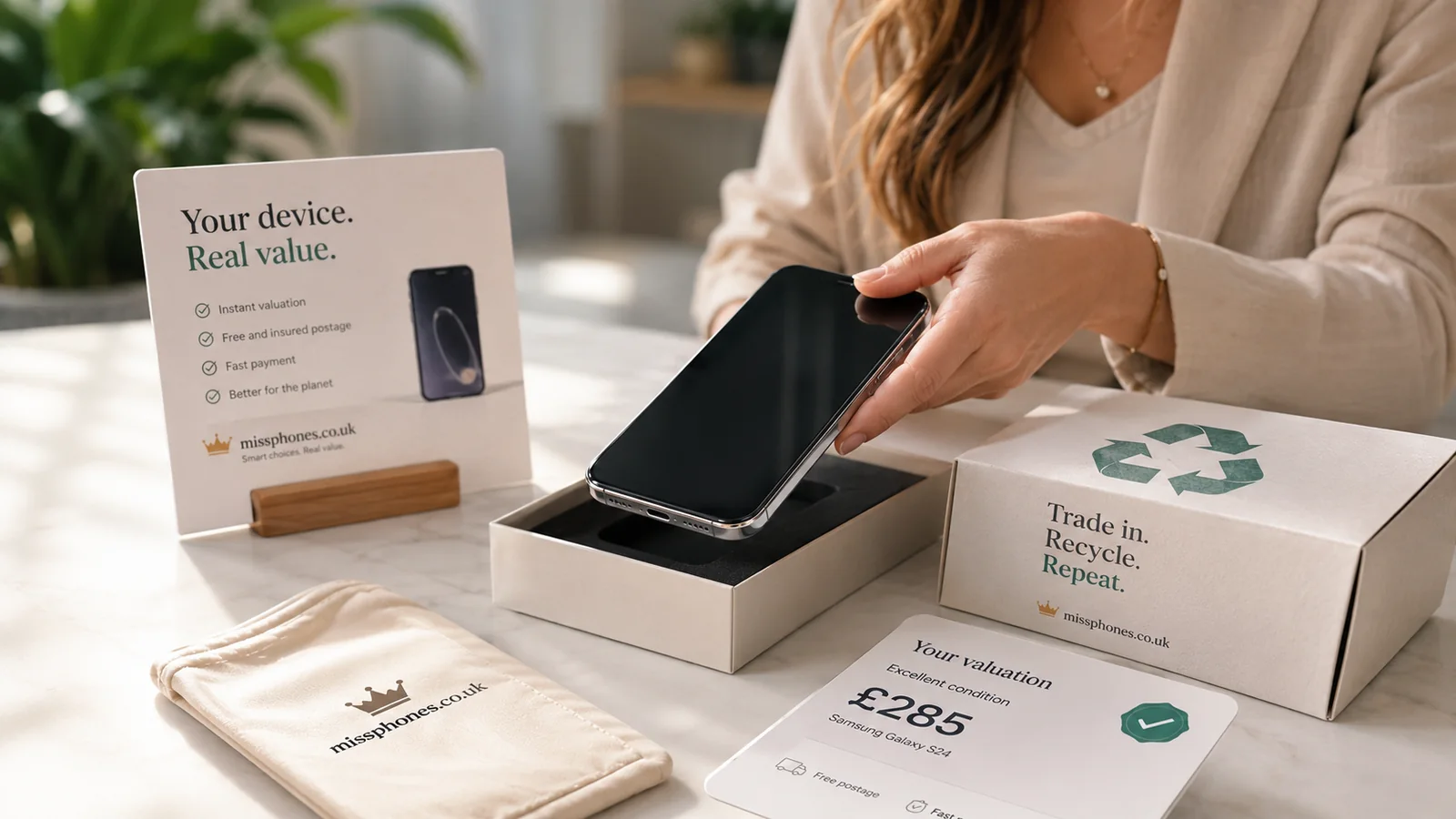
Illustrative example: a private buyer offers £310. After a £20 platform fee, £10 insured delivery and £5 packaging, the net is £275. A trade-in offers £250 in cash, while another offers £285 as store credit. If you would not otherwise shop at that store, the £285 credit should not automatically be treated as £285 of cash value.
Use trade-in when the process is the product
Trade-in is often sensible where the price gap is small, the provider gives a clear inspection and return process, or a verified promotion improves a purchase you had already chosen on total cost. Read what happens if the final value is lower and whether rejecting a revised offer costs anything.
Use private sale when you can control the transaction
A private sale is more attractive where the phone is recent, unusual or in unusually good condition and buyers are willing to pay for that distinction. It is less attractive if you cannot document the condition, do not understand the payment flow or need to post without adequate carrier cover.
Before choosing
- Calculate the phone’s resale value
- Check a trade-in quote
- Choose a safe payment method
- Document the condition before posting
Useful official references: Trade-In vs Private Sale
Before deciding on Trade-In vs Private Sale
- Evidence before handover:keep the advert or quote, photographs of condition, serial/IMEI records kept privately, and the payment or collection record; this keeps the Trade-In vs Private Sale transaction documented without publishing device identifiers in the listing.
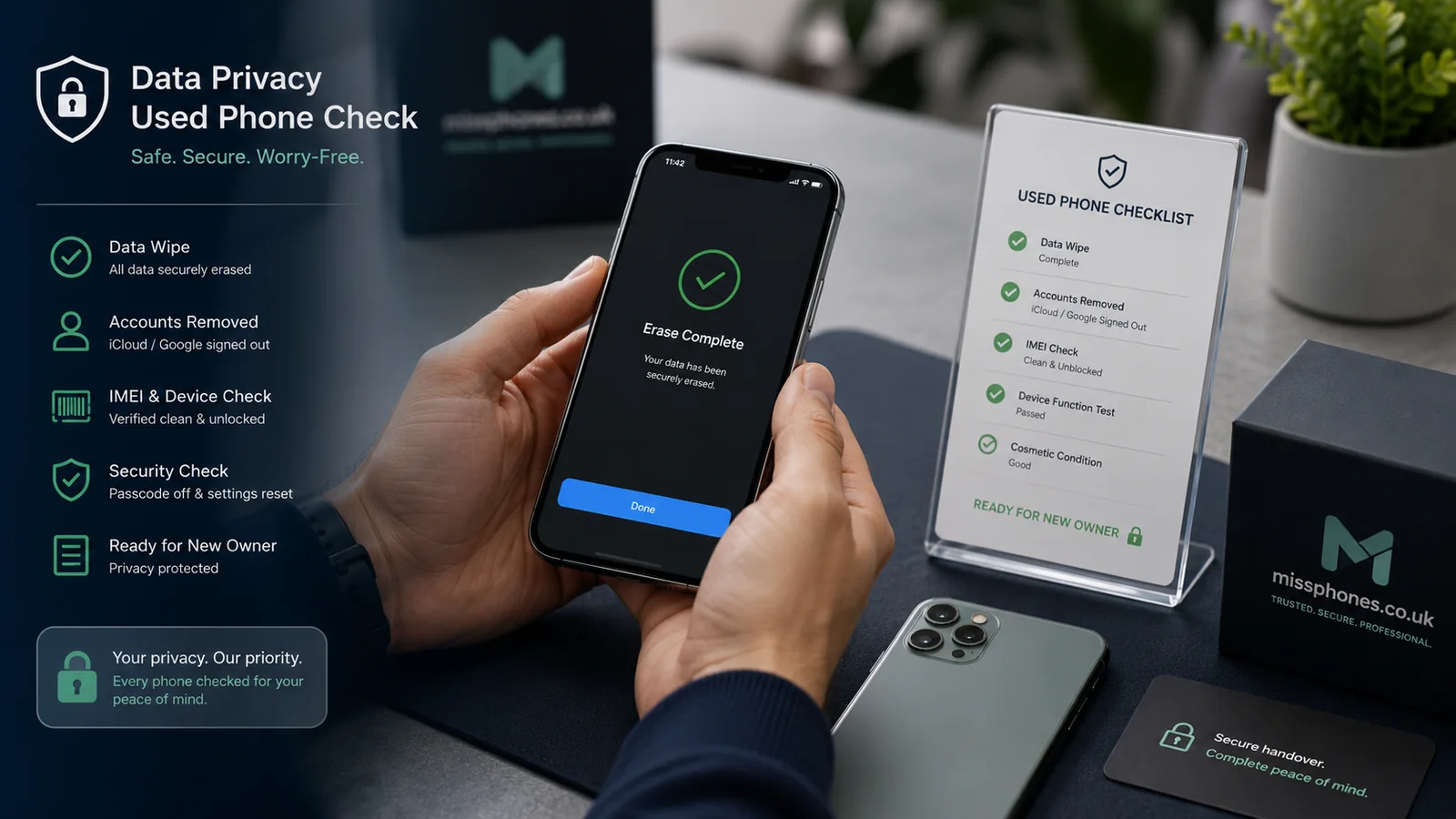
- Account and data separation:back up what you need, remove account locks using the manufacturer’s supported process, and complete the appropriate erase procedure before the phone leaves your control; apply this point to the trade vs private sale question.
- Payment and delivery fit:use a payment and delivery method that matches the marketplace or buyer-protection rules; do not change the delivery address or payment route simply because a buyer asks in a message before applying it to this particular case.
- Value versus certainty:a higher private-sale price can require more time and carry more dispute risk; a trade-in may pay less but provide a simpler documented process; compare the net amount rather than the headline quote; apply this point to the trade vs private sale question.