A single monthly figure can contain several products and can exclude irregular costs. Break the bill into components before deciding whether it is affordable.
Build a monthly view

| Line | Monthly treatment |
|---|---|
| Airtime | Use the actual core subscription for each period |
| Device plan | Show separately and note its end date |
| Insurance | Premium plus a separate possible excess |
| Subscriptions | Include only if retained after any free period |
| Accessories and repairs | Divide the whole-period estimate by the number of months |
| Residual value | Subtract only in a separate end-of-period scenario |
Illustrative example
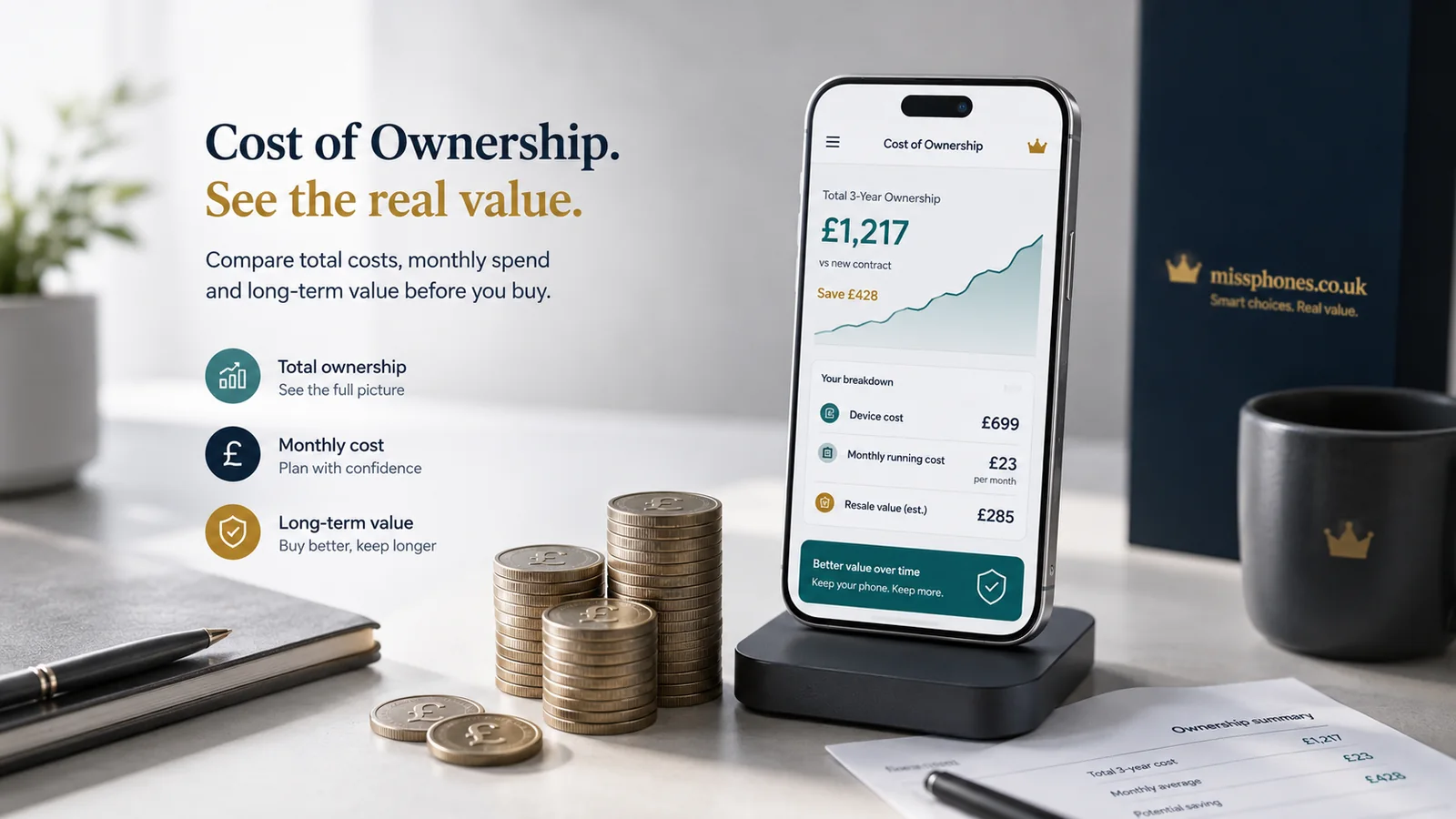
A £13 airtime plan, £21 device plan, £7 insurance and £120 of expected accessories and maintenance over 24 months produces an illustrative monthly ownership figure of £46, before any excess. A retailer might headline only £34.
Model price changes by period
Do not multiply today’s monthly price by the full term when the contract states a rise. For a new contract entered from 17 January 2025, any permitted core subscription rise must be stated upfront in pounds and pence.
Stress-test affordability
Add the likely excess or an ordinary repair to one difficult month. If that makes essential household spending unsafe, choose a lower device cost or build a repair reserve first.
Keep two monthly numbers
The first is the contractual monthly outflow. The second is the average ownership cost after spreading expected irregular spending across the period. Both matter: the first protects cash flow, while the second supports fair comparison.
Check the final months
Some device plans end before airtime; some promotions end while the minimum term continues. Build the schedule month by month where the price changes rather than relying on one average that hides a late increase.
Where to go next from Monthly Phone Costs Breakdown
- Phone Finance: Can You Afford It?
- the phone-contract calculation method
Useful official references: Monthly Phone Costs Breakdown
Putting Monthly Phone Costs Breakdown into practice
- Do not let a discount create the need:a genuine saving on the wrong device is still overspending; start with the required capability and budget before judging whether the current price is attractive in this specific comparison.
- Use a like-for-like baseline:compare the same model, storage, condition and seller type; a headline price is not useful if another listing includes less warranty, different storage or a mandatory contract for the decision described here.
- Separate known and uncertain costs:purchase price and contracted payments are known; resale value, repair probability and future promotions are estimates; keep those categories separate when calculating Monthly Phone Costs Breakdown.
- Choose an ownership period:a two-year and four-year comparison can produce different winners because depreciation, battery replacement and software support matter over time for the decision described here.